Tsukuda Tendai Jizō-son: The Ginkgo Goes Through the Roof
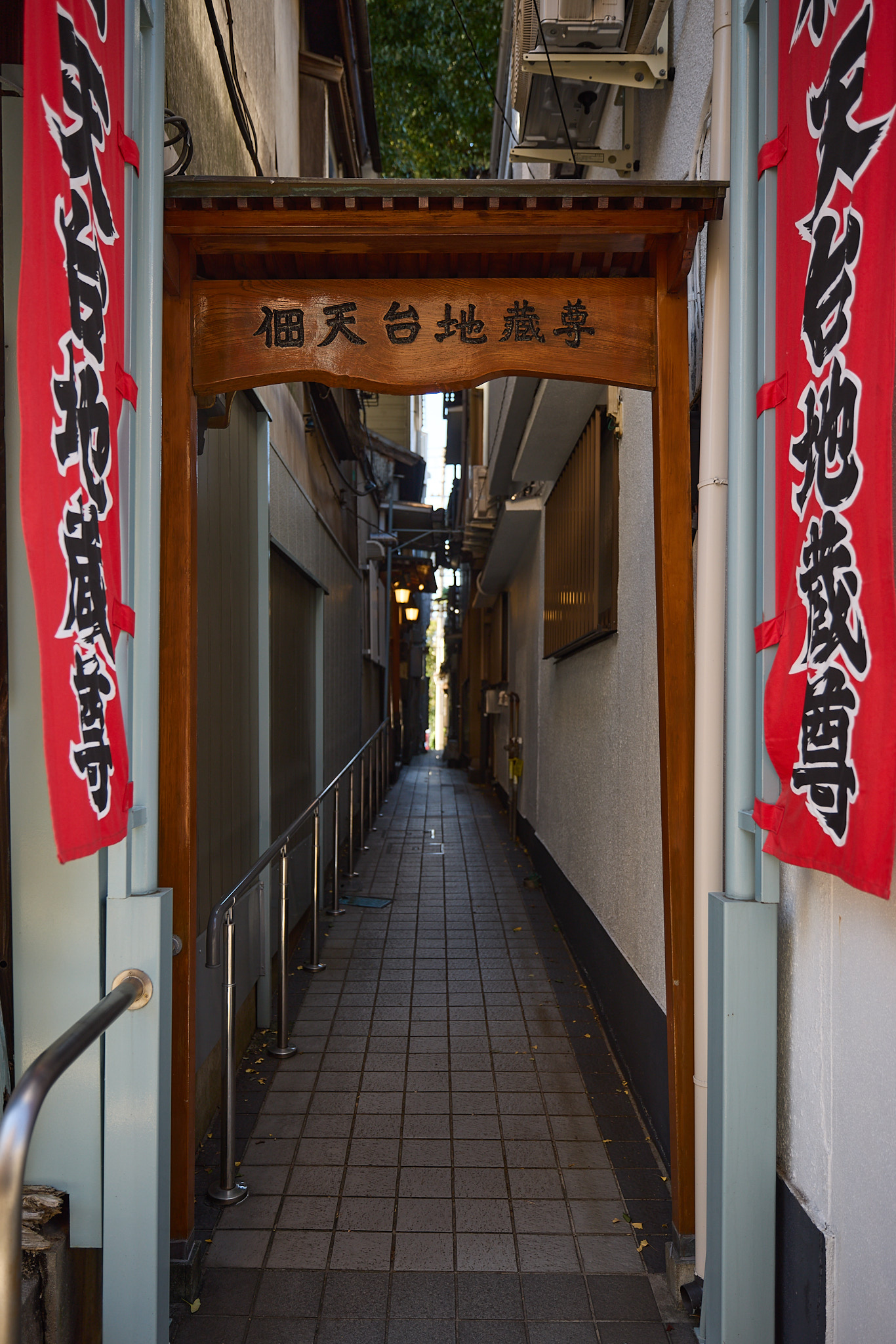
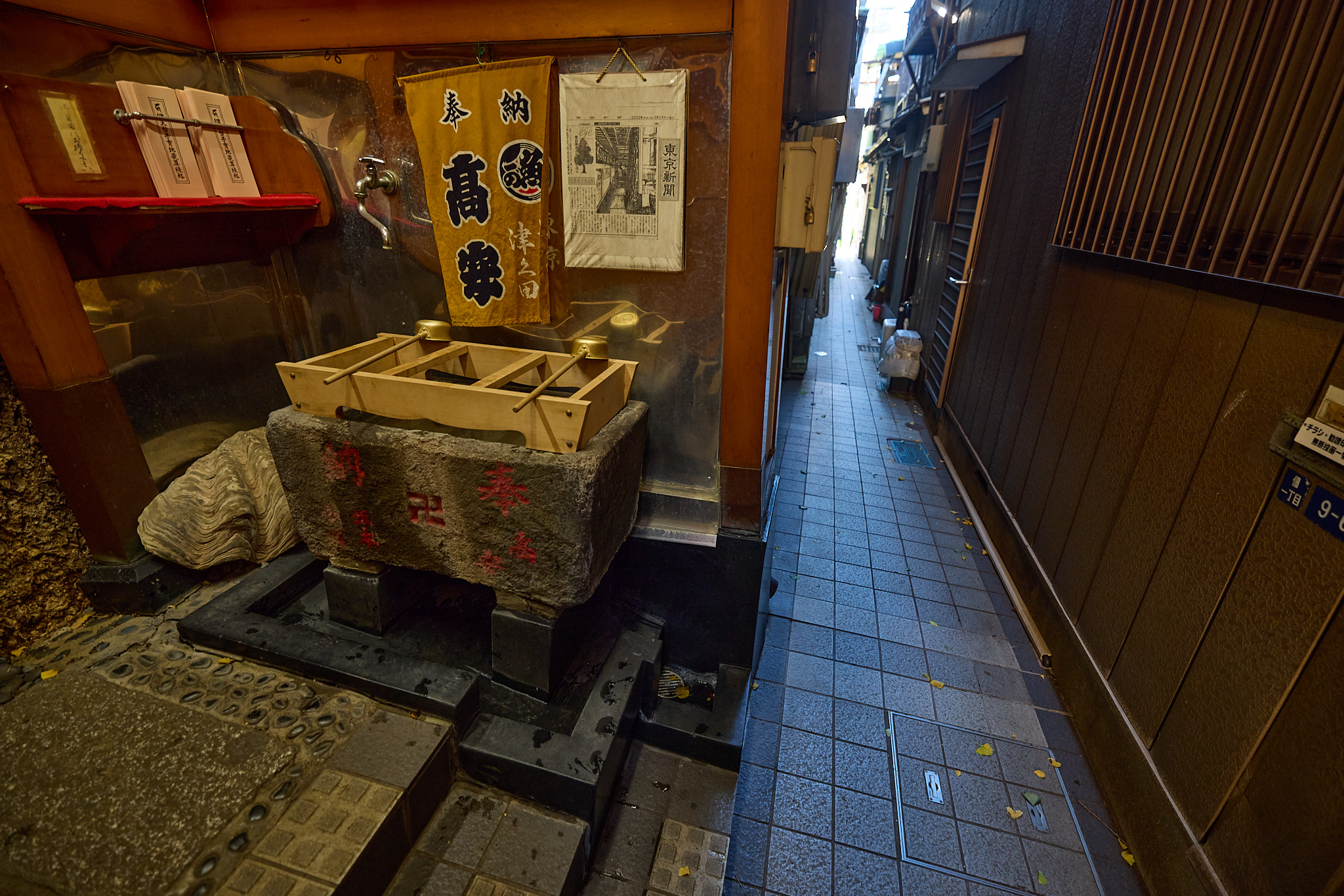
In Tsukuda, on Tokyo's waterfront, the way to a small Buddhist shrine is shared with the houses along it. A tiled passage runs back from the street between their walls, under air conditioners and past doors.
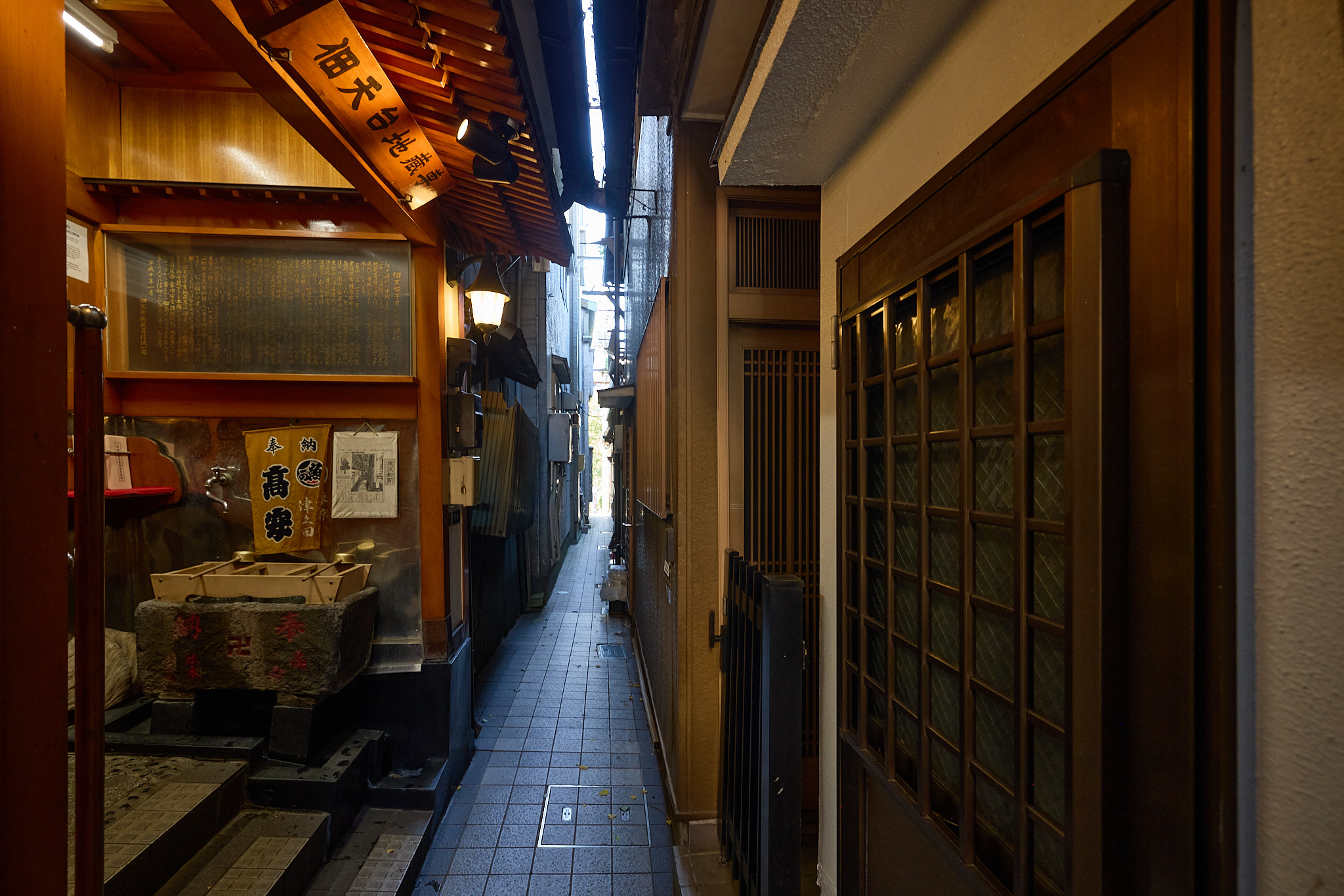
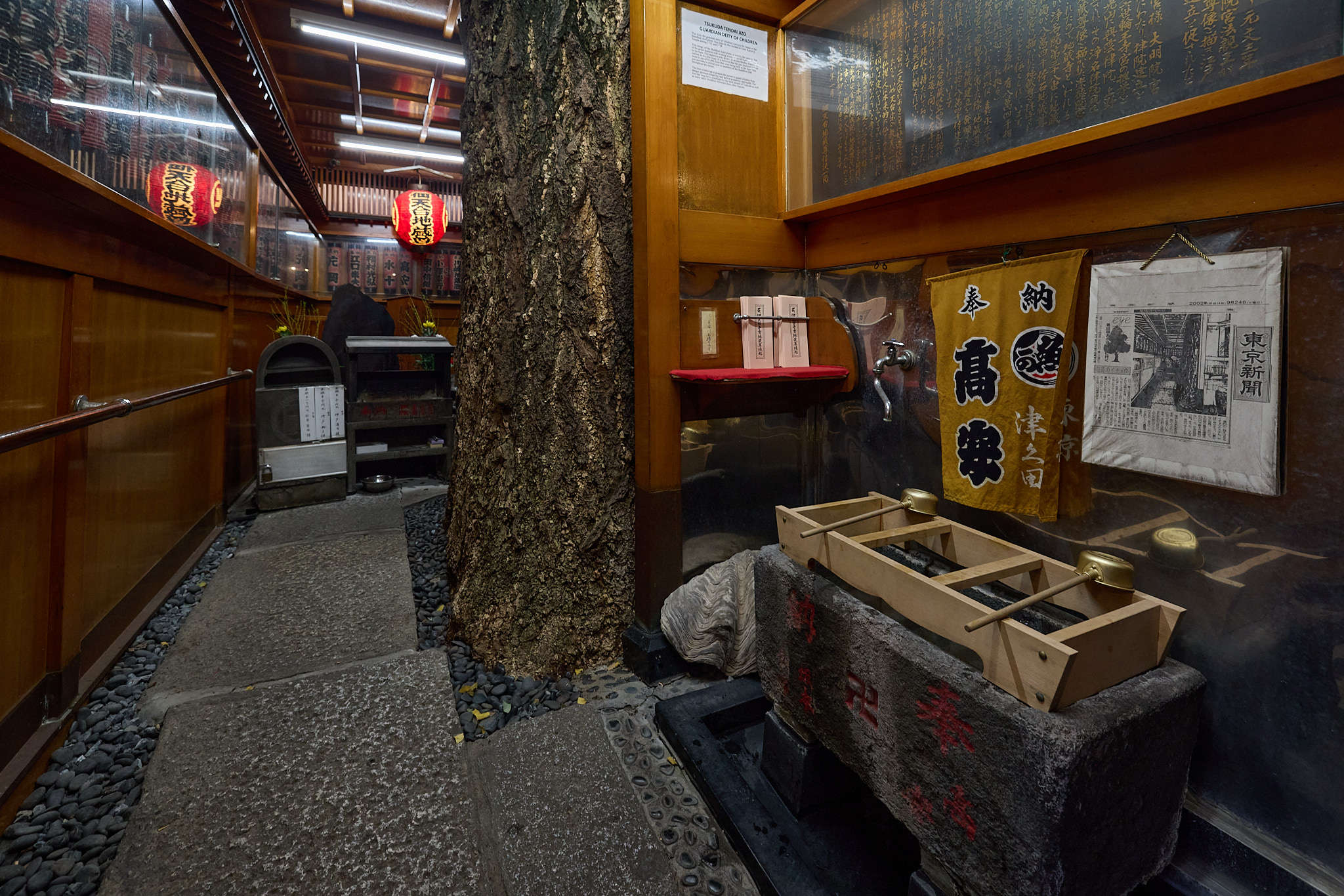
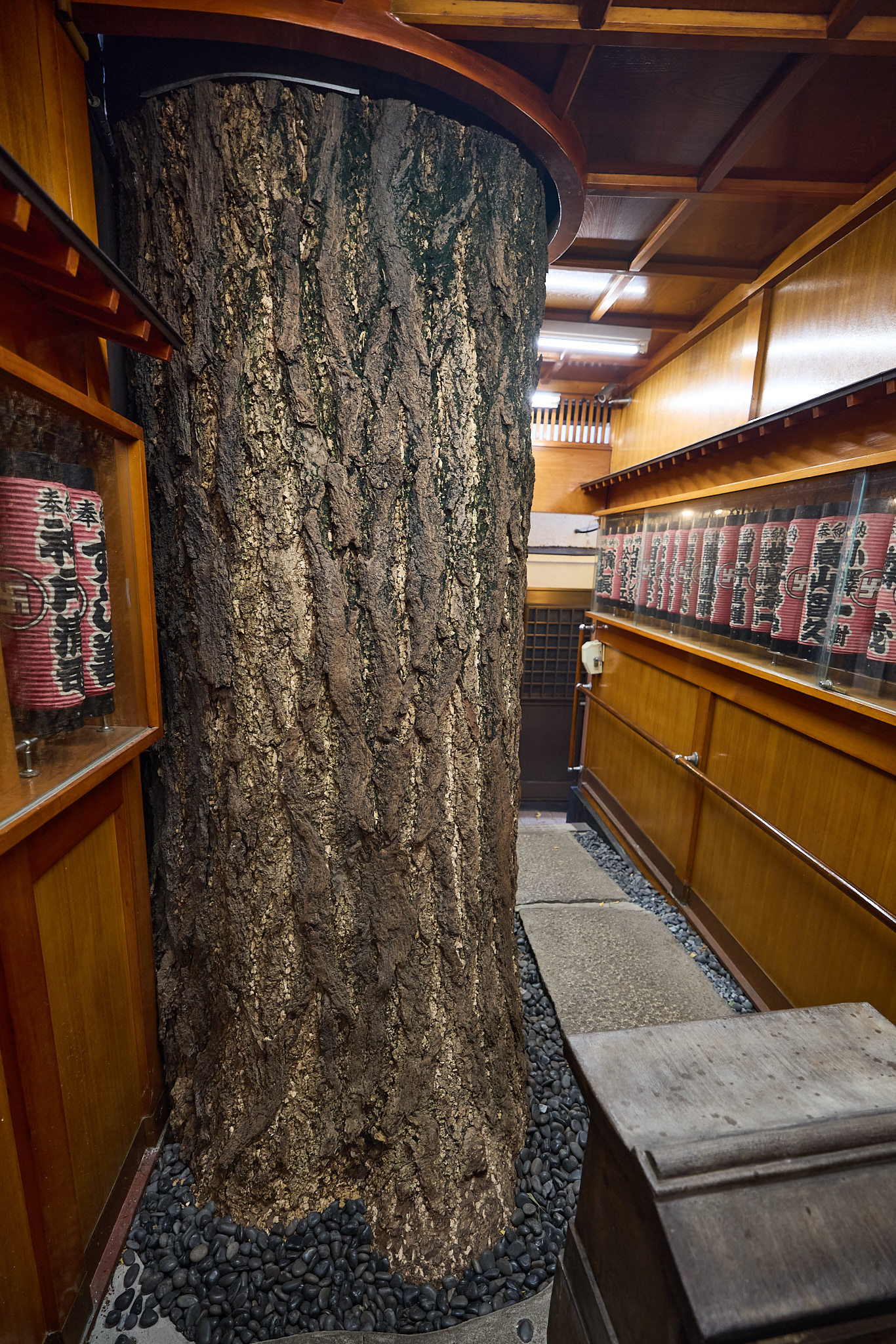
Partway along, Tsukuda Tendai Jizō-son opens off to one side. There is a stone water basin at the front, an offertory box, rows of red lanterns behind glass and, in the middle of it all, the trunk of a ginkgo.
The ceiling has been cut to fit it.
The tree
The trunk goes straight up through a round, wood-edged hole in the ceiling, barely wider than itself, and on through the roof into the open air.
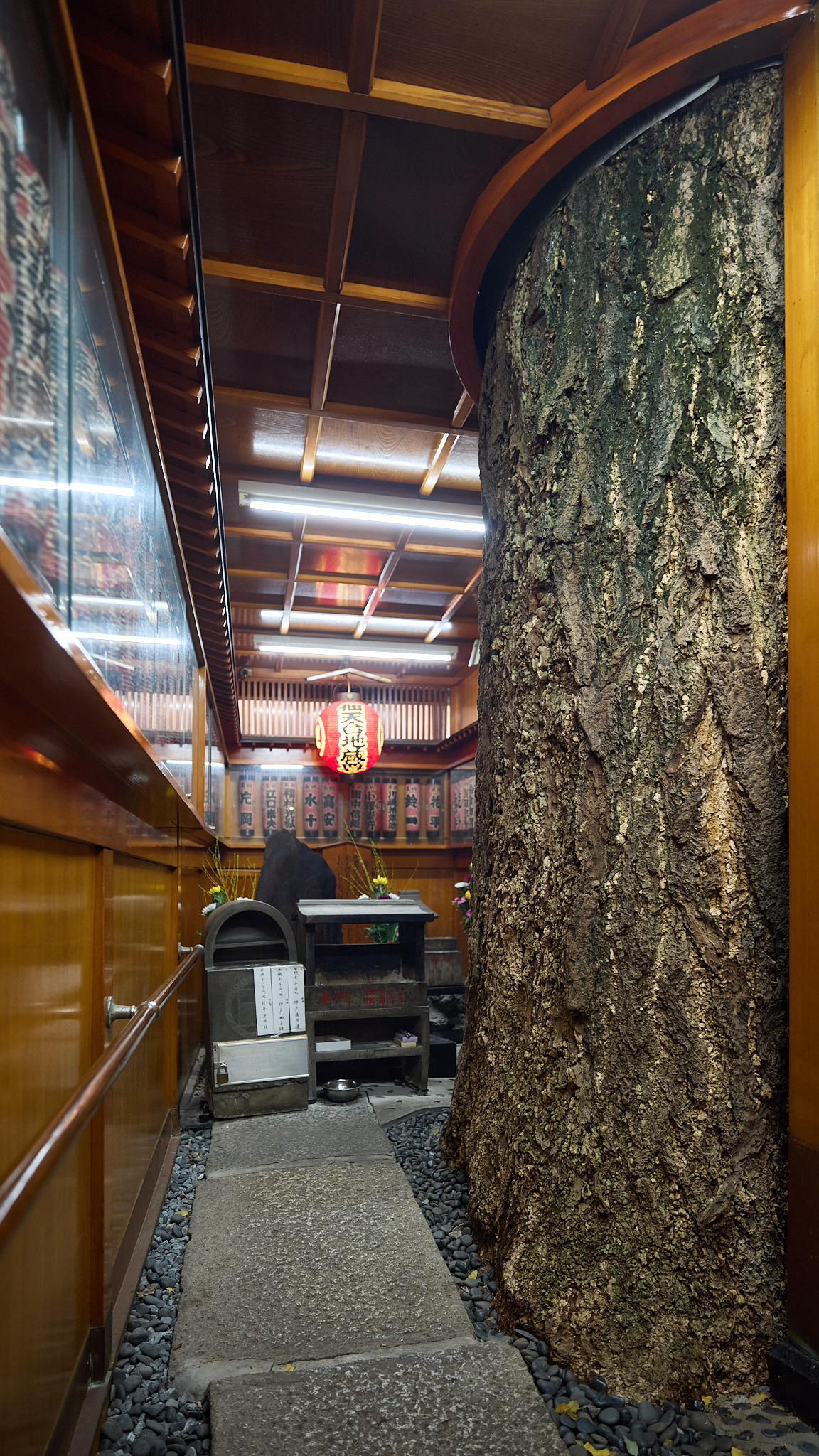
The ginkgo is said to be about four hundred years old. By one account, there was once no hall here at all, only an enclosure. When the hall came, it seems to have been built on the understanding that the tree was staying.
Eighty-four thousand
Past the trunk, at the far end of the hall, is the Jizō the shrine is named for. Jizō is a Buddhist figure who looks after children, among others. He is usually shown as a round-headed monk, and is often carved in stone.
This one is drawn. On the flat face of a rough, natural stone, fine incised lines make the monk: a round head inside a halo, rays fanning out across the stone, a ringed staff in one hand and a wish-granting jewel in the other.
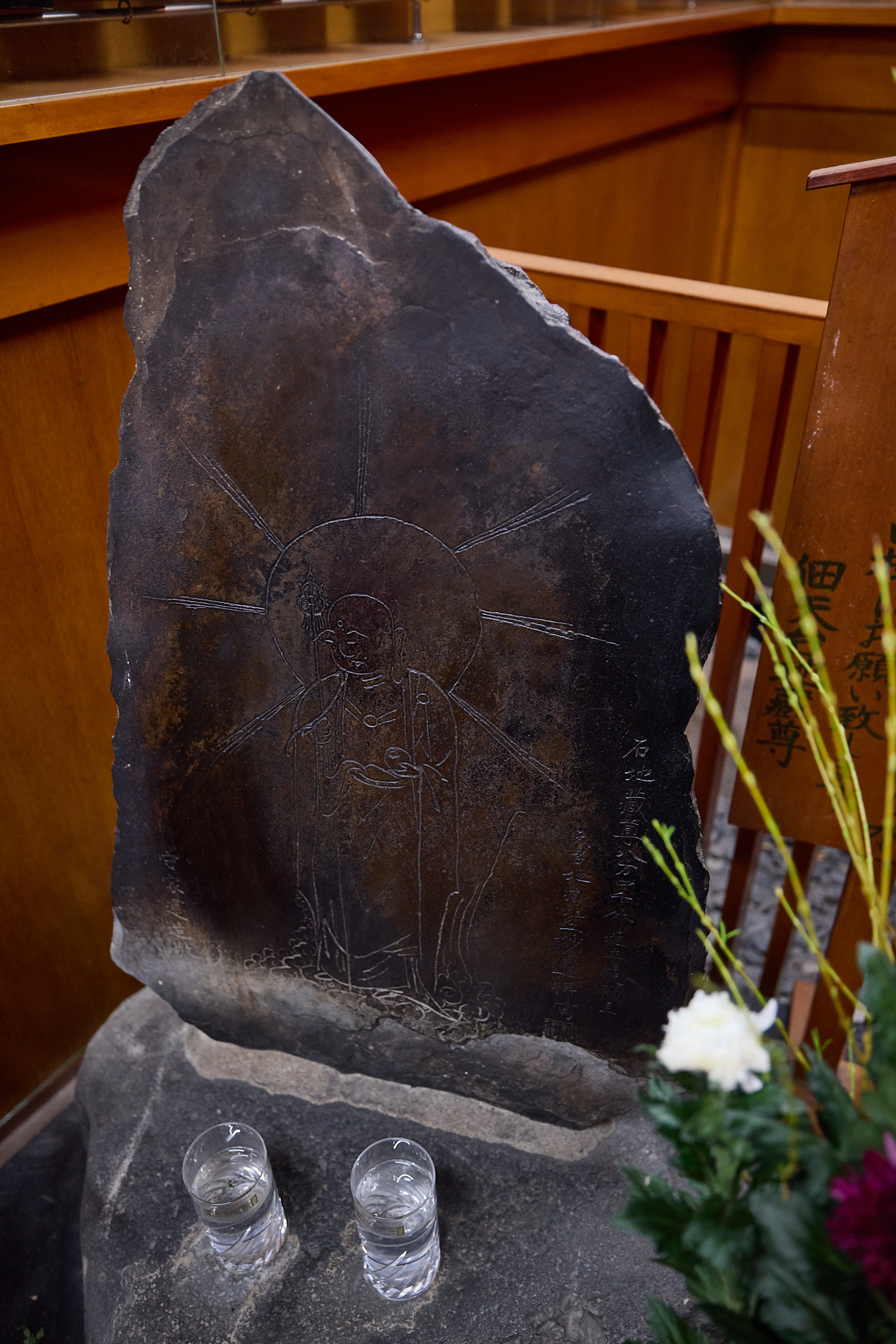
Elsewhere in Tokyo, a Jizō that worshippers strike with small stones has been worn down to something close to an outline. This one began as one. An outline does not have much to spare.
Down the right-hand edge of the stone runs an inscription. The image, it says, was copied by Myōun, the Tendai Jizō monk. The shrine has the same words, Tendai Jizō, in its name, and Tendai is the school of Buddhism Myōun belonged to. The framed history at the front of the shrine gives that as the reason for the name, then, within the same sentence, offers a different one.
The same history takes the image further back. What Myōun copied, it says, was a Jizō drawn in the eighteenth century by an imperial prince living as a monk at Kan'eiji, the great temple in Ueno.
So the story runs: a prince drew it, a monk copied it, and someone cut it into stone.
Myōun became head priest of Jōmyōin, another temple in Ueno. He had begun, it is said, with a vow to put up a thousand stone Jizō. At Jōmyōin, he raised it to eighty-four thousand. In Buddhist usage, eighty-four thousand is a way of saying countless.
The temple has been counting anyway.
By its latest published figures, it is past halfway, with Jizō in its own grounds and across Japan. This stone is believed to be one of them.
The island
Tsukuda was once an island of its own. In the 1640s, fishermen from Tsukuda, a village near Osaka, were granted tidal flats near the mouth of the Sumida River, in Edo, as Tokyo was then called. They built the flats up into an island and named it after home. It was small enough to walk across in a few minutes, with water on every side.
A ferry ran across the river for more than three centuries. It stopped only in 1964, when a bridge took over.
I had walked over from Tsukishima Station. Tsukishima is reclaimed land too, but more than two centuries younger.
Requests
The Jizō is asked for a good deal more than help with children: long life, a safe household and wishes in general. In 2021, NHK's Document 72 Hours, a television series that films one spot for seventy-two hours and talks to whoever turns up, chose the spot in front of this Jizō.
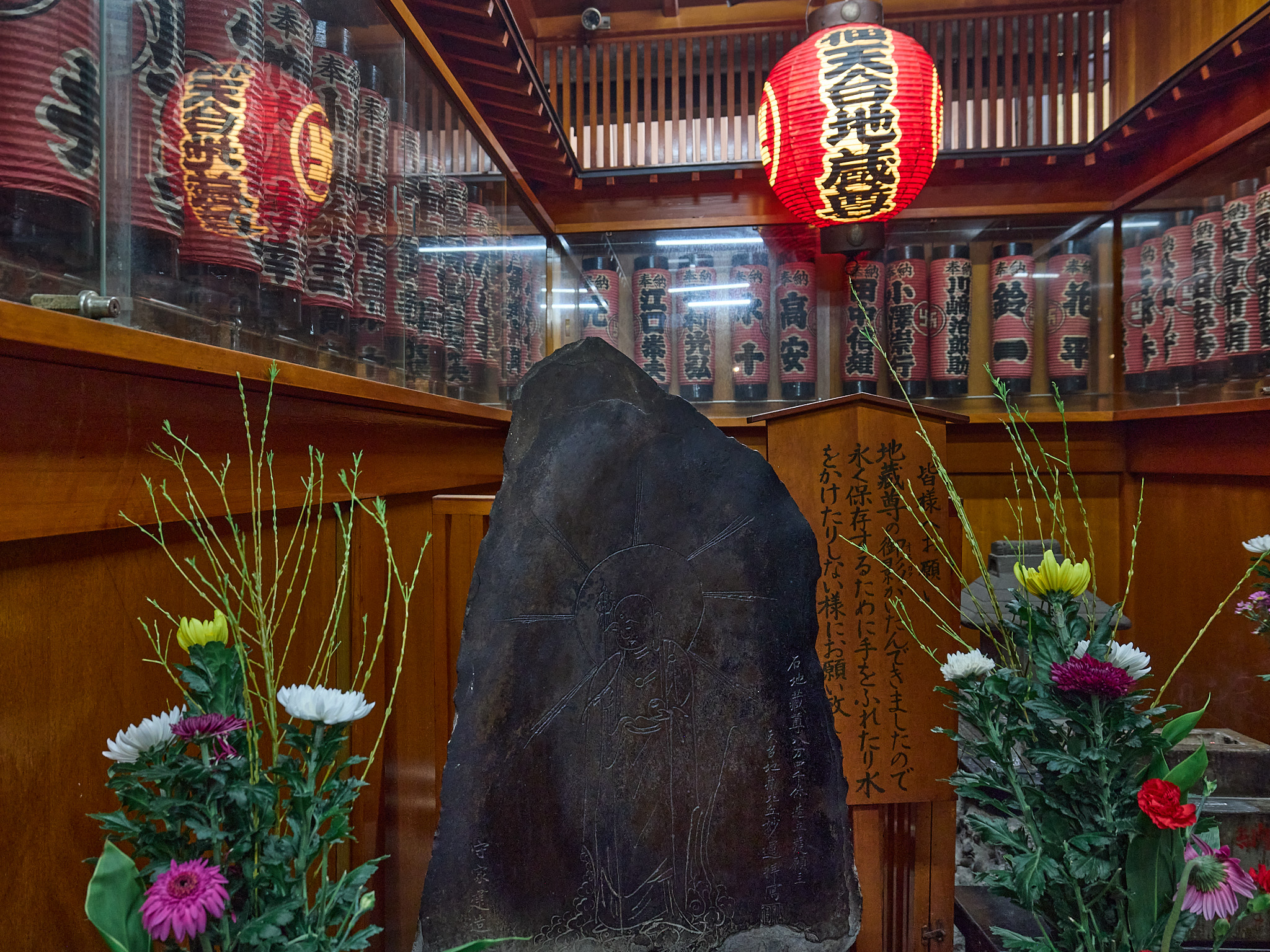
I put a coin in the box and bowed. Behind the stone stands a small wooden board addressed to everyone. The image on the stone has begun to deteriorate, the board says, and so that it can be kept for a long time, visitors are asked not to touch it.
The Jizō was put here, the story goes, to keep the island's children safe from all that water.
The board also asks you to keep the water off the Jizō.
Visit this place
Location
Tsukuda Tendai Jizō-son (佃天台地蔵尊)
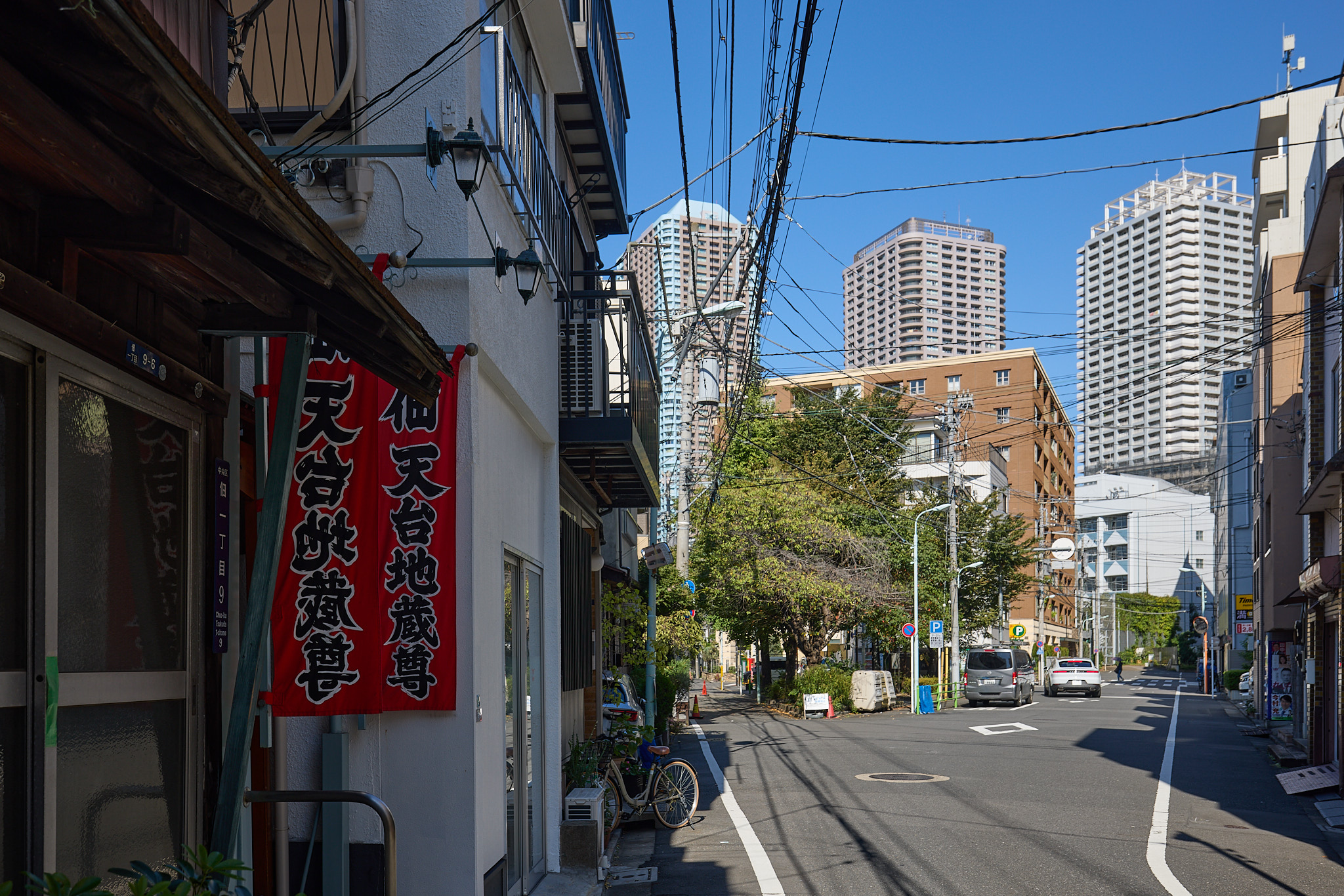
Partway along a narrow passage between houses off a side street in Tsukuda, a few minutes on foot from Tsukishima Station. Red banners mark the entrance on the street.
1-9-6 Tsukuda, Chūō City, Tokyo 104-0051, Japan
Practical information
- Area
- Tsukuda, Chūō City, Tokyo
- Access
- About 3 minutes on foot from Exit 6 of Tsukishima Station (Tokyo Metro Yurakucho Line, Toei Oedo Line). The shrine is partway along a narrow passage off the street, with red banners at the entrance.
- Admission
- Free
- Visitor note
- The passage is shared with private homes. Keep your voice down, keep your visit short and do not block the doorways. A sign behind the stone asks visitors not to touch the image or pour water over it.
Information last checked: November 6, 2026 (location, access from Tsukishima Station and admission).
Conversation
Comments
Review pending commentsComments are reviewed before appearing. The internet already contains enough unattended surprises.
Checking comments…
Comments are not available in this migration preview yet. Existing comments remain on the current site.
Leave a comment