Jōganji: The Tree That Watched Yoritomo Leave
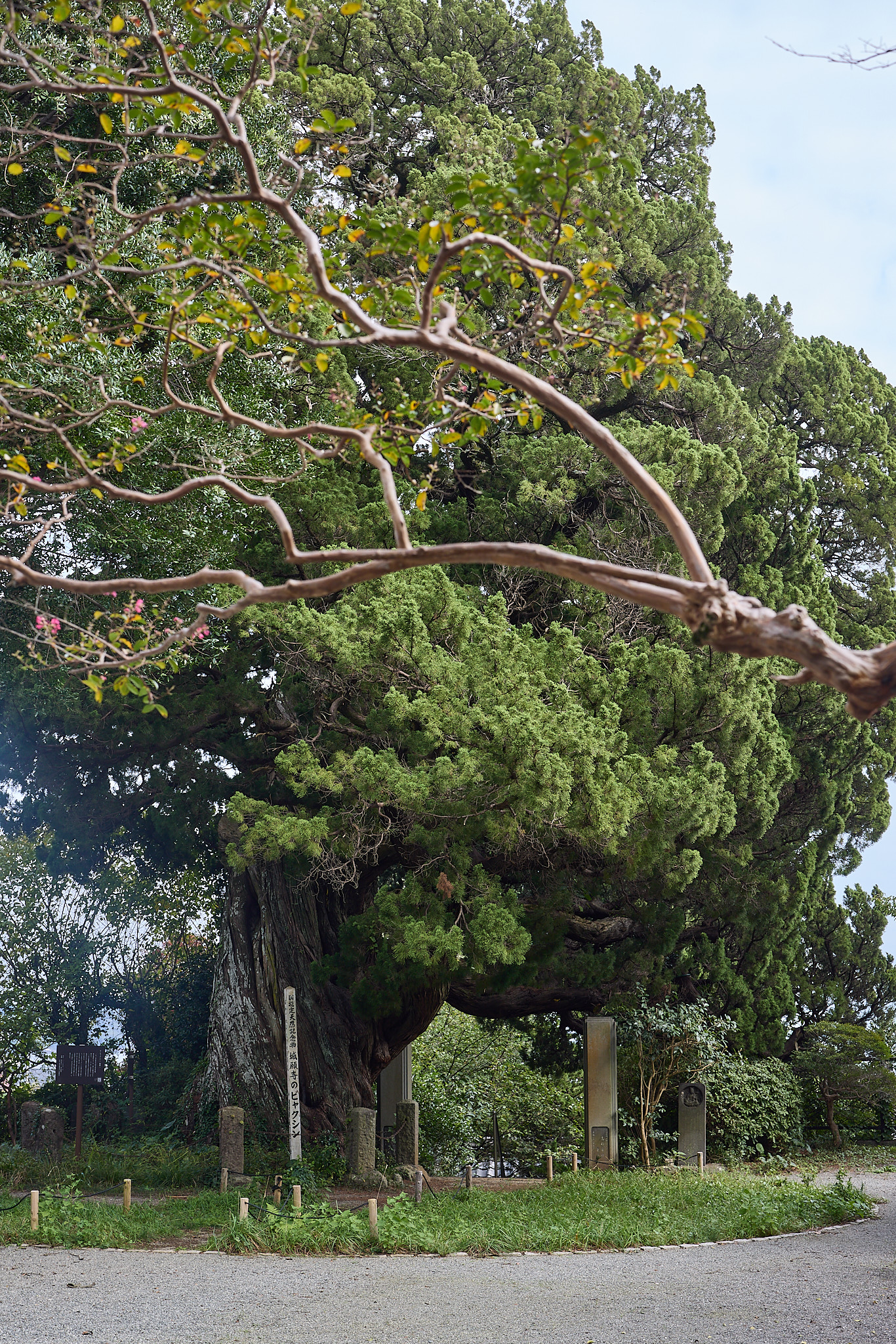
In 1180, a juniper on a hillside watched Minamoto no Yoritomo ride out to war.
So says the sign in front of it, at Jōganji, a temple in the hot-spring town of Yugawara, in the southwest corner of Kanagawa Prefecture.
Yoritomo would go on to found Japan's first military government, the shogunate, in Kamakura. That year, though, he was in his early thirties and had spent twenty years in exile, sent away as a boy after his father was defeated by the Taira, the clan then running the country. Now he had risen against them. The local lord, Doi Sanehira, had come out on his side.
The same sign, put up in 2023, gives the tree's estimated age as 850 years.
That would make the witness about seven.
The way in
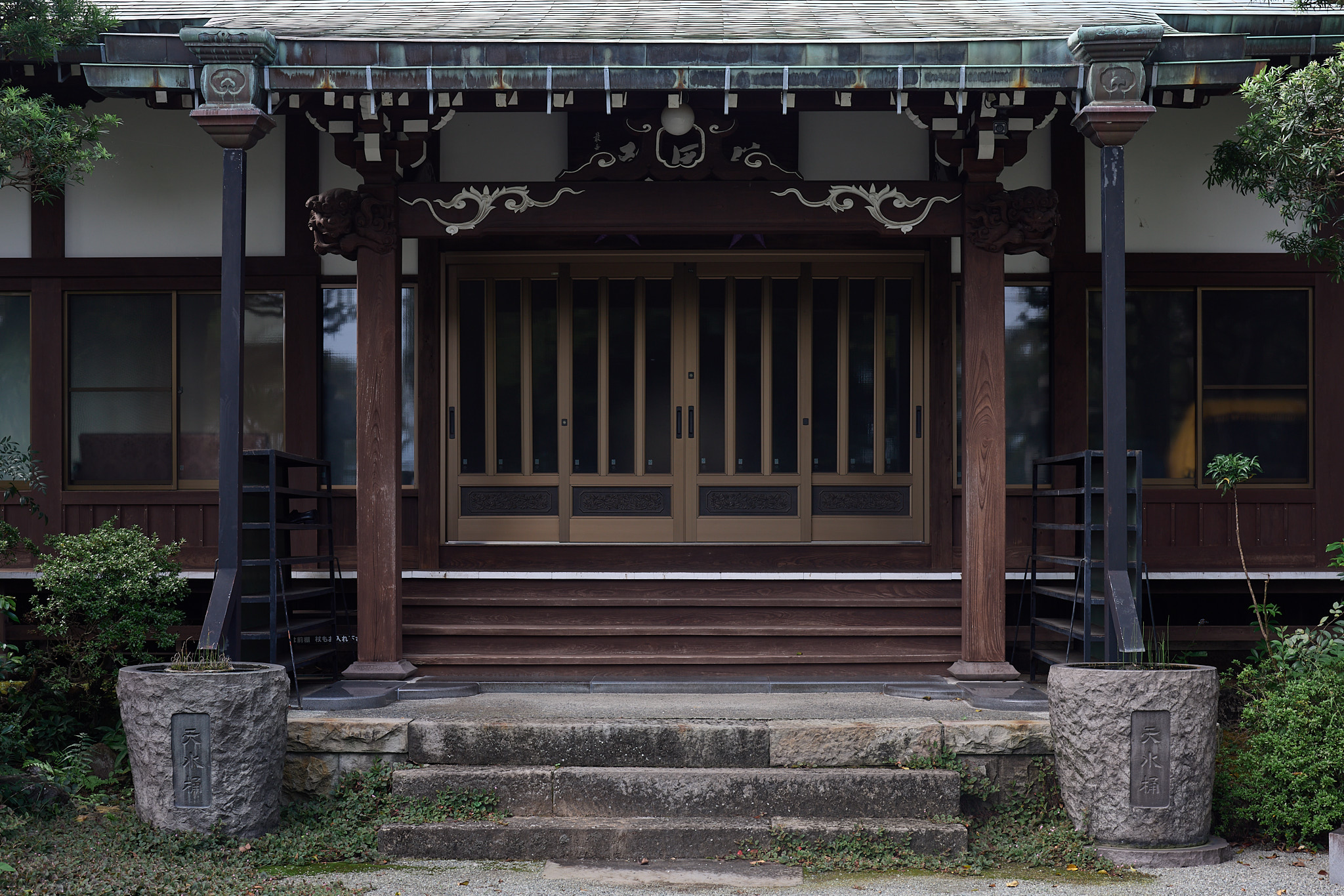
Jōganji is a short walk from Yugawara Station, and the last part is a steep climb. The temple traces its beginnings to a small private chapel that Sanehira kept behind his house.
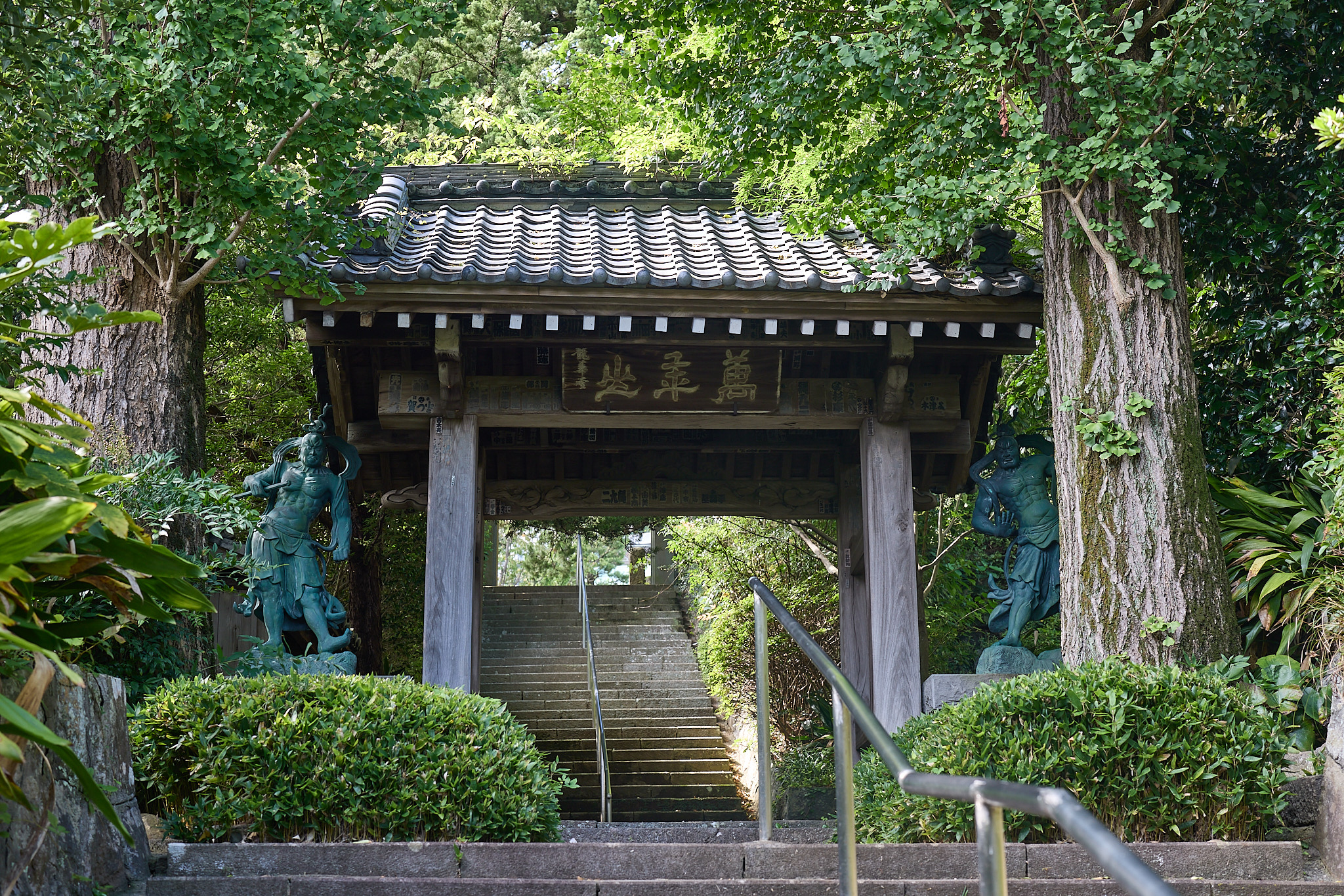
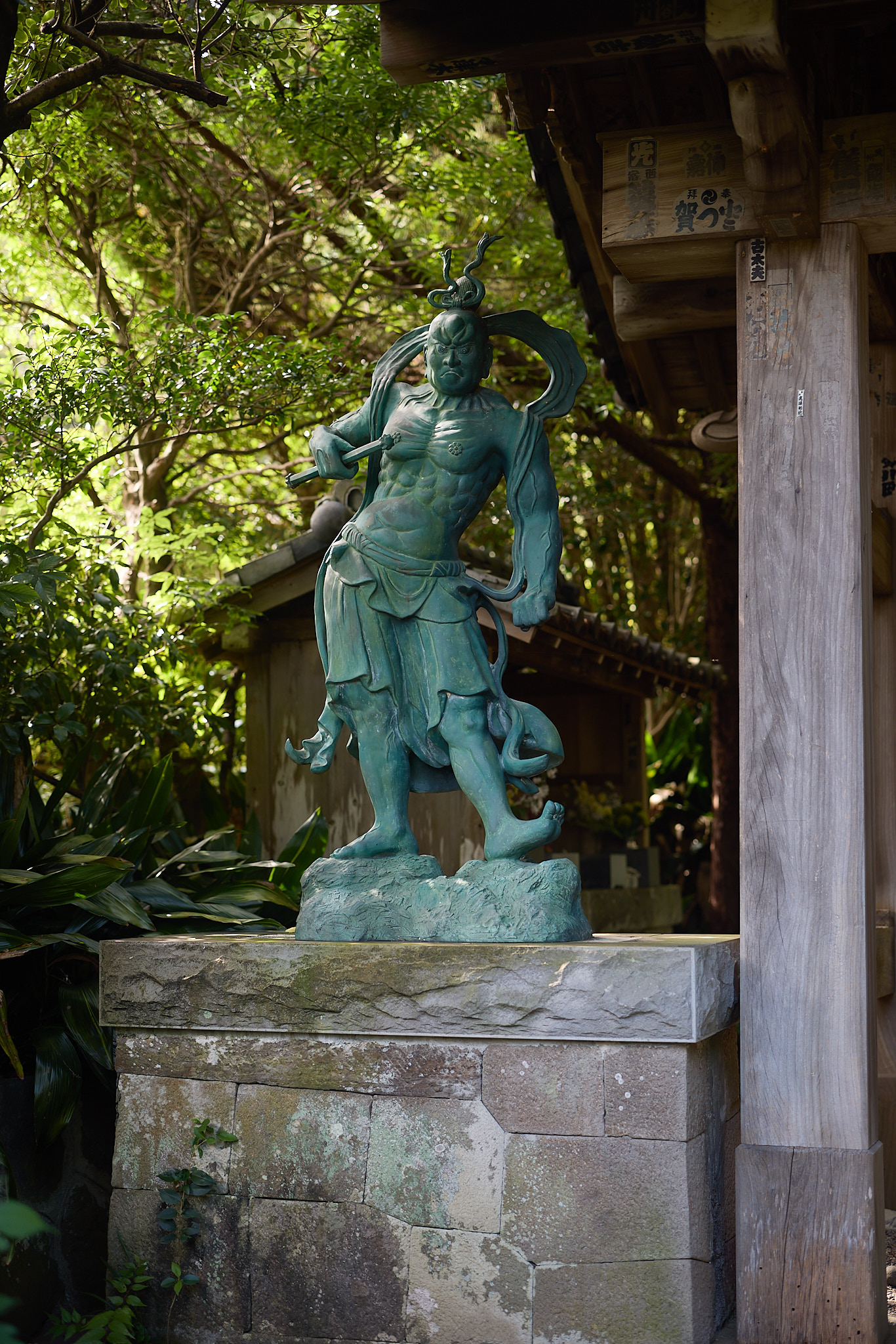
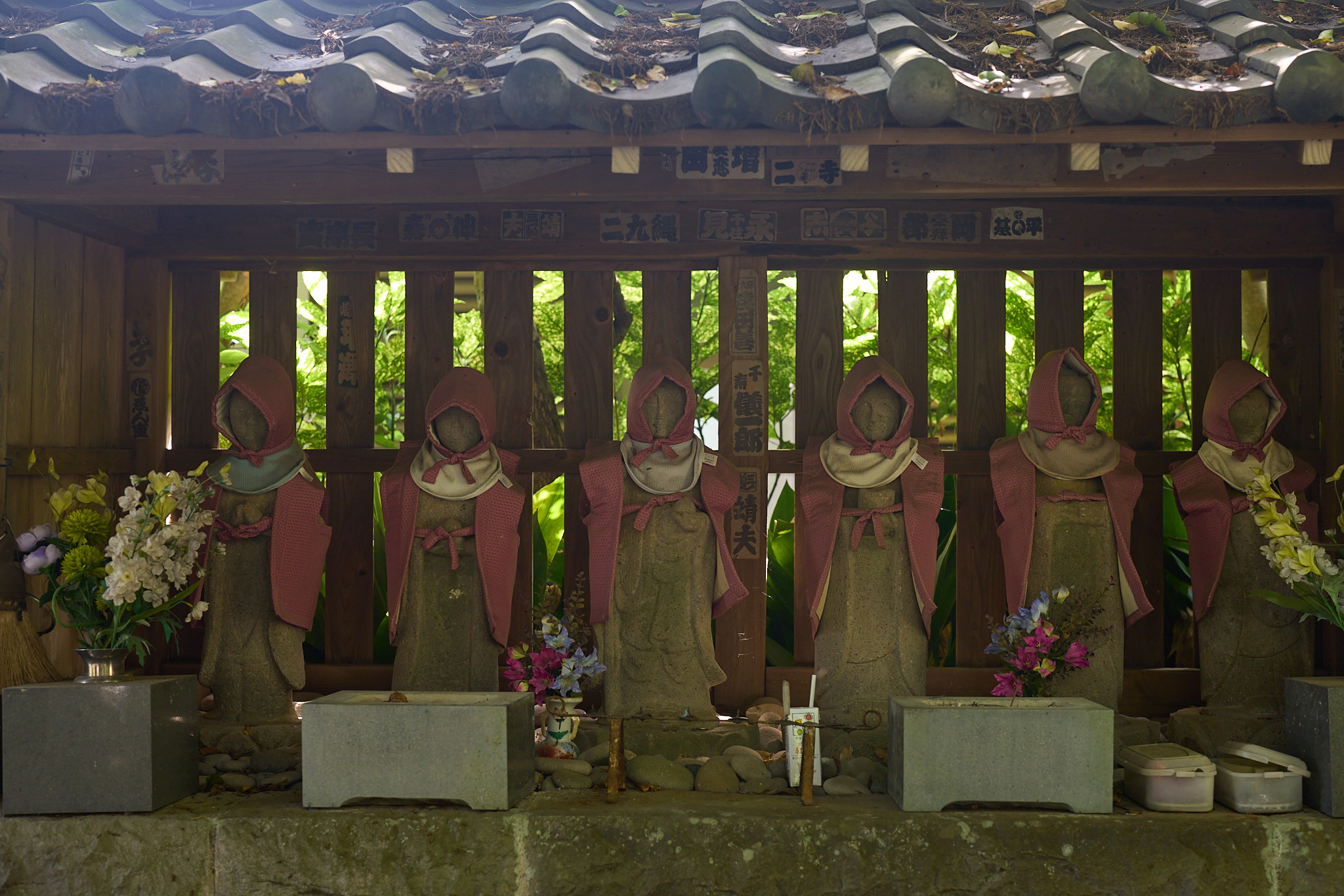
At the top of the steps, just to the right, is the tree. It is a byakushin, a Chinese juniper, and a national natural monument. The story goes that Sanehira planted it himself.
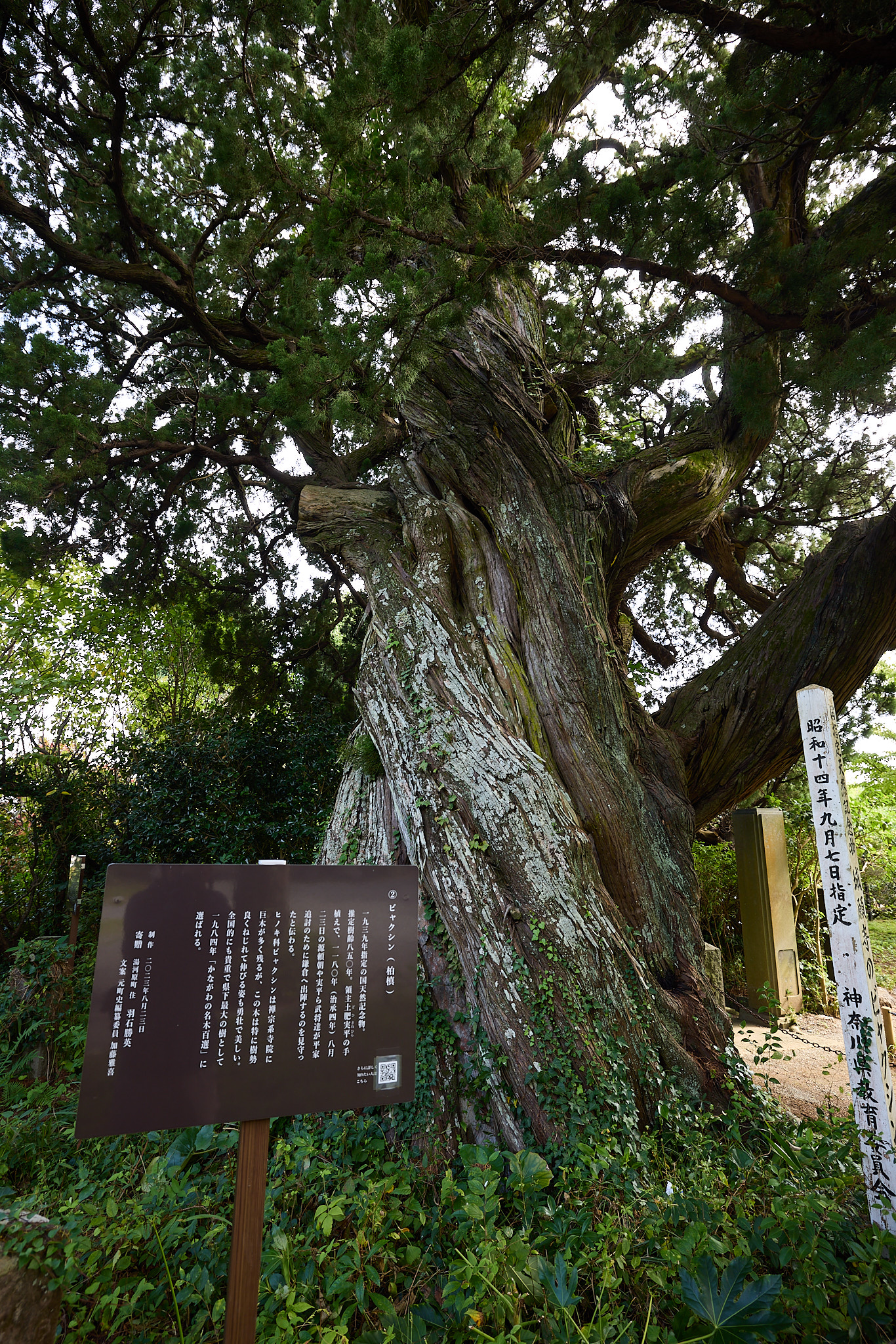
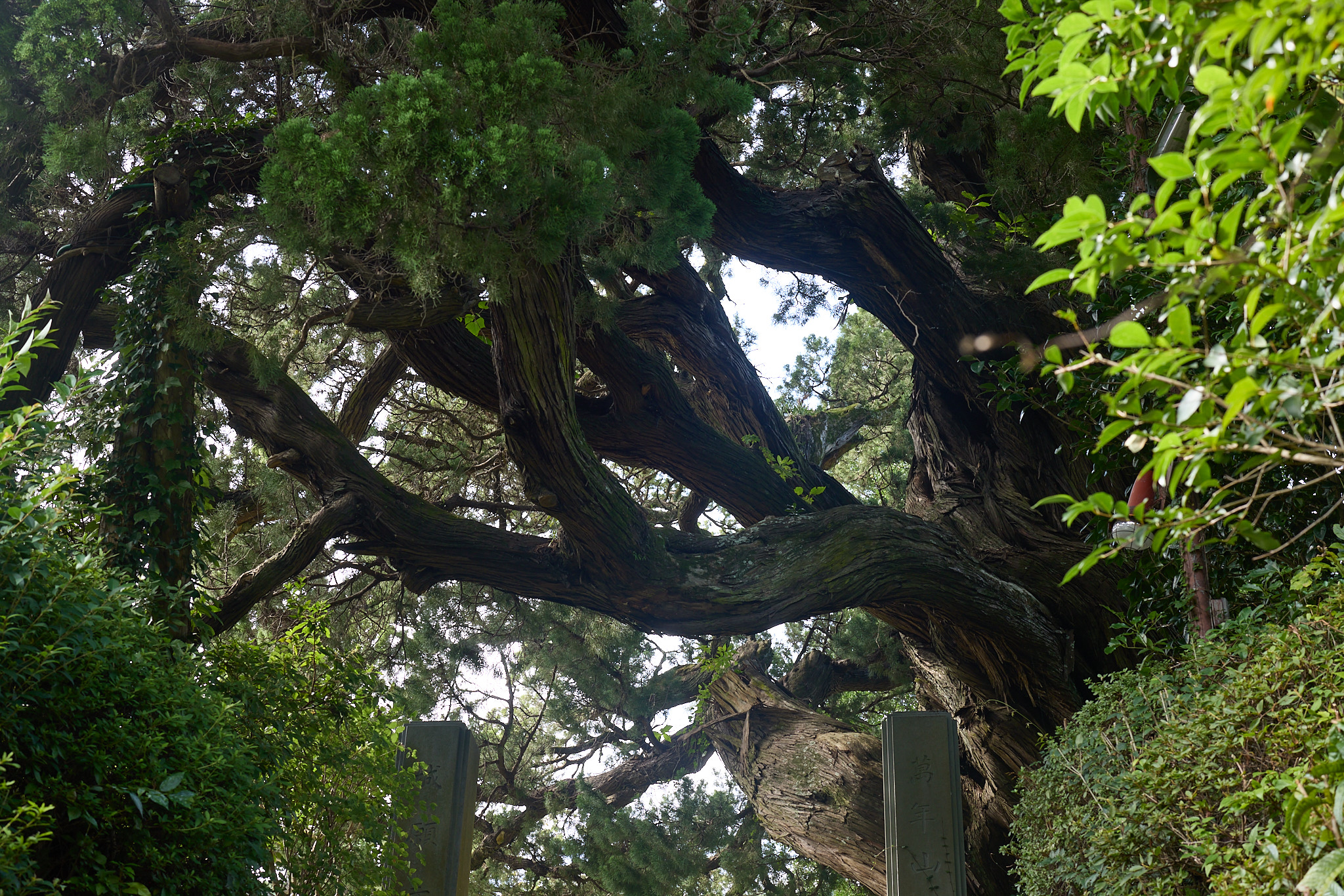
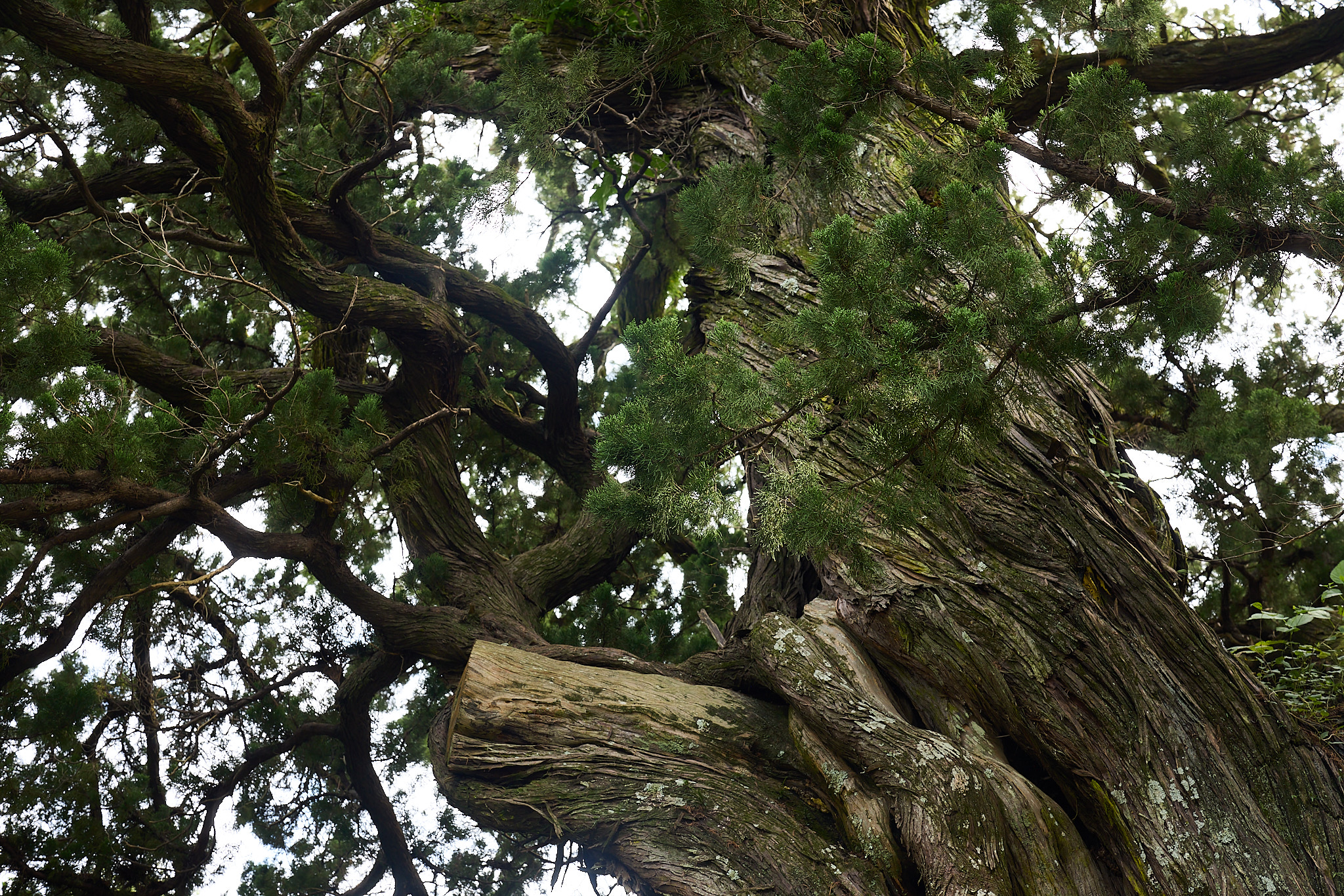
It does not so much grow as wander. The trunk twists as it climbs, then splits into limbs that head off sideways, until it is hard to say where the trunk stops.
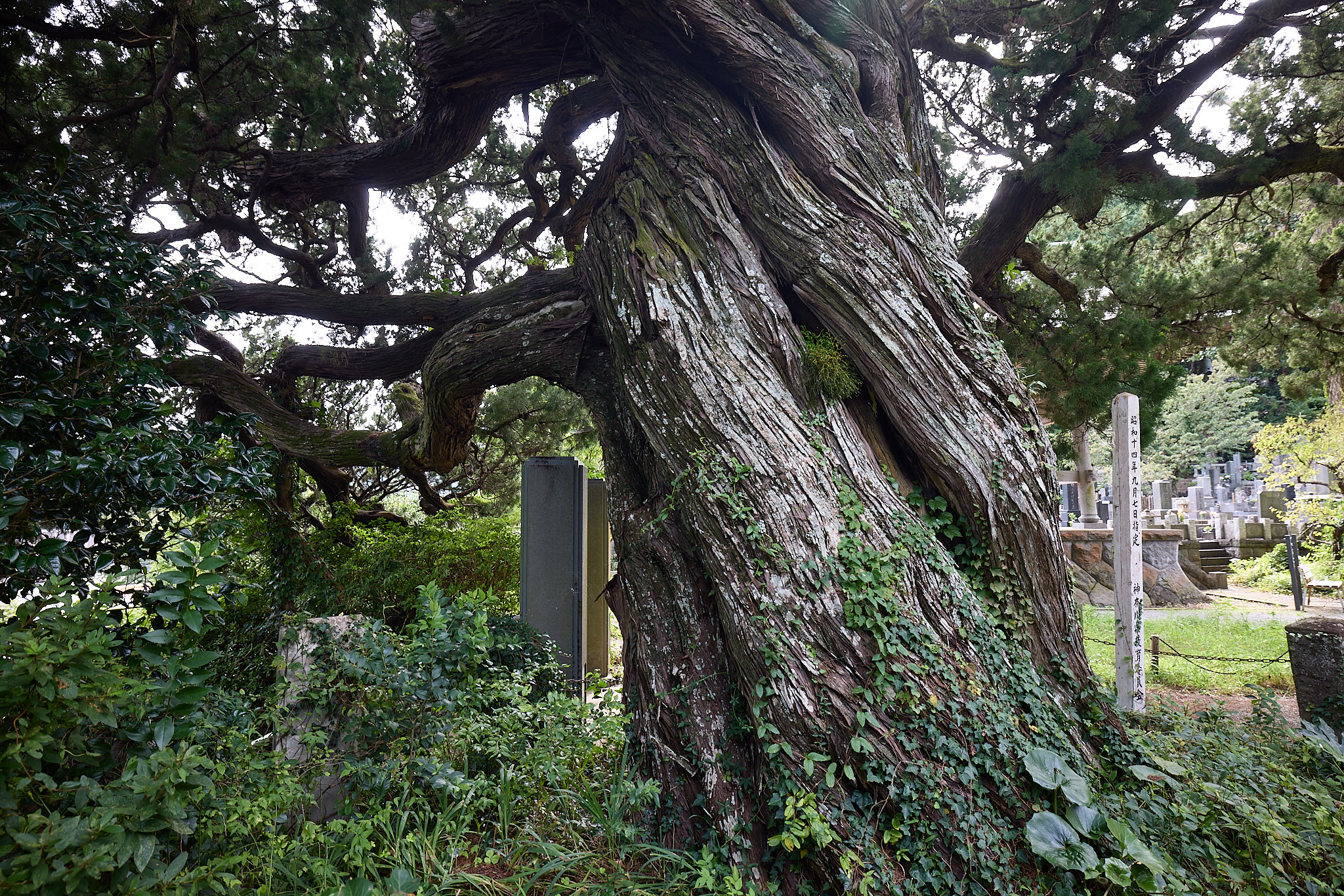
Not every estimate of its age agrees with the sign. Some go as high as 900 years, which would have made for a more seasoned witness.
Smoke
Within a week of rising, Yoritomo was beaten at Ishibashiyama, a few miles up the coast. Sanehira led him into the hills of his own domain to hide. A cave there is said to have been one of their hiding places.
From up there, the story goes, Sanehira could see smoke. A lord on the Taira side had set fire to his house.
Sanehira's answer was to dance, to keep Yoritomo's spirits up.
The dance is known as Jōmō no Mai, roughly "the dance of the burning". Every April, on the day a procession in armour makes its way through the town, it is performed at Jōganji. The version danced today was reconstructed in 1967, modelled on an old dance at Chūsonji, a temple in the far north. Chūsonji's great patrons, the northern Fujiwara, were later wiped out by Yoritomo, with Sanehira in his army.
Seven, from eight
A few days later, Sanehira got Yoritomo away by sea. They set out in a fishing boat from Manazuru, the next town along the coast, and crossed to the Bōsō Peninsula on the far side of the bay. Tradition puts seven of them aboard, and the escape is remembered as Shichiki-ochi, the flight of the seven riders.
On the other side, Yoritomo raised a new and far larger army. Less than two months later, he was in Kamakura.
In the noh play about the escape, there are eight, and the play makes eight an unlucky number for Yoritomo's family, the Minamoto: his grandfather and his father had each fled a lost battle with eight riders. So Sanehira leaves one man on the shore. He chooses his own son, Tōhira.
The play ends well. Tōhira is found by Wada Yoshimori, a warrior on his way to join Yoritomo, and brought back to them. There is a celebration, and here too, Sanehira dances.
Shichikidō, the Hall of the Seven Riders, houses statues of the seven, made in the 1950s.
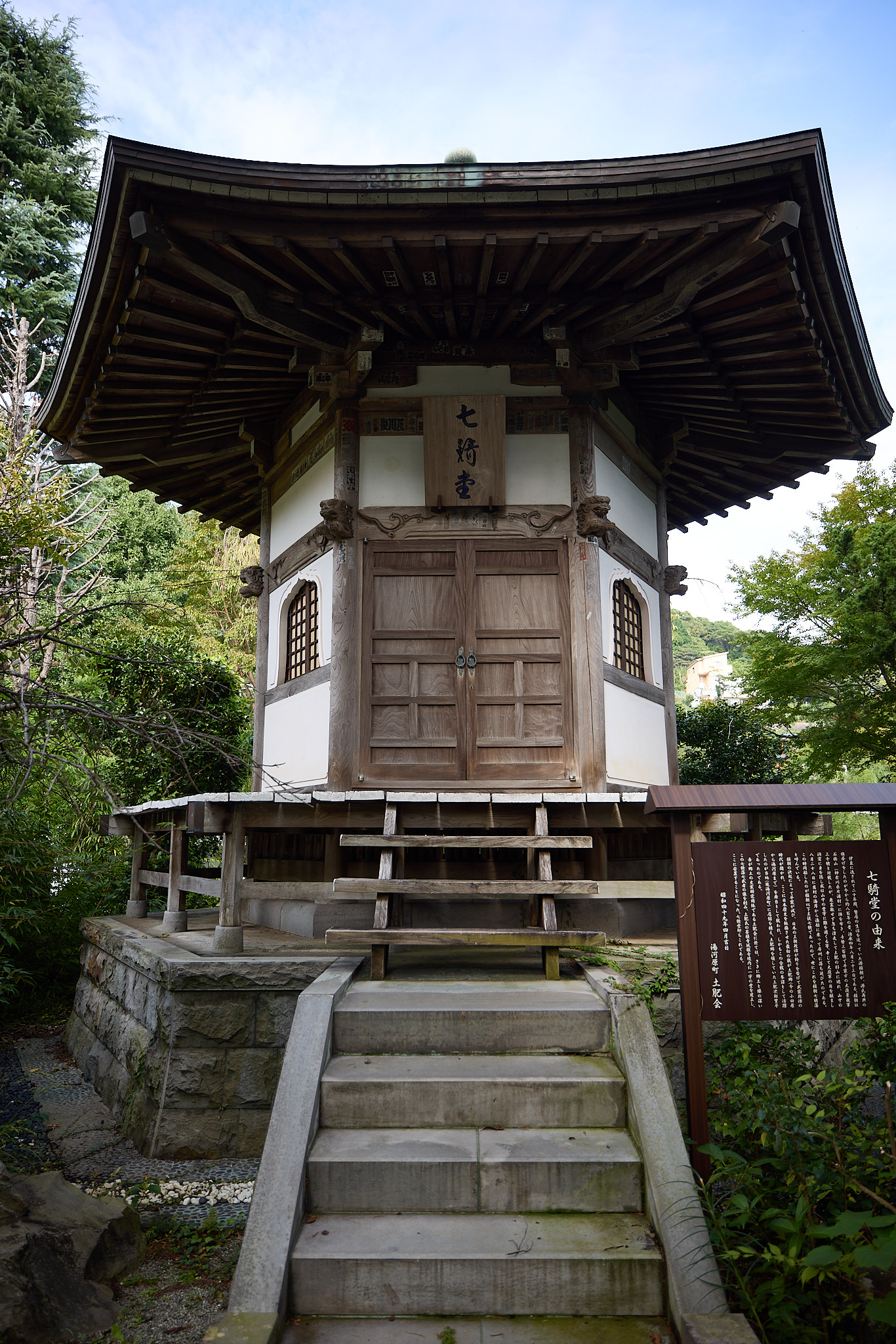
The temple keeps an older pair as well: seated wooden figures of Sanehira and Tōhira, carved several centuries ago. The father wears court dress and a sword; the son, the robes of a monk. These two, at least, are kept together.
Two boards
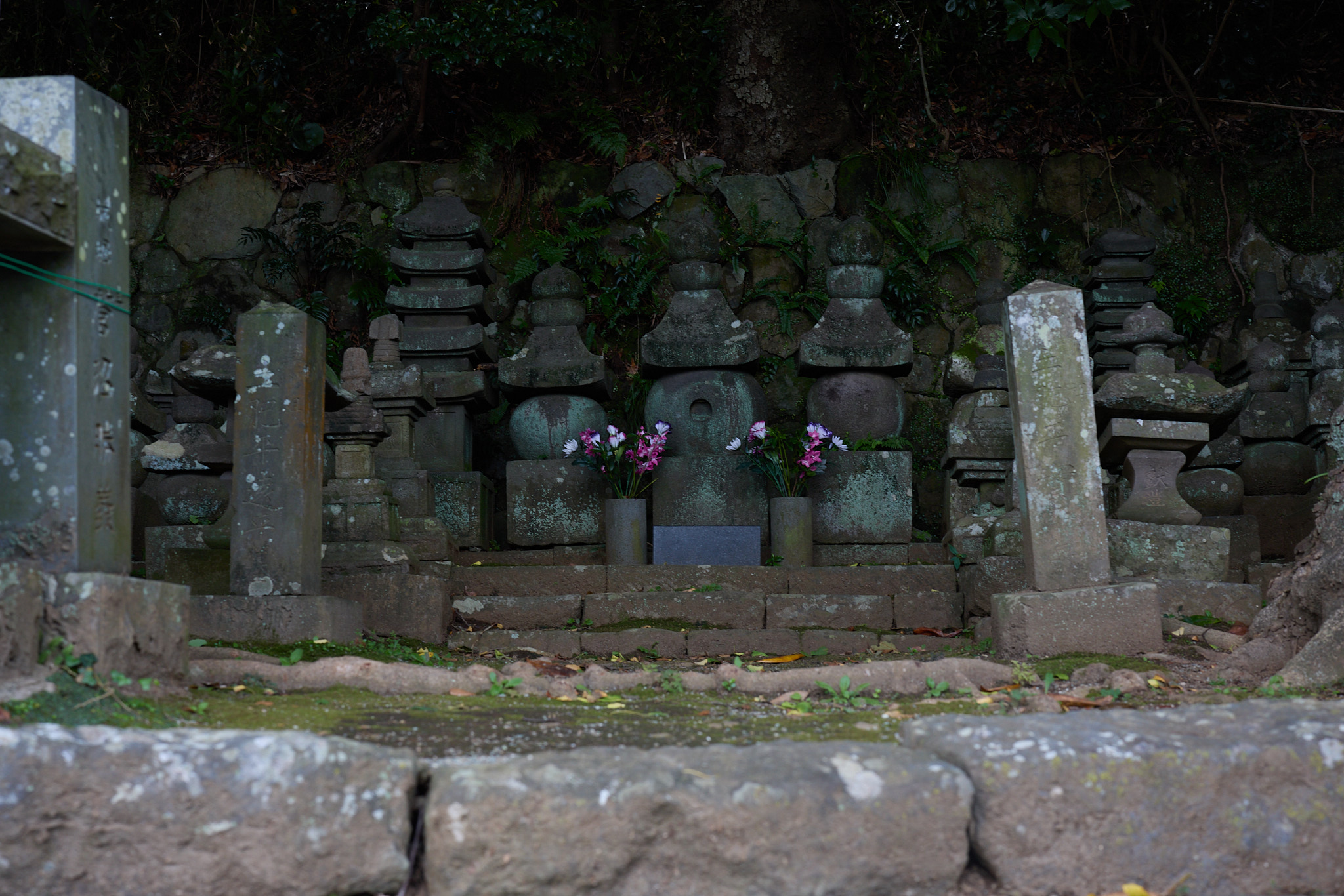
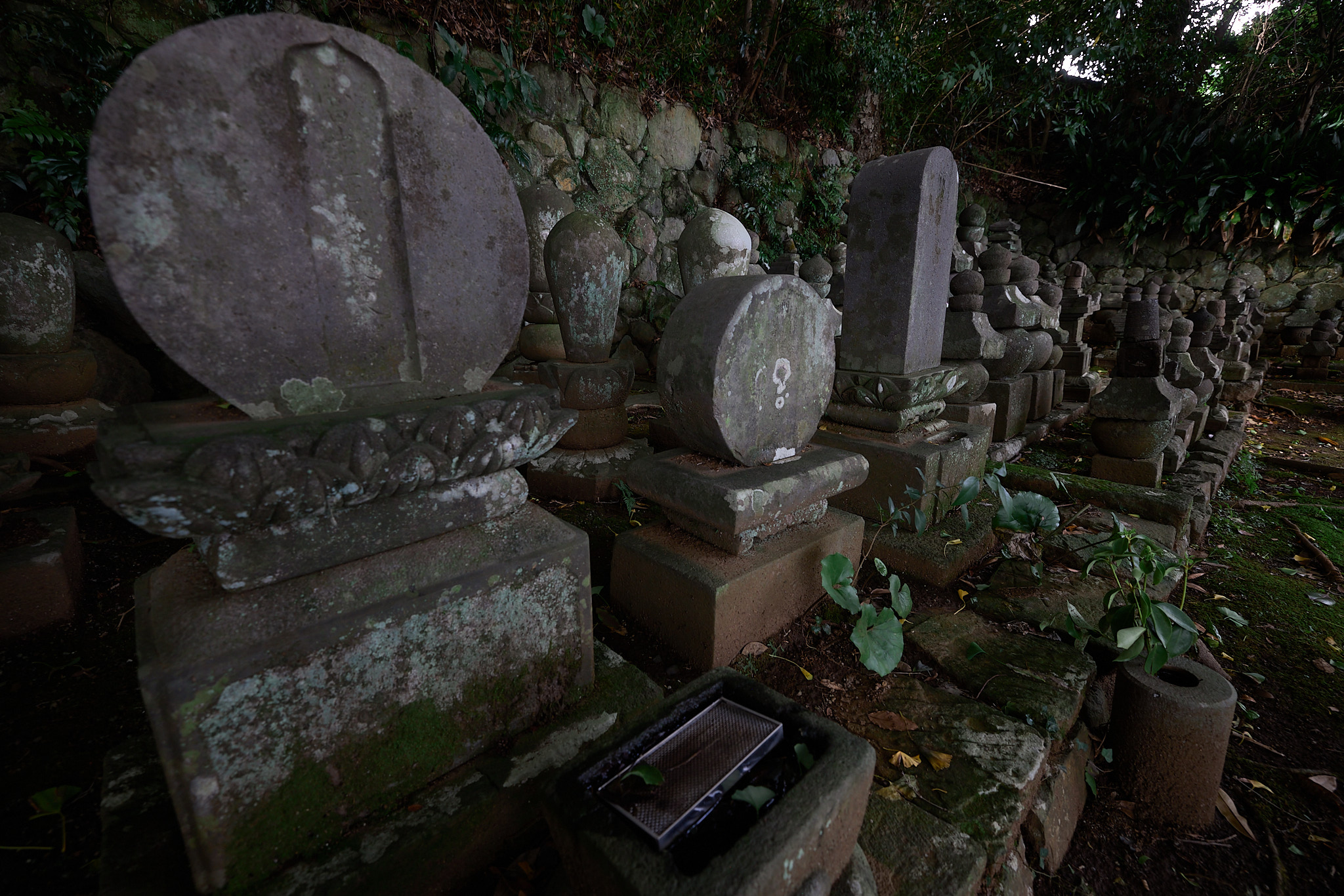
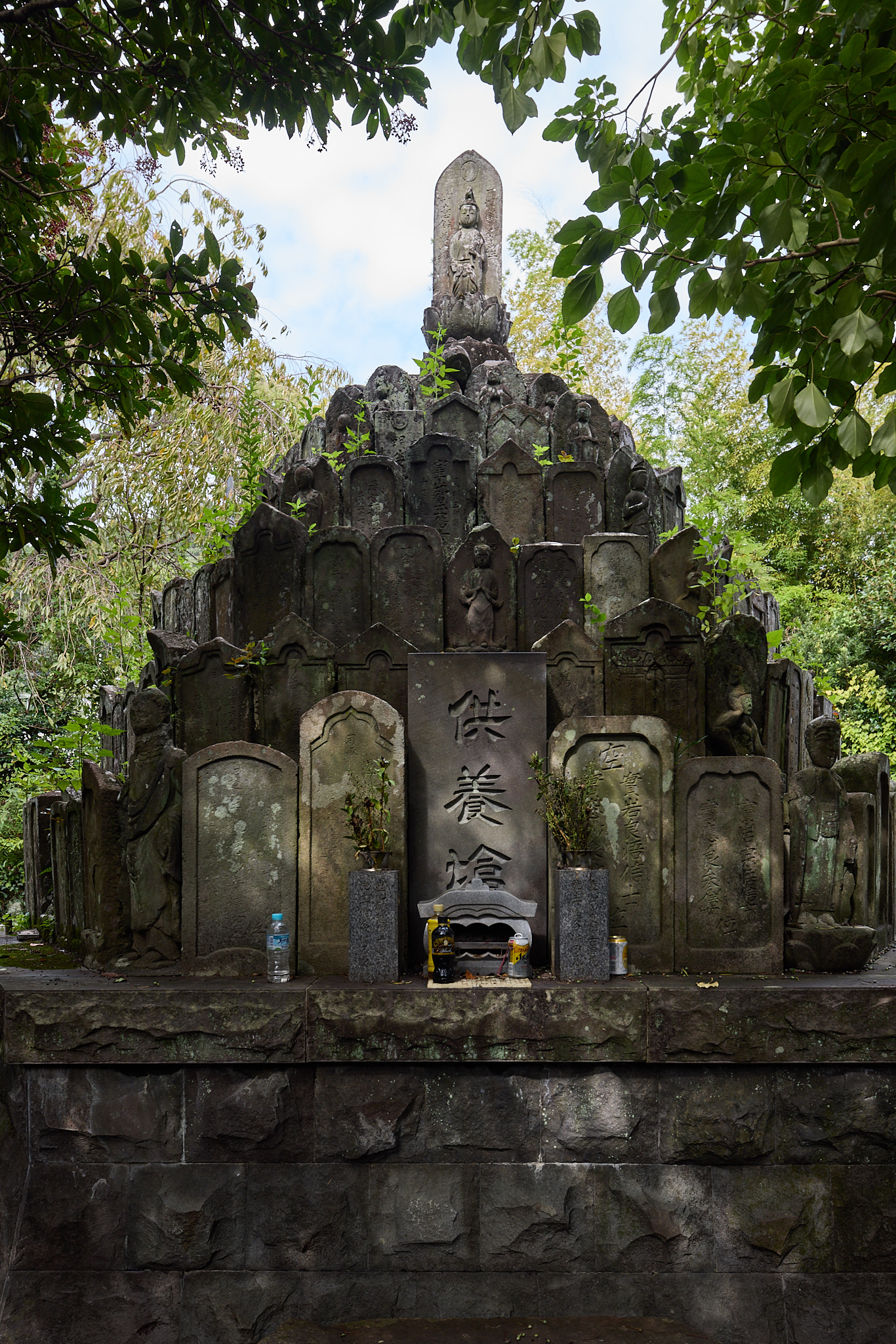
The Doi family graveyard lies against a wall of mossy stone. Sixty-six stone towers stand in it, in many shapes and from many periods, a mixture rarely found in one place in this part of Japan.
None of the four towers at the front is inscribed. Tradition has assigned them anyway: Sanehira in the middle, his wife on one side, Tōhira and his wife on the other.
Two boards stand by the graves.
The town's follows Sanehira through Yoritomo's wars, as far as the campaign in the north. After that, it says, nothing is certain.
The other was put up by the Doi-kai, a local society that honours the family, and it is much better informed, or at least has more to say. Sanehira, it says, moved to an estate in what is now Hiroshima Prefecture and died there. His remains, it is said, were divided. Some were buried at Beisanji, a temple near the estate. The rest went to Kamakura for an audience with Yoritomo, and only then came here to be buried.
The board goes on to list Sanehira's graves: here, at Beisanji, in Yamagata, in Shizuoka and in Odawara, "and elsewhere".
The town's board cannot say what became of him. The other gives him at least five graves.
Visitors
People have been calling at Jōganji for a long time.
In 1375, Gidō Shūshin, one of the great Zen monks of his day, stopped here on his way back from Atami, the hot-spring town just down the coast. According to the temple, which tells the story from his diary, the priest was out, and two boy monks looked after him. Gidō burned incense and bowed three times before a memorial tower, long since lost, then had tea with the temple's chief patron, a Doi: first at the temple, and then, at the patron's house, more tea.
A little over two centuries ago, a survey team stopped by to pay its respects at the Doi graves. A stone post beside them calls it Inō Tadataka's survey team, after the man who mapped the coasts of Japan, though Inō himself was not on that trip. In their diary, the surveyors wrote down Sanehira's date of death, his age and his Buddhist name, which is more than the town's board is prepared to do. Two centuries later, a member of the committee compiling the town's history came across the entry.
Visitors still leave things behind.
There is also a photo frame, with an empty window in the middle. Its heading calls the tree Yugawara's Power Spot II, the second of three in the town. The panel at the bottom tells the story again. The tree watched the warriors ride out, watched the seven escape to the Bōsō Peninsula and watched the temple recover from a period of ruin: a witness to history. It is said, the panel adds, to give out "Byakushin Power": trust, friendship and on'gi, the debt you owe someone who has done you a great kindness.
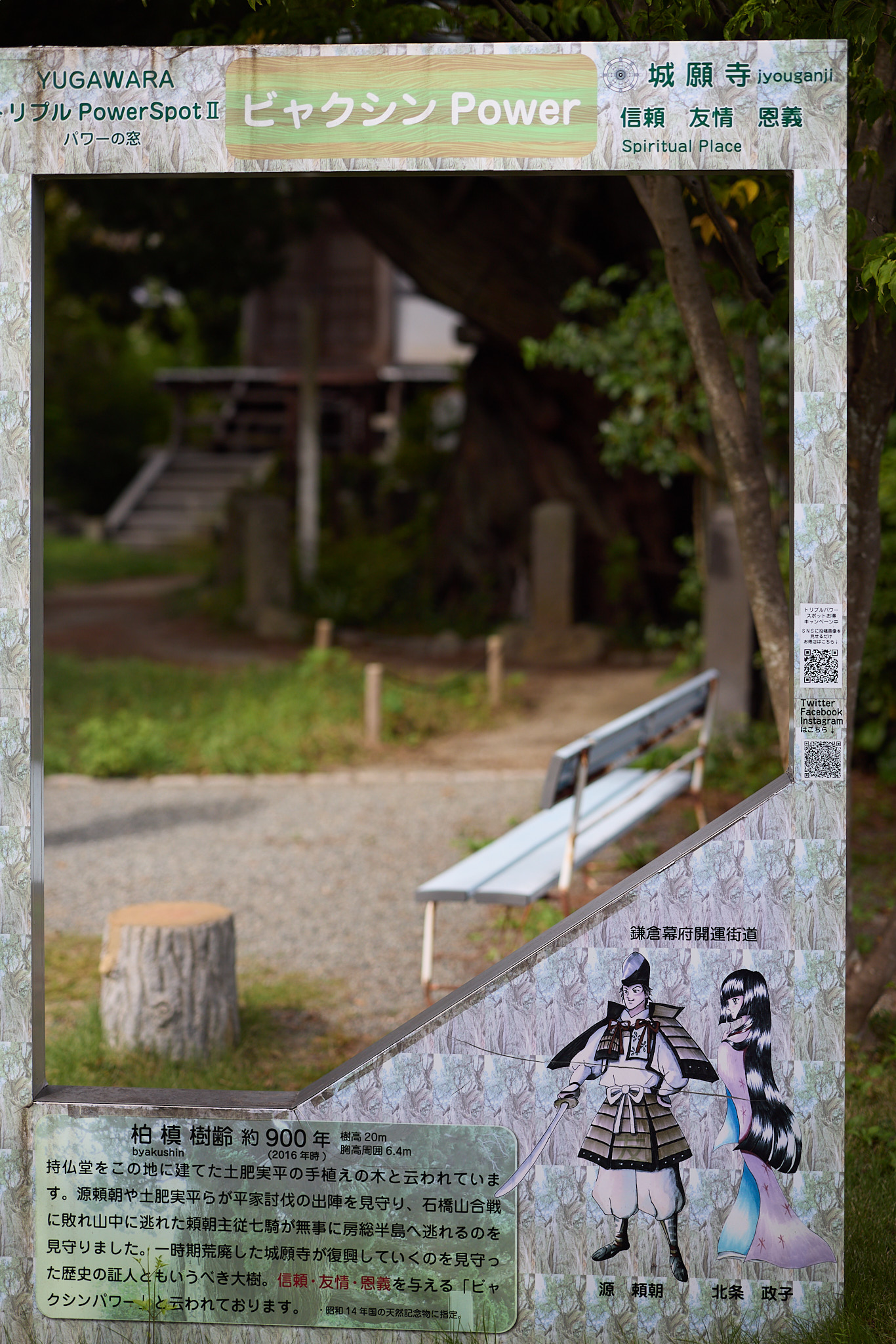
In the corner, drawn in manga style, stand Yoritomo and his wife, Hōjō Masako.
At his family's temple, Sanehira is in the small print.
Visit this place
Location
Jōganji (城願寺)
In Yugawara, about 8 minutes on foot from JR Yugawara Station, the last part steeply uphill. The juniper is just to the right at the top of the steps; the Doi family graves are in the temple grounds.
252 Shirohori, Yugawara, Ashigarashimo District, Kanagawa 259-0305, Japan
Practical information
- Access
- About 8 minutes on foot from JR Yugawara Station; the last part is a steep uphill road. A taxi from the station takes about 2 minutes.
- Parking
- Free, in two places: beside the main hall and above the cemetery. The road up to the upper car park is narrow.
- Visitor note
- Jōganji is a working temple with a cemetery. The town's sign asks visitors never to touch the Doi family gravestones. The juniper is roped off. The temple does not publish opening hours or an admission fee.
- Official website
- Mannenzan Jōganji (Japanese)
- Tourism information
- Yugawara Onsen tourism site — Jōganji (Japanese)
Information last checked: November 7, 2026 (address, access, parking and visitor rules).
Conversation
Comments
Review pending commentsComments are reviewed before appearing. The internet already contains enough unattended surprises.
Checking comments…
Comments are not available in this migration preview yet. Existing comments remain on the current site.
Leave a comment