Tantan Yakisoba: Yugawara’s Noodles Named for a Tanuki
Long ago, the story goes, an arrow wounded a tanuki, a Japanese raccoon dog. He found hot water welling up from the ground and healed himself in it. A female tanuki with burnt feet began to come as well, and the two became a couple. Later, they took human form and spread the word about the water.
That is how Yugawara, a hot-spring town in the southwest corner of Kanagawa Prefecture, tells the story of its springs: discovery, recovery, marriage and publicity, all by tanuki.
In 2008, he also lent his name, more or less, to a plate of fried noodles.
Tan, tan, tanuki
The noodles are tantan yakisoba, and the name has two layers. One is tantan, as in tantanmen, the sesame-and-chilli noodles Japan made from Sichuan’s dandan noodles. The other, according to the local chamber of commerce, comes from the opening of a familiar song: tan tan tanuki.
Restaurants around Yugawara each serve their own version. What they share is the seasoning rather than a fixed list of ingredients: sesame paste and doubanjiang, a fermented chilli-bean paste, for a toasty, spicy flavour. In 2009, a food-industry newspaper reported that the participating restaurants worked from a common recipe built on those two pastes, and that each added a hidden touch of its own. Some use local citrus. Others come topped with an egg, sometimes an onsen tamago, the soft-cooked “hot-spring egg”.
The beginning owed less to folklore than the name did. According to the town’s official history, Ebara Foods, a sauce maker, approached the local chamber of commerce about test-selling a spicy yakisoba it was developing. The chamber held a tasting, and the project began in February 2008.
The tanuki joined after the tasting.
Founded 1968
I had come to Yugawara meaning to eat tantan yakisoba, and looked up a restaurant on the spot. The one I chose stands near Yugawara Station. Its main sign was about something else.
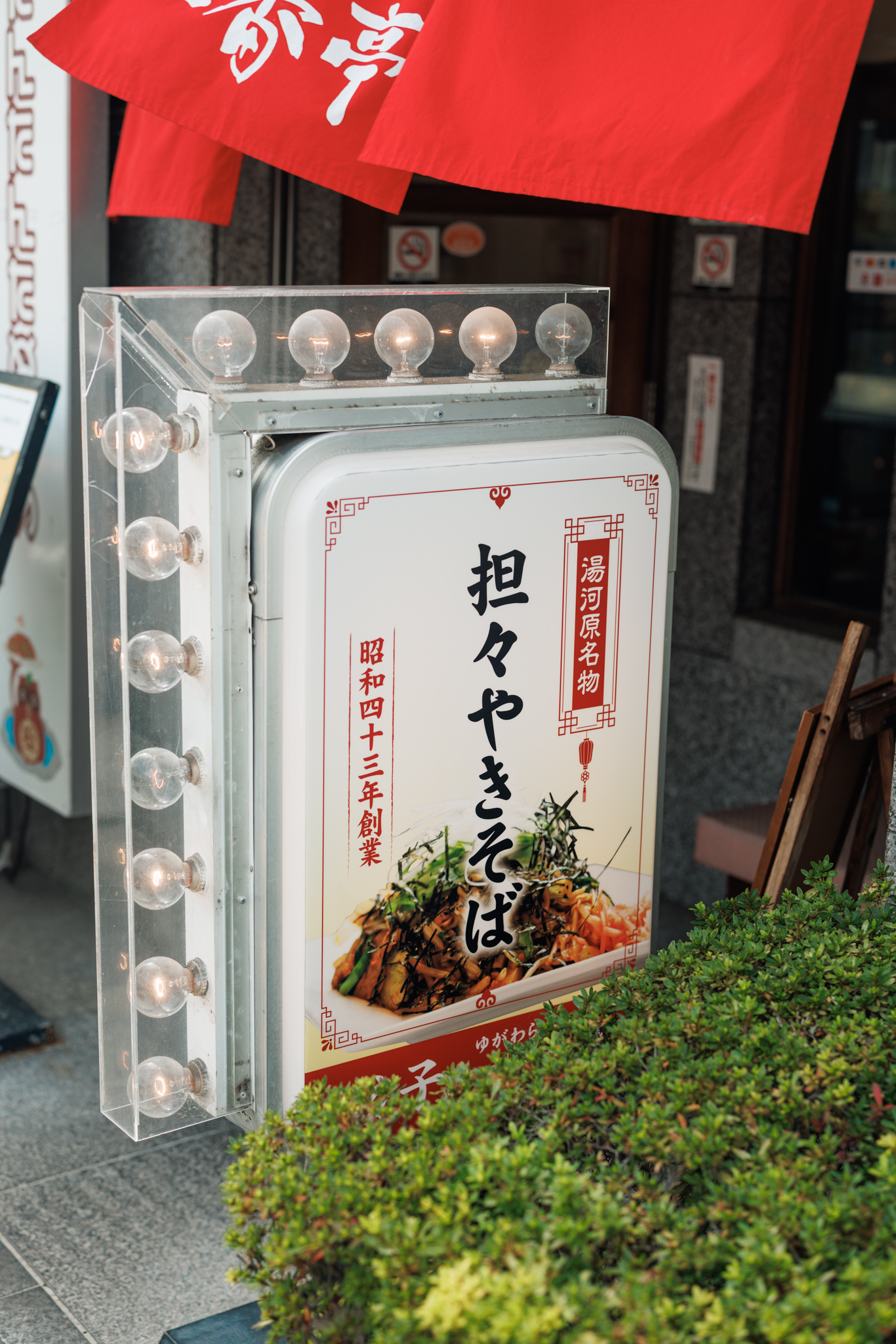
The noodles had a sign of their own by the door, framed with light bulbs. Down the middle, in large letters, it said tantan yakisoba. Down one side ran Yugawara meibutsu, “Yugawara speciality”. Down the other: founded in Shōwa 43, which is 1968.
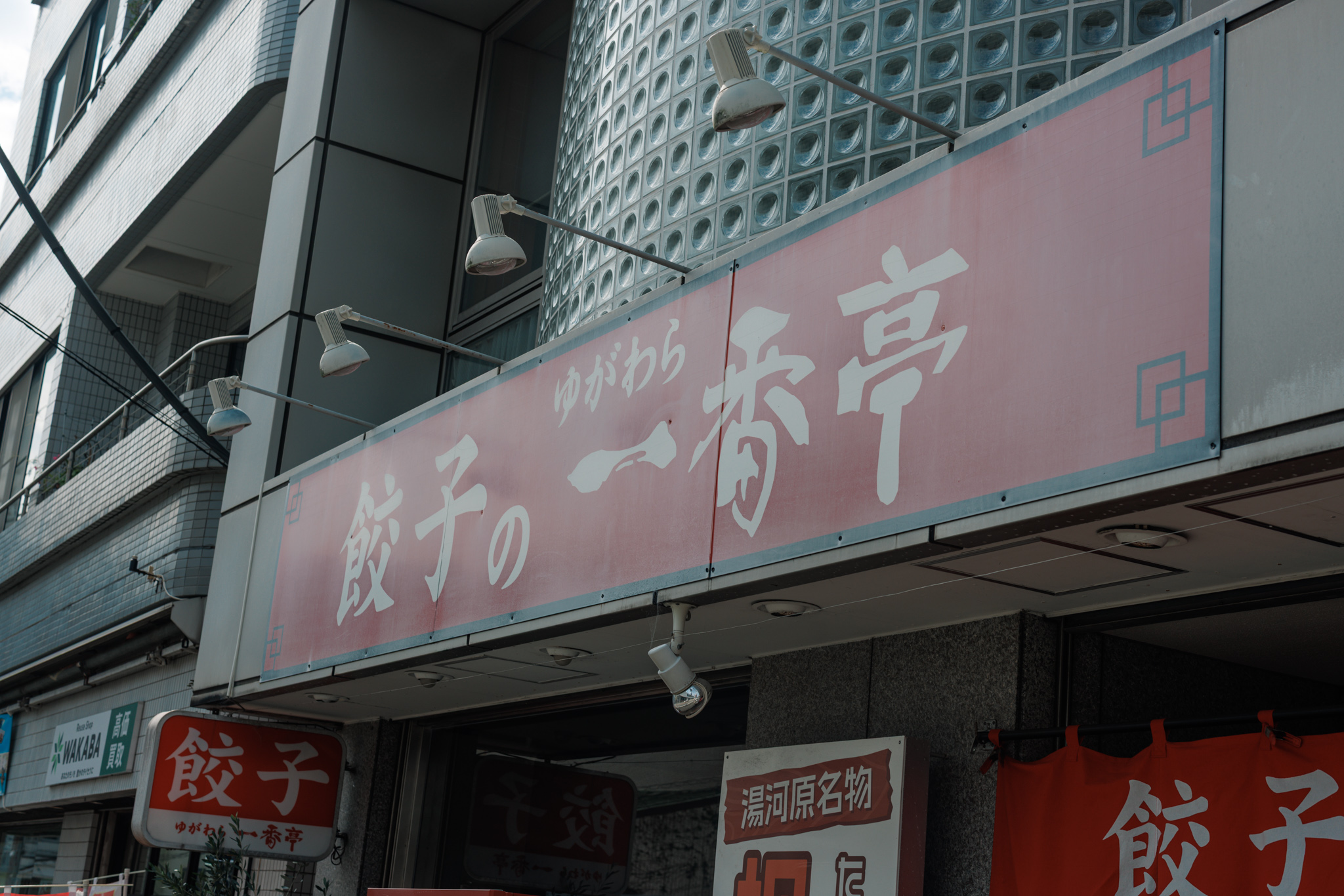
Read at a glance, the sign suggests a local dish with more than half a century behind it. The date belongs to Ichibantei’s history, not to the noodles. The Nishihara Group, a restaurant company, records that a barbecue restaurant opened in Yugawara in 1966 and became Sapporo Ramen Ichibantei in 1968. According to Ichibantei, the Yugawara restaurant was independently run under its name for decades before returning to the chain in the 2010s. Today the sign above the door says gyoza. The shop has changed hands and signs. The name has stayed.
Ichibantei has other branches across the border in eastern Shizuoka. Tantan yakisoba is on the menu only in Yugawara.
The hill on the plate
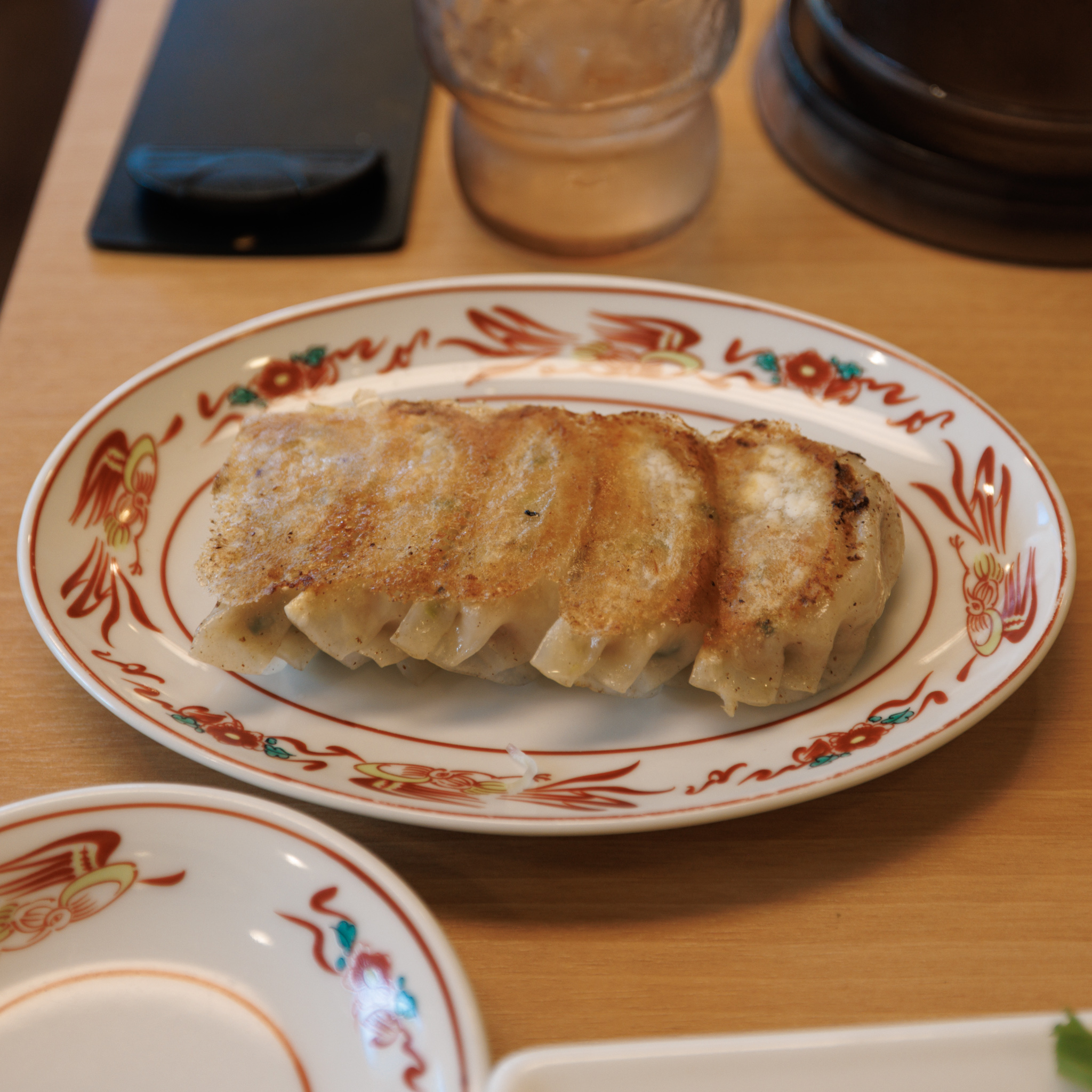
The heat can be chosen. I asked for choi-kara, “a little spicy”, and added a plate of gyoza.
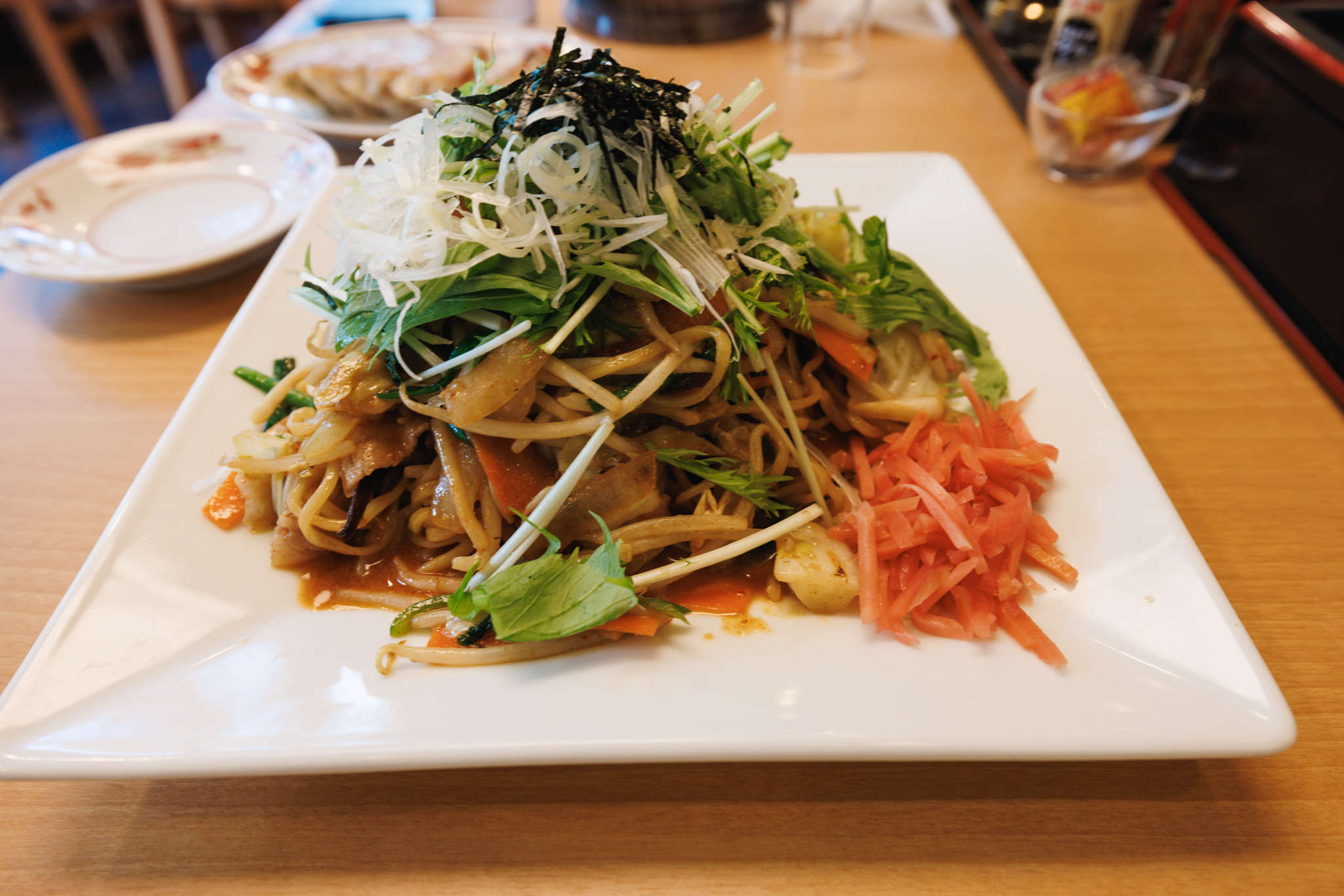
The plate of noodles arrived as a hill. Mizuna and fine shreds of white leek were piled on top, shredded nori sat at the summit, and red pickled ginger was heaped at the foot. Underneath, the noodles were tangled with cabbage, carrot and onion, and a reddish-brown sauce had gathered on the plate.
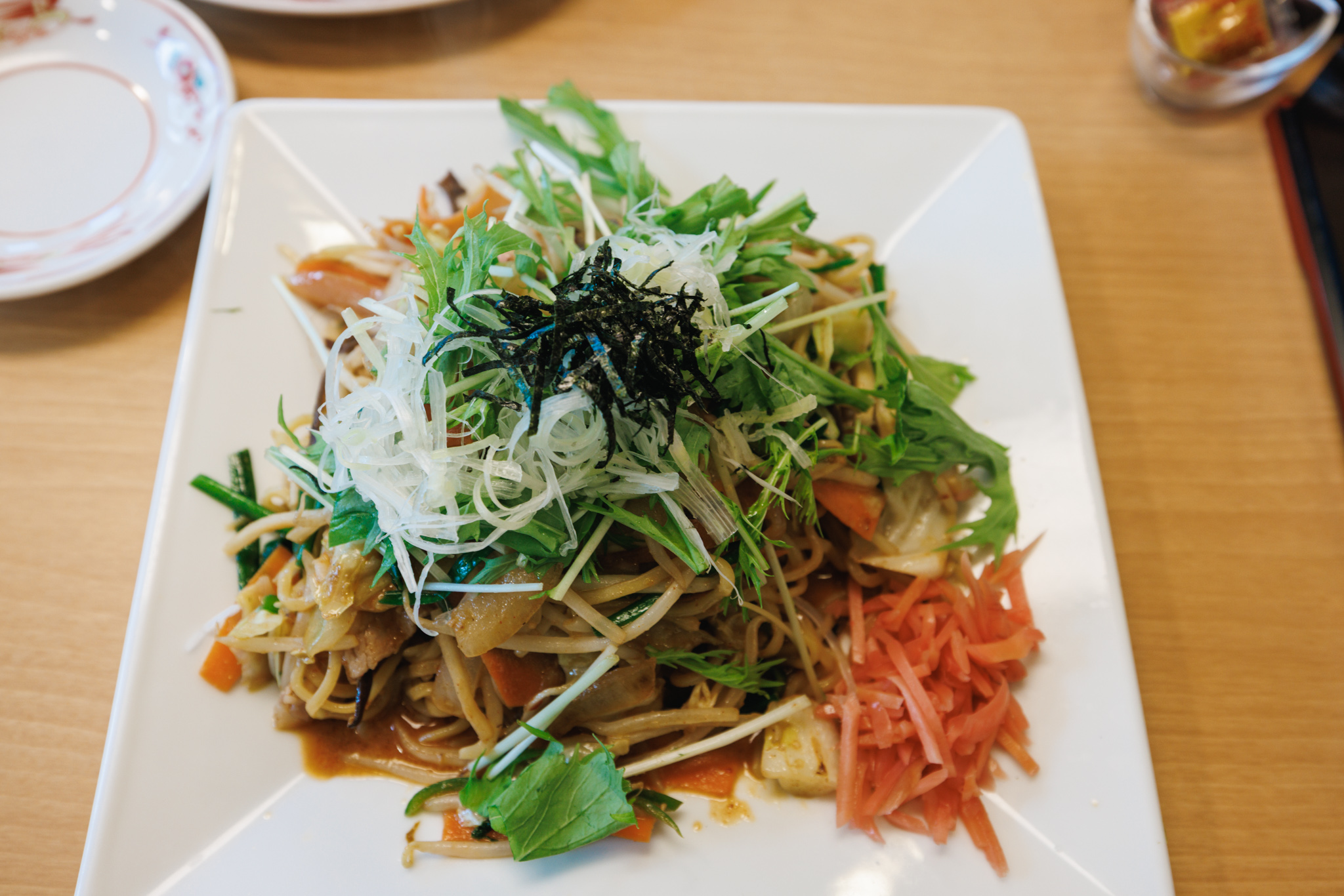
Much of the hill was vegetables, and they kept their crunch as I worked my way down. It took a while, but eventually there was nothing left on the plate.
The heat was another matter. It was a good deal hotter than I had expected.
The tanuki of the legend talked up the hot springs. The menu, it seems, had talked down the chilli.
Location
Restaurant
Gyoza no Ichibantei, Yugawara (餃子の一番亭 湯河原店)
About 1 minute on foot from JR Yugawara Station, on the street in front of the station (Ichibantei, 2025).
29 Miyashita, Yugawara, Ashigarashimo District, Kanagawa 259-0304, Japan
Practical Information
- Dish
- Tantan Yakisoba (担々やきそば)
- Associated area
- Yugawara, Kanagawa
- Serving note
- The heat can be chosen when ordering: choi-kara (a little spicy), chūkara (medium) or ōkara (hot), as listed by the restaurant. Among Ichibantei’s restaurants, tantan yakisoba is served only at the Yugawara branch.
- Opening hours
- 11:00–21:00 (last orders 20:30), according to Ichibantei’s store list
- Closing days
- Tuesdays, according to the restaurant’s notice of February 2025. Check before travelling.
- Phone
- +81 465-62-4339
Information last checked: October 11, 2026 (address, opening hours and phone; the closing day is from a February 2025 notice).
Conversation
Comments
Review pending commentsComments are reviewed before appearing. The internet already contains enough unattended surprises.
Checking comments…
Comments are not available in this migration preview yet. Existing comments remain on the current site.
Leave a comment