Bukubuku Tea: Bubble Tea, Taken Literally
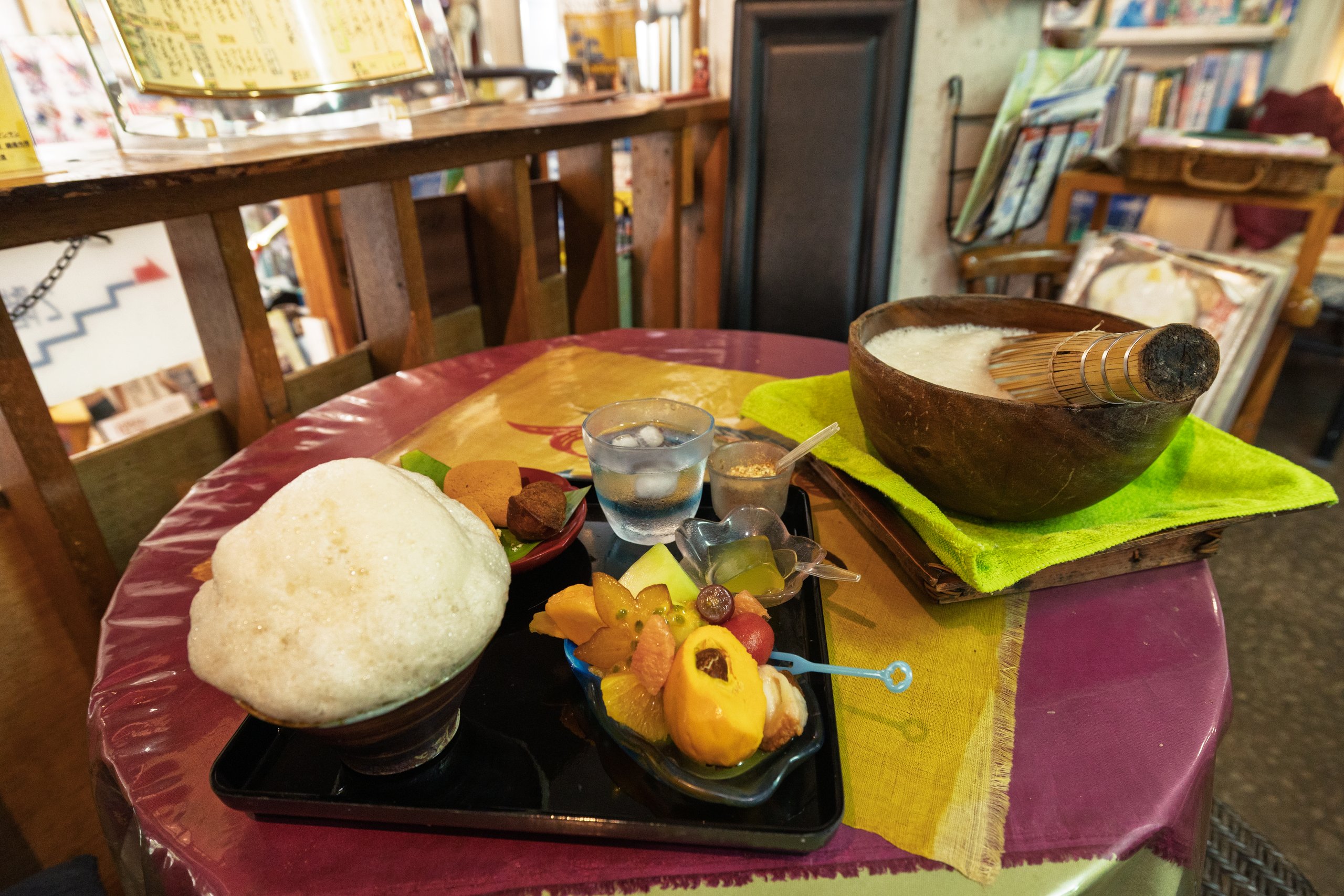
The sign on the wall said BUBBLE TEA, in red capitals, under the words “Okinawa Traditional”.
There were no tapioca pearls anywhere on the premises. Nobody had forgotten them.
In bukubuku tea, the bubbles are not something waiting at the bottom of the cup. They are the drink.
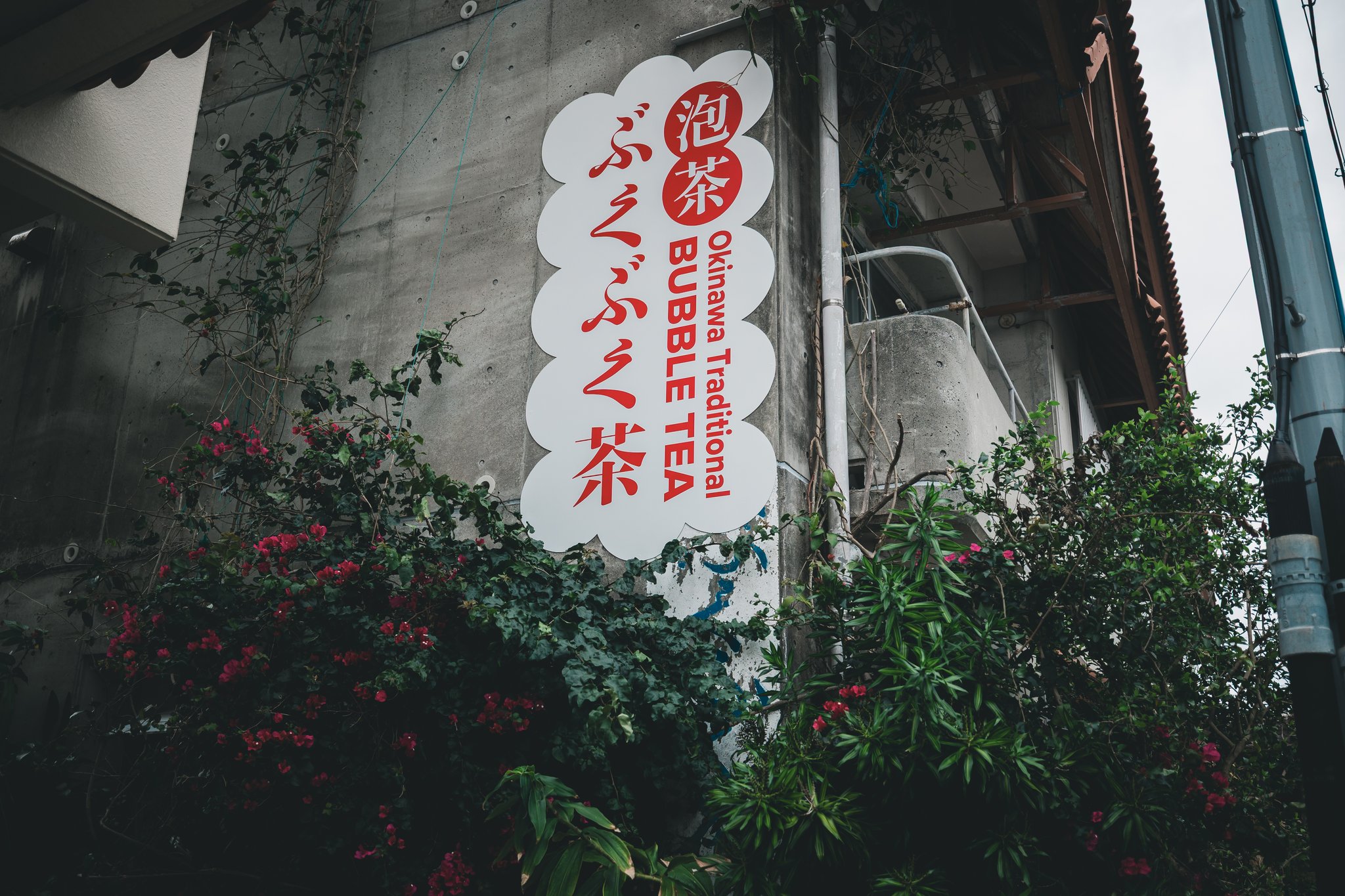
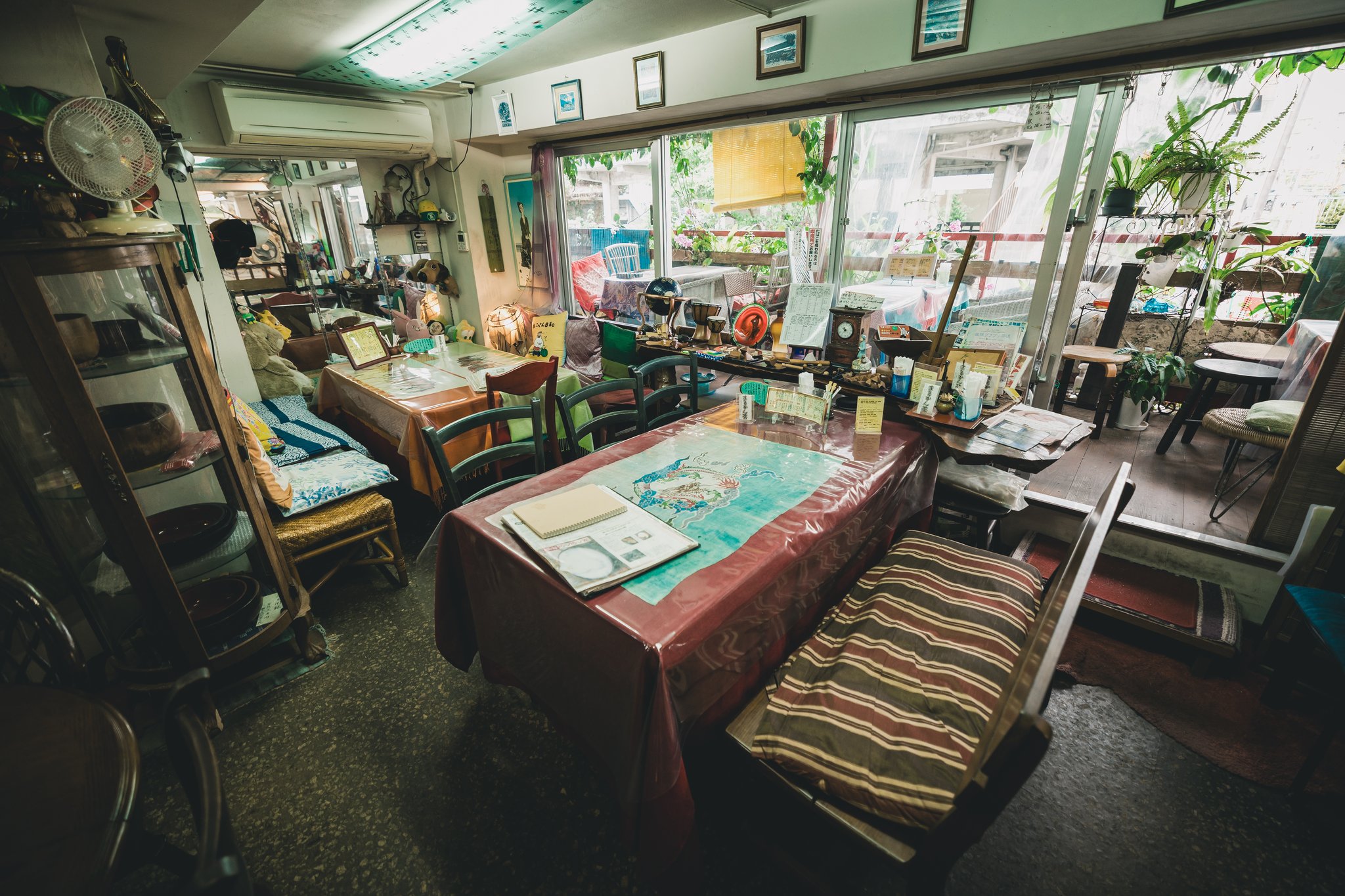
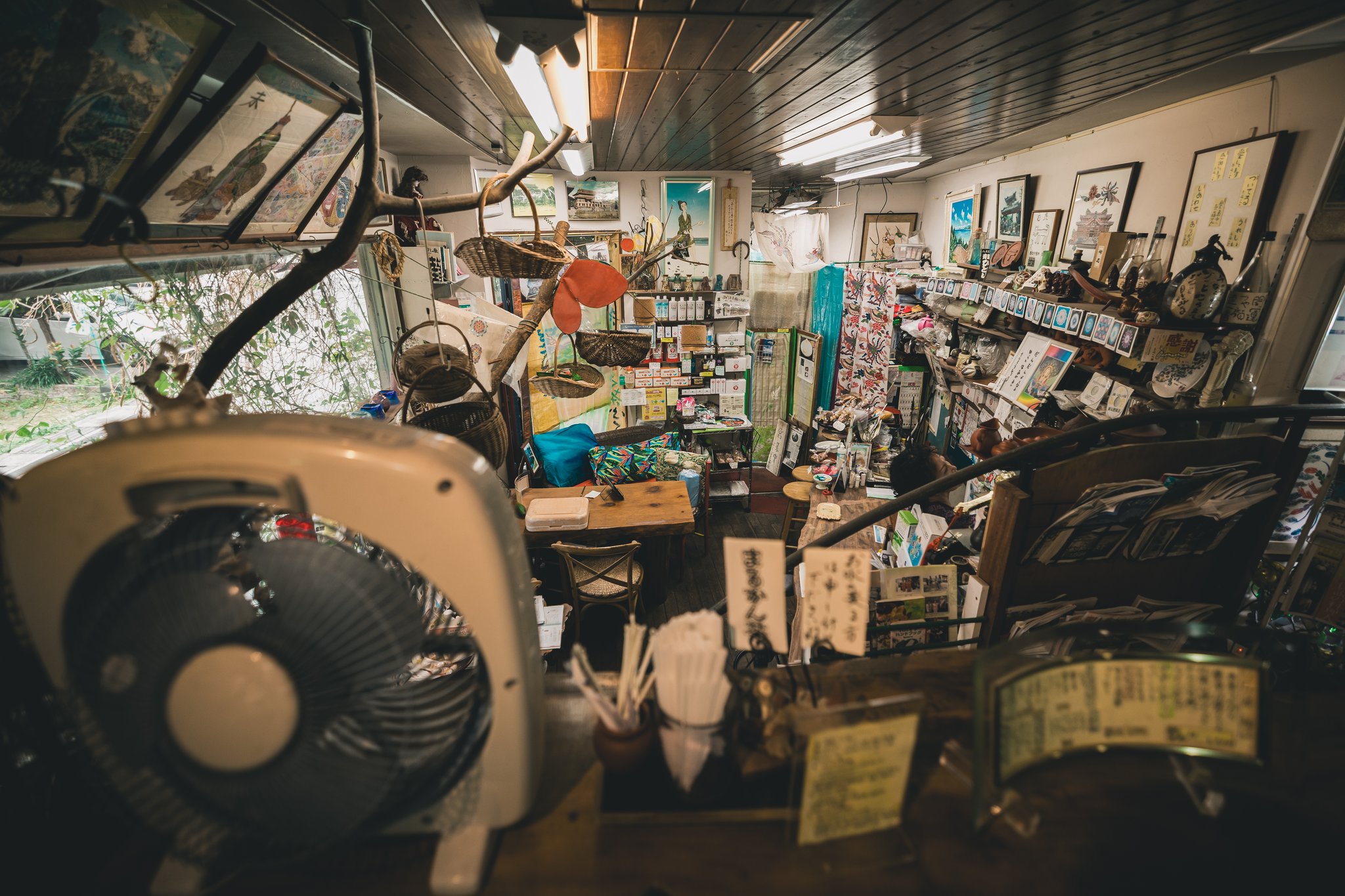
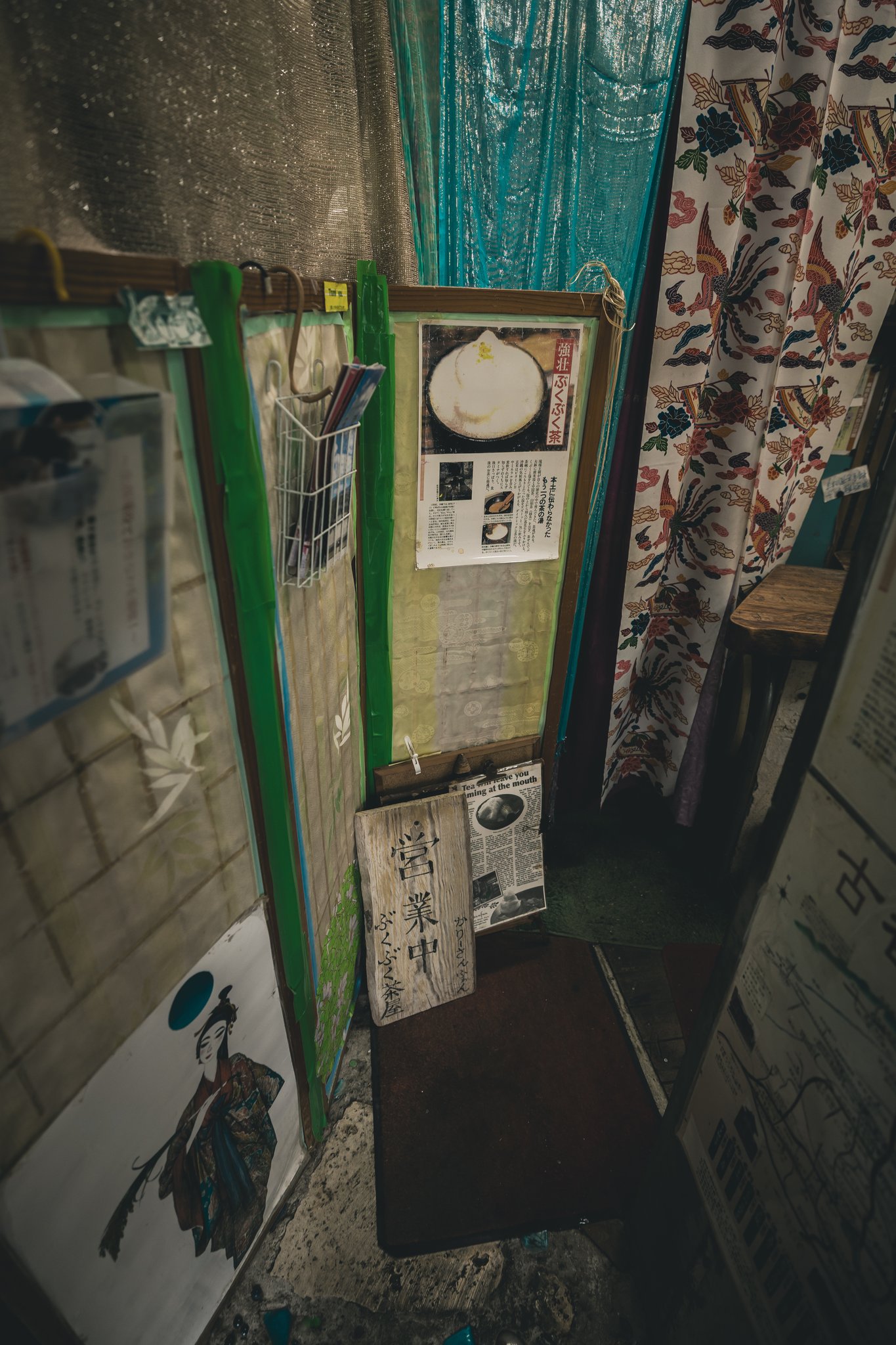
Bukubuku Chaya Karisanfan (ぶくぶく茶屋 嘉例山房) is a small tea house in Shuri, the old royal capital, now part of Naha, not far from Shuri Castle. Its entrance is half buried in potted plants and orchids. A hand-painted board beside the steps announced, in Japanese, that customers could enjoy whipping the foam themselves.
I would find out how much enjoyment was involved.
Rice, tea and hard water
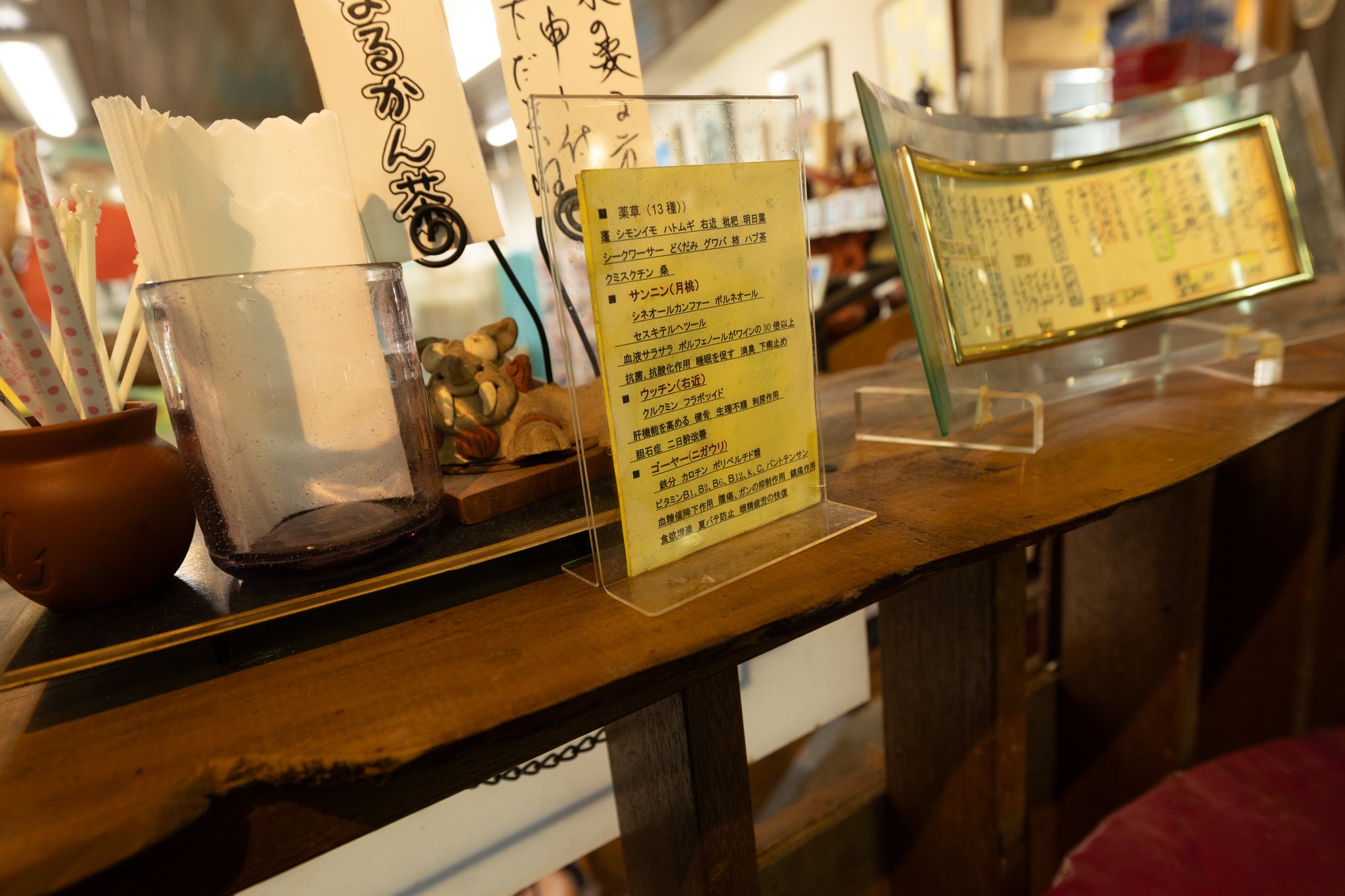
Bukubuku tea begins with rice, roasted until brown and then simmered. The rice water is mixed with tea in a large wooden bowl and whipped with an oversized bamboo whisk. The foam is then piled onto a separate cup of tea. There is no milk in it.
The older woman serving at the shop told me it would not foam with tap water. It needed hard well water.
Japan’s Agency for Cultural Affairs, in more official language, describes the traditional recipe as using hard well water that has run through Ryukyu limestone. A writer involved in preserving the tea puts the secret down to the calcium and magnesium in it.
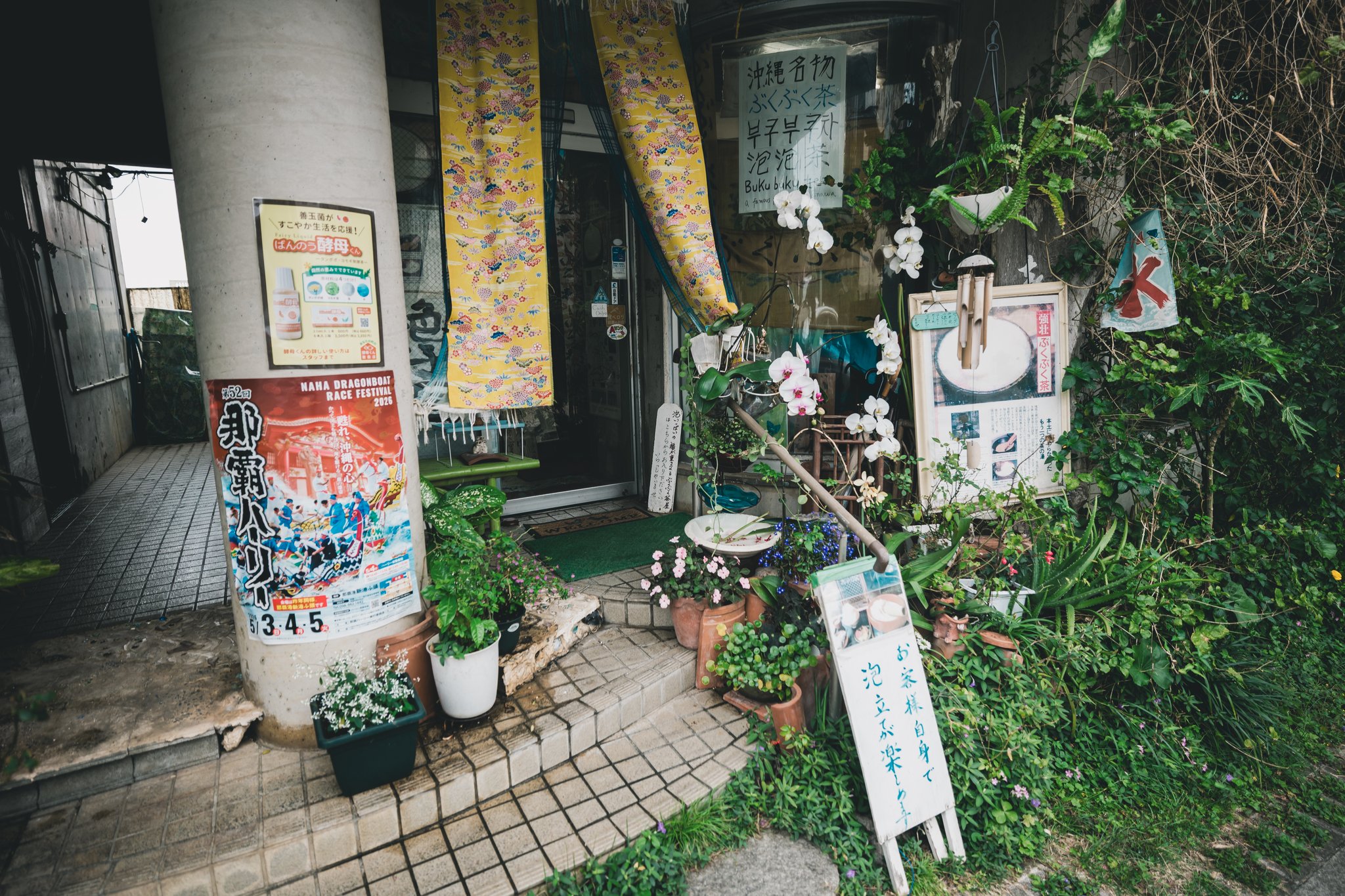
The tea underneath was mine to choose. A card on the counter listed the bases on offer, among them a blend of thirteen herbs, shell ginger, turmeric and bitter melon. I went for the thirteen herbs, served lukewarm.
Nobody knows exactly how old bukubuku tea is; the same agency guesses at the Edo period, between 1603 and 1868, when Okinawa was still the Ryukyu Kingdom. The trail is clearer in Naha in the decades before the Second World War, when the tea was drunk at home, especially by women, on birthdays and to celebrate departures. It was a lucky drink for seeing people off on a voyage.
The war destroyed the bowls and whisks, and the tea disappeared with them. After some of the old utensils turned up in 1960, people began trying to bring it back, and in 1992 it was restored. One of the people who made that possible, Junko Ashitomi, collected old records and re-examined the water of different areas.
Even the revival came down to the water.
Five minutes with a whisk
I was given the wooden bowl, the whisk and the liquid for the foam, and left to it.
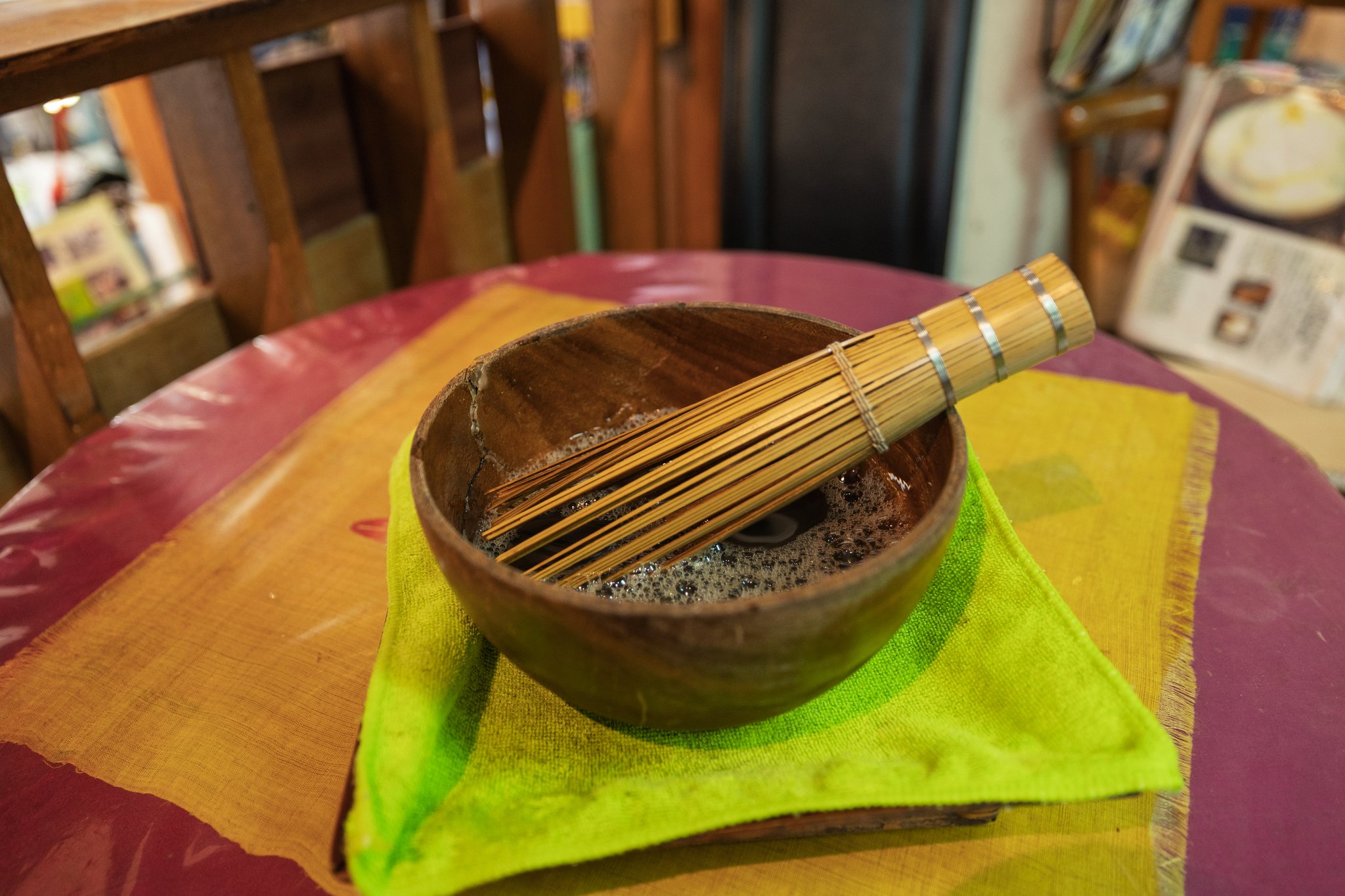
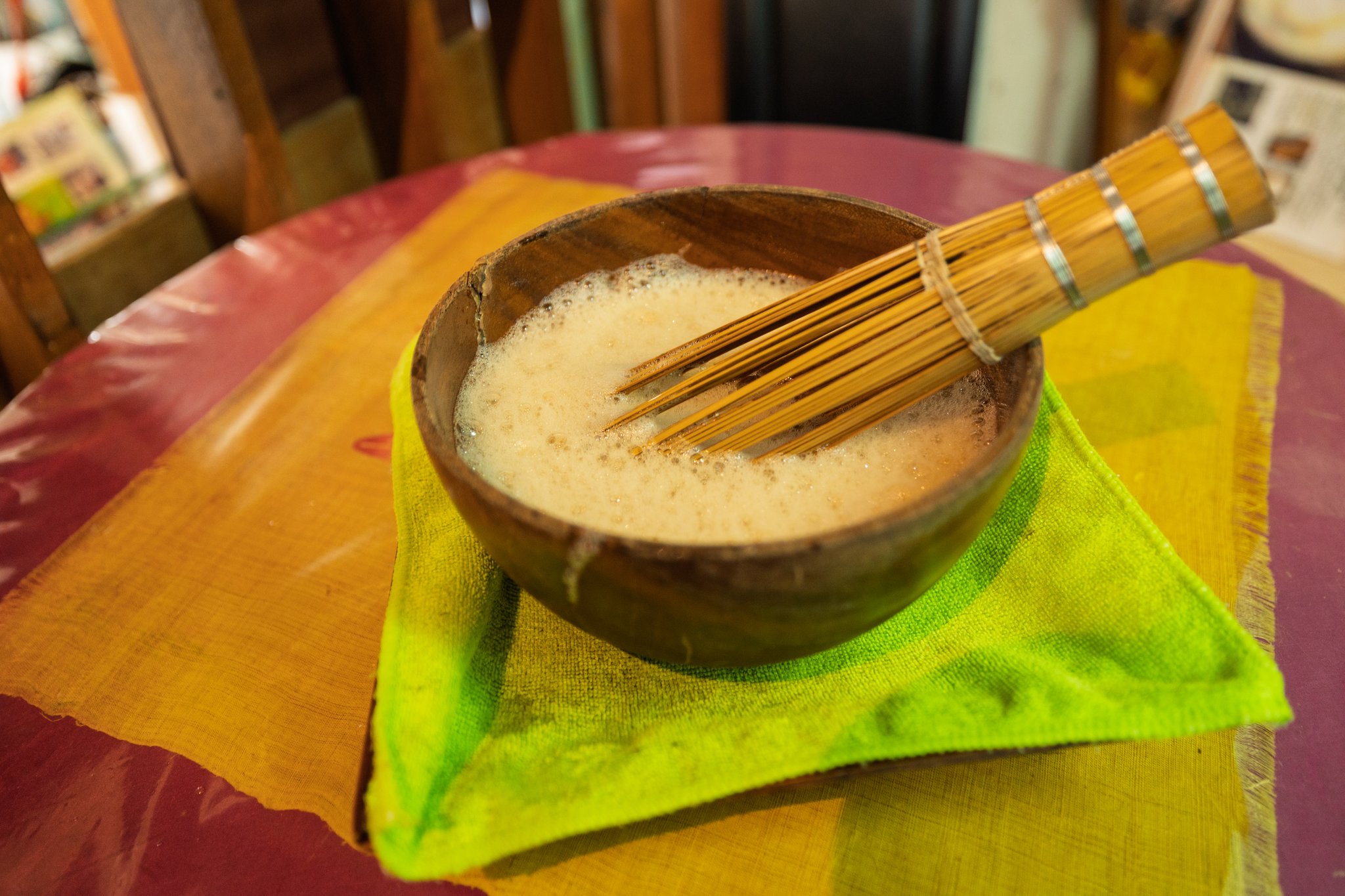
I whisked for about five minutes. It was more of a workout than the board by the steps had let on. The traditional recipe allows about ten; at five, I decided my foam was ready.
I piled it onto my tea until it stood well above the rim, then added brown sugar and peanuts from the little cup on the tray. When the foam sank, topping it up was my job too. I picked up the whisk again.
By tradition, bukubuku tea is drunk without chopsticks or spoons. One guide suggests opening your mouth wide, as if biting into the foam.
It tasted exactly like tea with bubbles in it. The sign had not been exaggerating.
The side plate
The set came with simple, very good sweets, a little citrusy jelly and a plate of fruit. The fruit plate asked nothing of me. Half of it needed explaining.
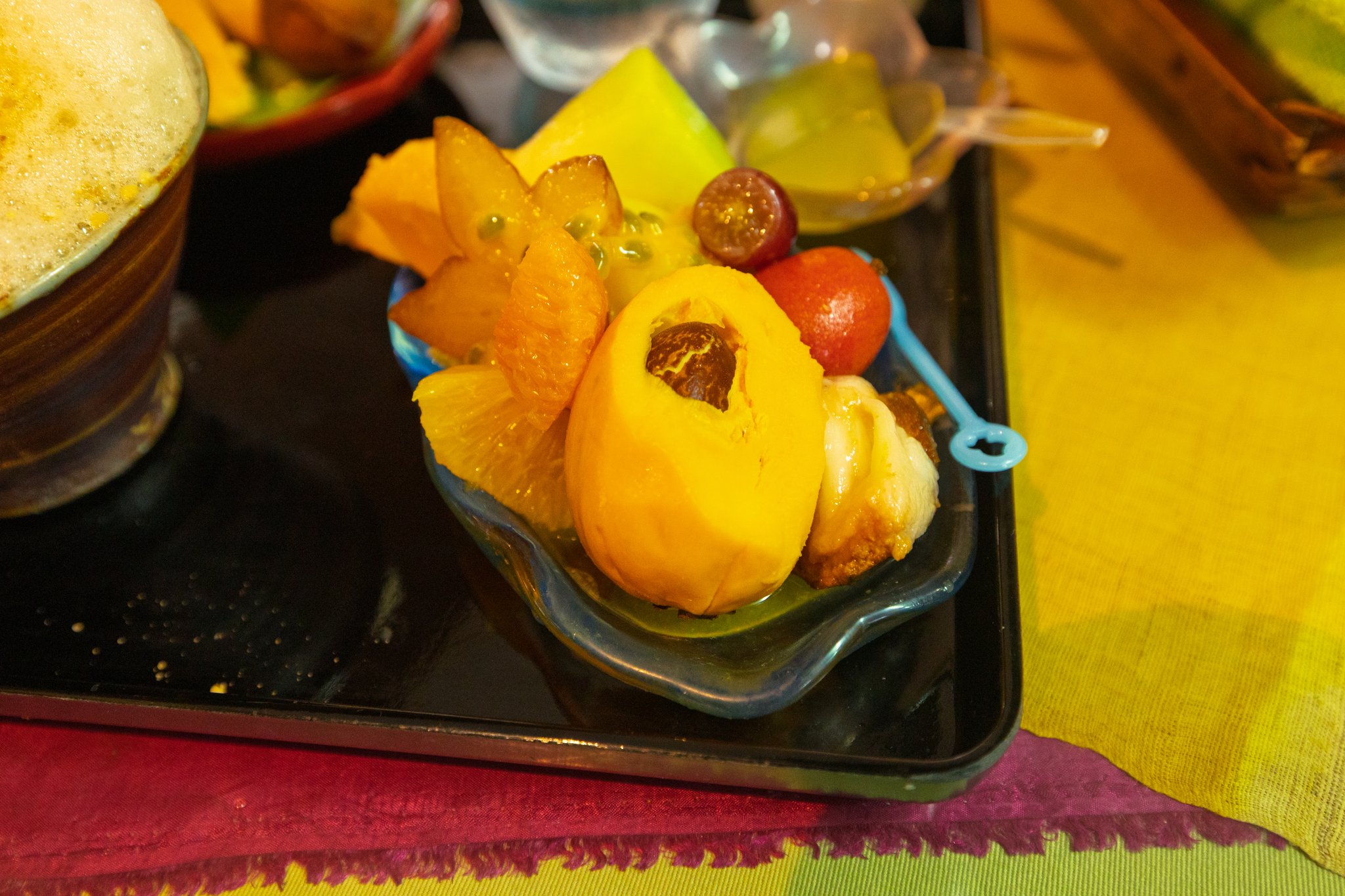
The star fruit, easily the most exotic-looking thing on the plate, tasted like a pear. Its star is not the work of a cookie cutter: the fruit grows with ridges, and every slice comes out that shape.
The acerola was ferociously sour. Passion fruit I already liked, and the mango, melon, grapes and citrus were old acquaintances. The white piece at the bottom right was not. I never found out what it was.
My favourite was the yellow, egg-shaped fruit at the front with a large brown seed in the middle: canistel. One of its English names is eggfruit, because its flesh looks and feels like the yolk of a hard-boiled egg.
It was dense and slightly powdery, somewhere between a Japanese roasted sweet potato and pumpkin, with just the texture its name suggests.
Canistel is native to southern Mexico and Central America, and is grown in Okinawa now too. Plants travel. So does the other bubble tea: tapioca pearls can be shipped anywhere, and the drink has spread around the world in plastic cups. The bubbles on this tray needed hard well water, and a well stays where it is.
If the right wells had been easier to find, the world’s bubble tea craze might have involved a great deal more whisking.
Location
Restaurant
Bukubuku Chaya Karisanfan (ぶくぶく茶屋 嘉例山房)
Near Shuri Castle; about 10 minutes on foot from Gibo Station on the Yui Rail monorail, according to the Naha tourist association
9 Shuri Ikehata-cho, Naha, Okinawa 903-0824, Japan
Practical Information
- Dish
- Bukubuku Tea (ぶくぶく茶)
- Associated area
- Naha, Okinawa
- Opening hours
- 10:00–18:00 (last orders 17:30), according to the Naha tourist association; Google Maps shows 10:00–17:30. Some 2024–2025 magazine articles give later hours.
- Closing days
- Tuesdays and Wednesdays
- Price when checked
- Tea with sweets ¥1,200; tea with sweets and fruit ¥1,600 (listed in September 2025)
- Payment
- Cash, according to the Naha tourist association. A 2024 article says cards are accepted.
- Languages
- Menus in English, Chinese and Korean, according to the Naha tourist association
Information last checked: October 7, 2026 (listed address, opening hours, closing days, prices, payment and menu languages).
Conversation
Comments
Review pending commentsComments are reviewed before appearing. The internet already contains enough unattended surprises.
Checking comments…
Comments are not available in this migration preview yet. Existing comments remain on the current site.
Leave a comment