Abasa and Coconut Crab Soup: The Spiny and the Clawed
The entrance to Churasantei, a seafood izakaya near Asahibashi Station in Naha, does not go in for understatement. Dried porcupinefish hang from the eaves, spines out. On the glass of the door is a cut-out of what looked to me like a coconut crab.
I walked in beneath both of them and ordered two soups.
One had been covered in spines. The other had claws.
Spines, but no poison
Abasa is the Okinawan name for the porcupinefish, the pufferfish relative that inflates itself into a ball of spines when threatened.
In Japan, pufferfish comes with rules. A national government notice lists which species may be eaten, and which parts. The porcupinefish is on it, and is generally described as a non-toxic fish. Its defences are all on the outside.
Remove the skin, and the spines go with it.
Abasa soup is traditionally made by simmering the fish in chunks, mashing its liver into the broth and seasoning the whole thing with miso. A handful of fuchiba, Okinawan mugwort, often goes on top.
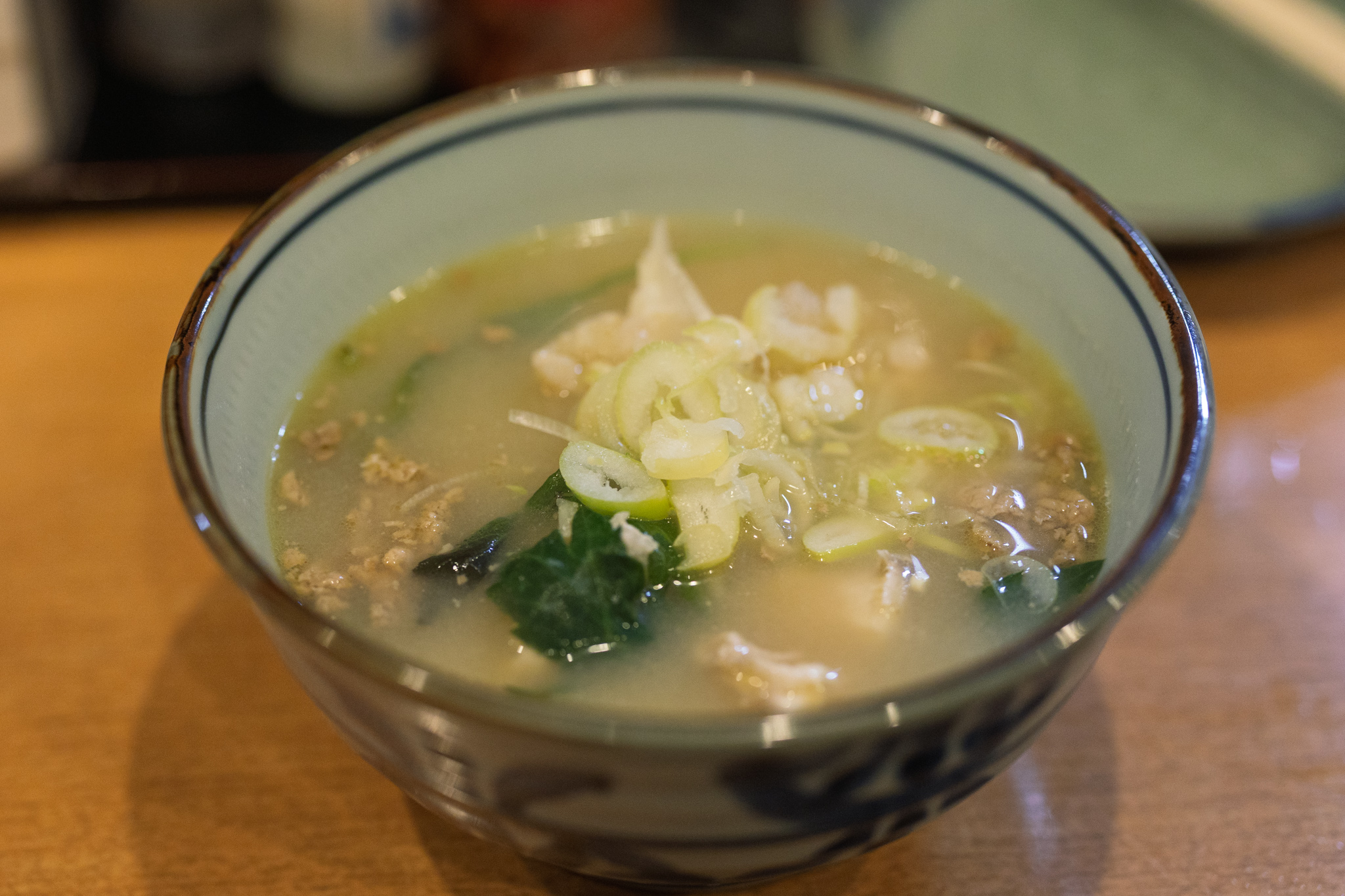
Churasantei’s bowl was cloudy and pale, with flakes of white fish, thick slices of spring onion and dark leafy greens.
The flesh was mild, as I had expected, with a firm, substantial chew. It tasted like pufferfish. Most of the flavour, though, seemed to have moved into the broth.
If the liver goes into the broth, that is presumably where the flavour is meant to end up. The fish had done the work. It simply was not keeping any of the credit.
The crab that isn’t a crab
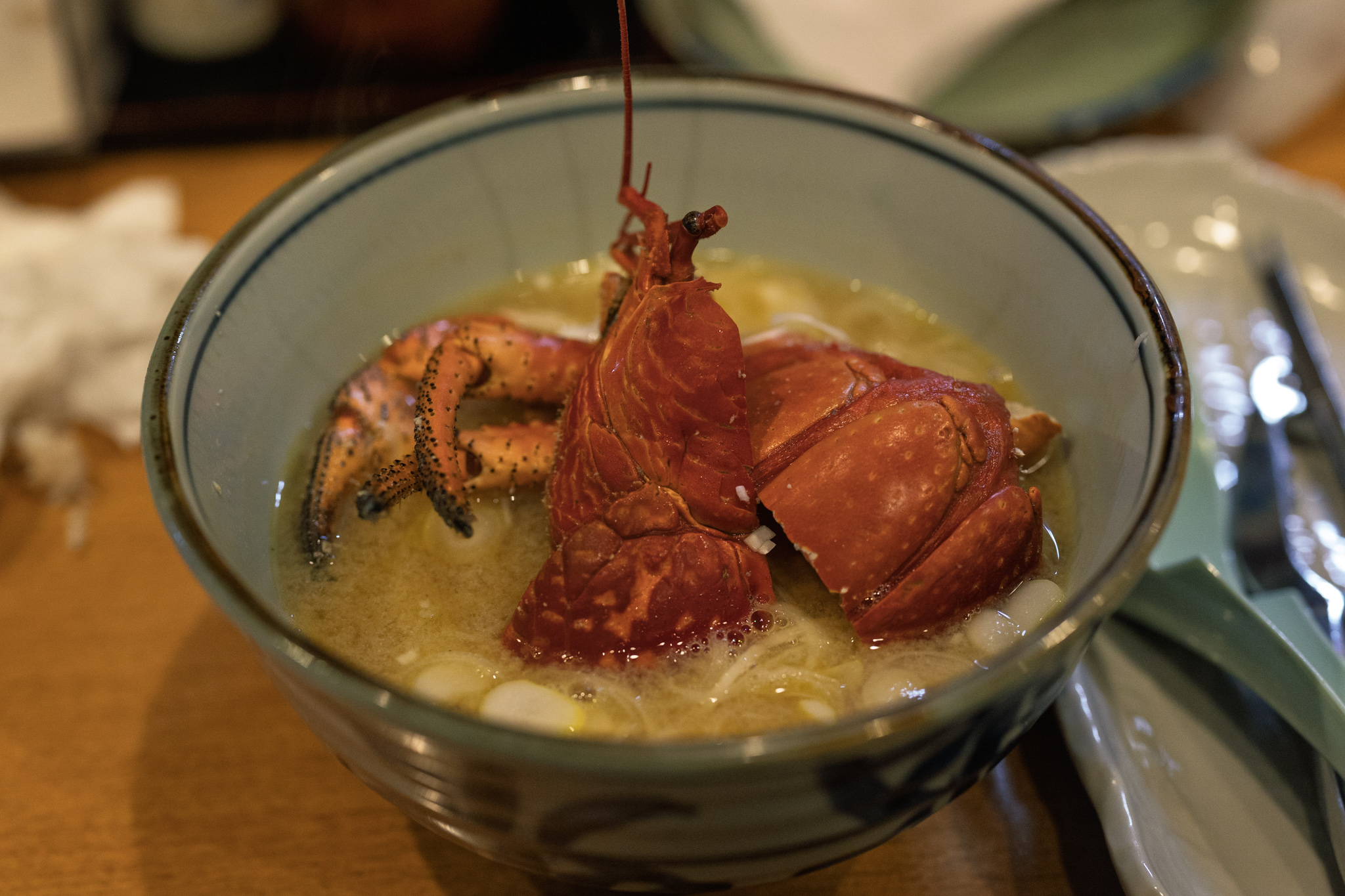
The coconut crab soup made no effort to blend in. The split red shell stood upright in the bowl, legs folded beside it, with a long antenna and a pair of stalked eyes rising above the broth.
Some soups have ingredients. This one had a face.
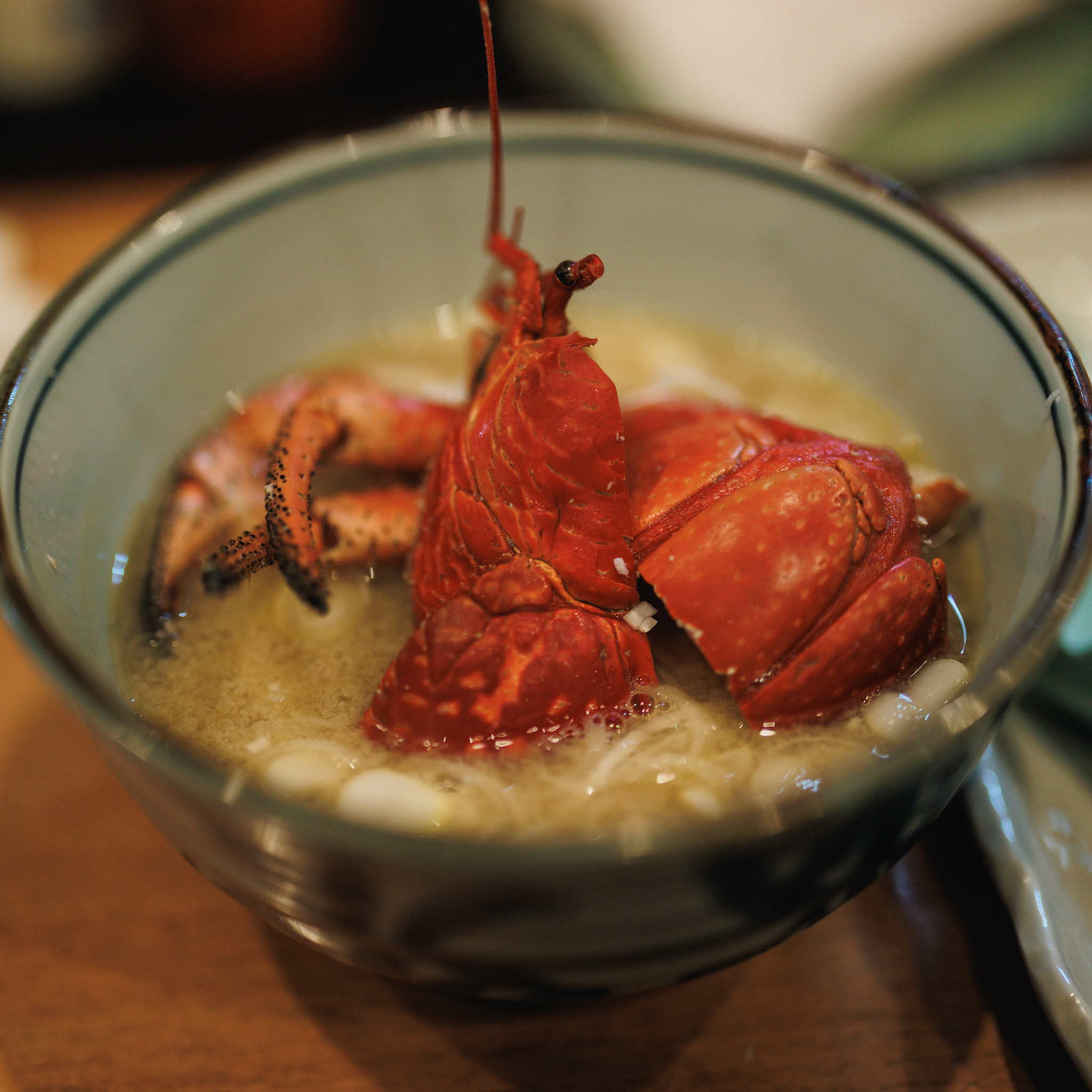
Despite its name, the coconut crab is not a true crab. It is a relative of the hermit crab, and the largest arthropod that lives on land. London’s Natural History Museum, which gives it that title, also notes that the squeeze of its claws can be much stronger than a human grip. In Japanese it is yashigani: palm crab.
It is also an old part of island eating. On Miyako Island, where it is called makugan, the local newspaper Miyako Mainichi says it has long been caught and eaten as a valuable source of protein. Today it remains a prized ingredient in Okinawa, and a rare, expensive one.
Its situation is more complicated than the porcupinefish’s, though. Japan’s Ministry of the Environment lists it as Vulnerable, and several Okinawan municipalities have their own coconut crab protection ordinances. In Miyakojima City, catching them is banned all year in designated protected areas; elsewhere it is banned from June to August, and crabs that are too small or too large are off limits. Ishigaki City allows only males within a set size range, and only from September to November.
The rules manage the harvest rather than end it. Miyakojima City’s ordinance describes its aim as passing the crab on to the future as a shared asset.
The crab itself is not poisonous. It does, however, eat what it finds, and there are reports of people falling ill after eating coconut crabs that had fed on toxic plants.
The animal covered in spines had been the simple order.
As I had expected, it tasted close to crab. Once again, though, much of the flavour had gone into the broth. For ease of eating, an ordinary crab wins comfortably. For visual impact, this one was in a different league.
The menu by the door
I had been determined to try both, so I finished the evening with two large bowls of soup inside me and a stomach that sloshed.
Outside, I looked at the entrance again. Most of it was spiny lobster: large, brightly coloured photographs of them above the doorway and beside it.
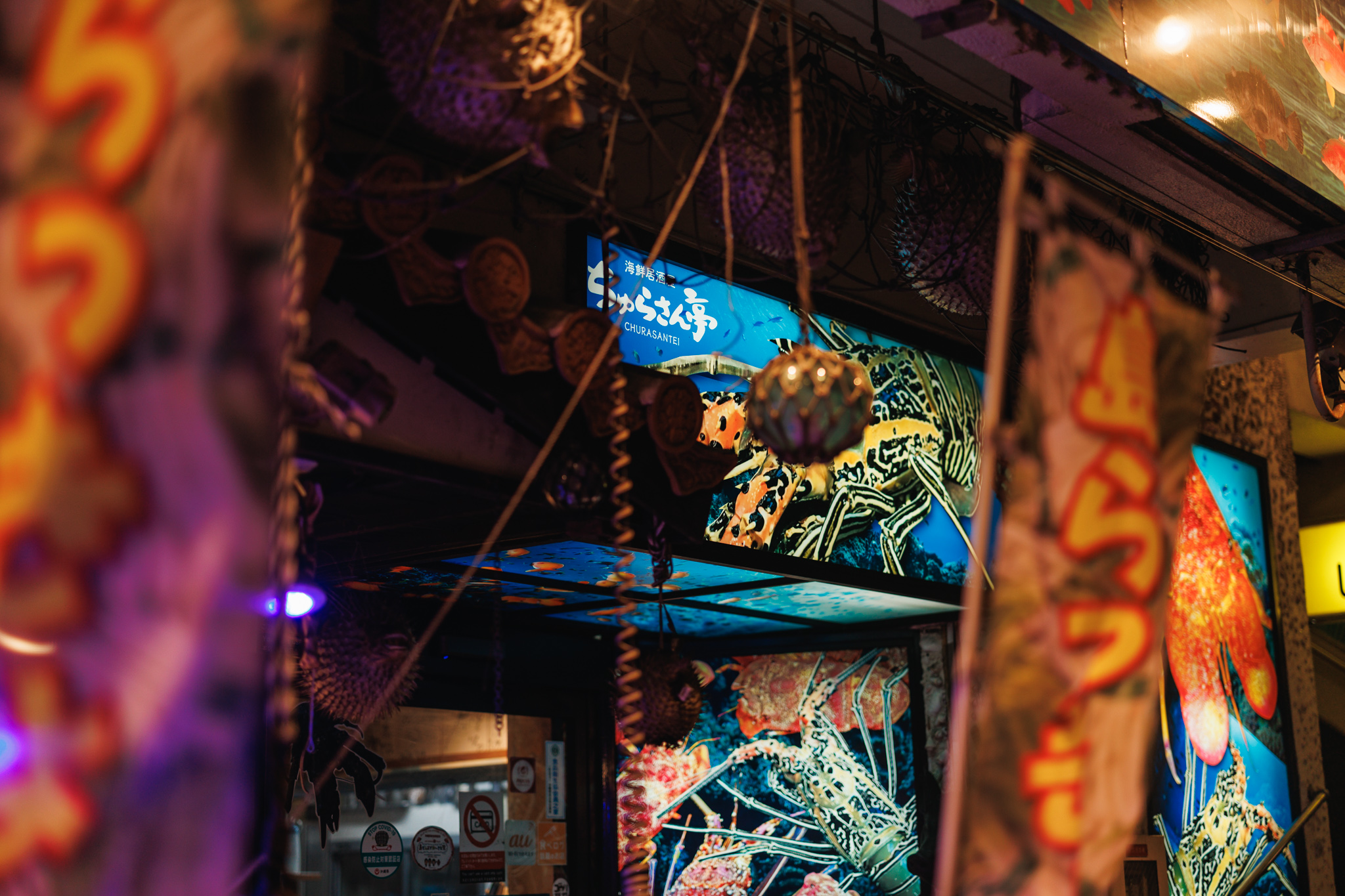
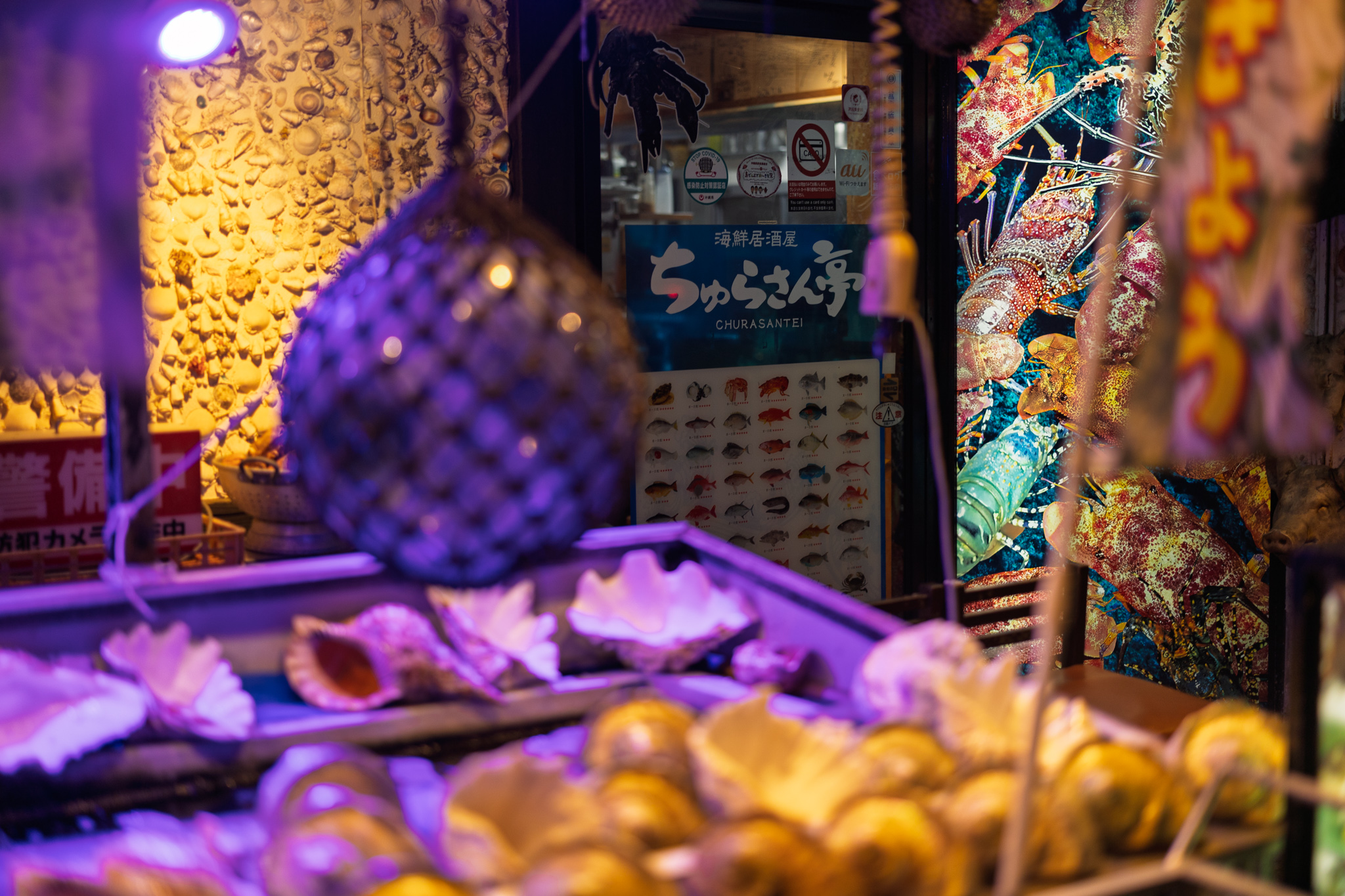
The two animals I had eaten were around the edges: one hanging in the eaves, the other a silhouette at the top of the door.
The entrance was selling lobster. I had ordered the decorations.
Location
Restaurant
Churasantei (海鮮居酒屋 ちゅらさん亭)
About 3 minutes on foot from Asahibashi Station on the Yui Rail monorail, on National Route 58
5-15 Higashimachi, Naha, Okinawa 900-0034, Japan — Asahi Building
Practical Information
- Dish
- Abasa Soup and Coconut Crab Soup (アバサー汁・ヤシガニ汁)
- Associated area
- Okinawa
- Menu note
- Coconut crab soup was on the menu when I visited. It does not appear on the restaurant’s online menus, so ask before making a special trip.
- Opening hours
- 17:00–01:00 (last orders 00:00)
- Closing days
- Wednesdays
- Payment
- Cash only when I visited (sign on the door). Restaurant listings also say cards are not accepted.
- References
- Restaurant page (Japanese); Hitosara (Japanese)
Information last checked: September 30, 2026 (listed address, opening hours, closing days and payment).
Conversation
Comments
Review pending commentsComments are reviewed before appearing. The internet already contains enough unattended surprises.
Checking comments…
Comments are not available in this migration preview yet. Existing comments remain on the current site.
Leave a comment