Wani Sashimi: The Crocodile Is a Shark
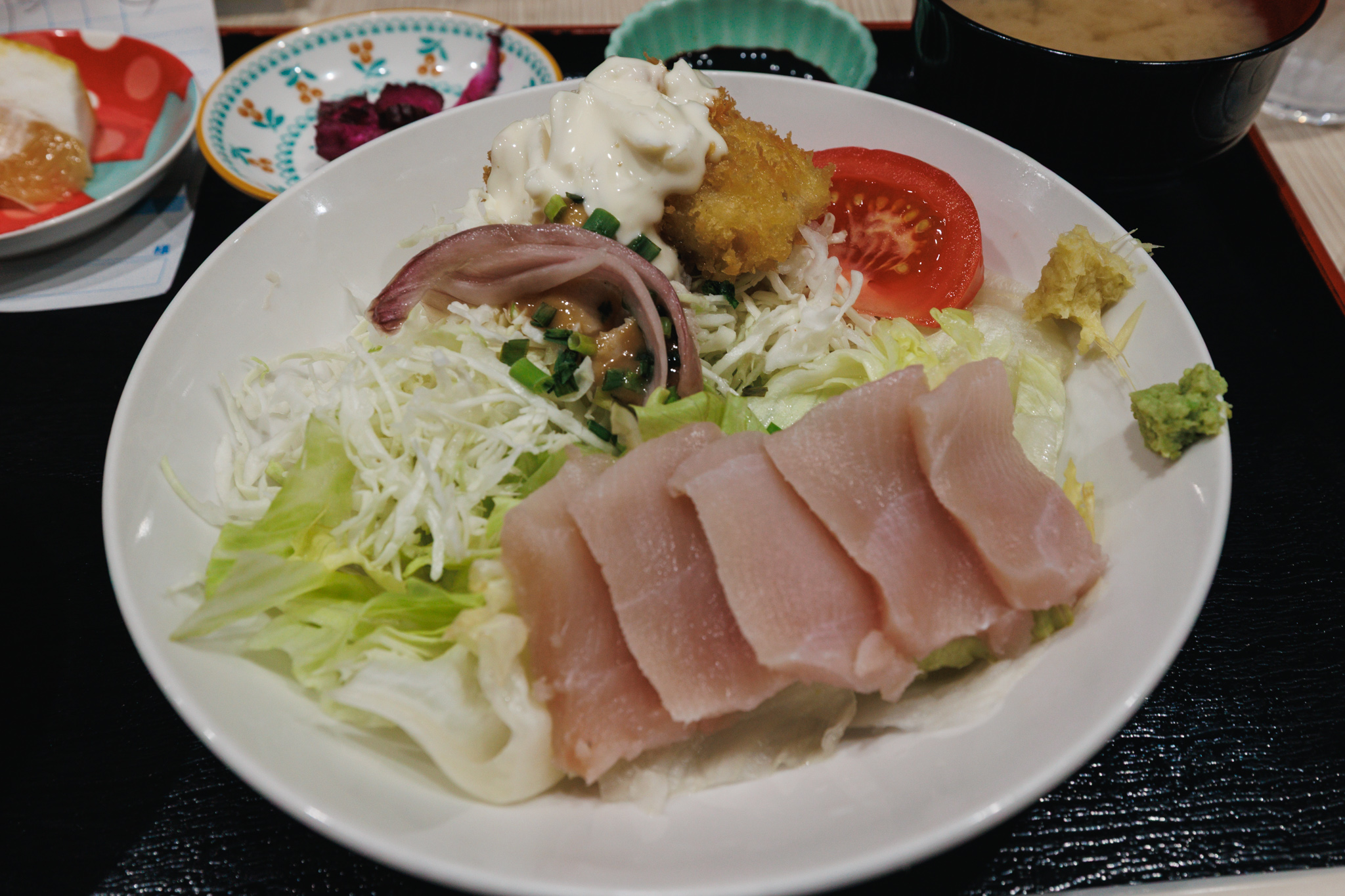
At festival meals in the hills of northern Hiroshima Prefecture, there is a traditional line for offering one dish to guests: Wani o hara no hieru made tabete tsukāsai. Please eat the wani until your stomach goes cold.
Wani means crocodile. Here, it is the local name for shark. Locally, it has also gone by Miyoshi kajiki, the Miyoshi marlin, in Miyoshi, and Saijō maguro, the Saijō tuna, in Saijō, now part of Shobara. Three names, three animals, and not one of them a shark.
The dish is wani sashimi: raw shark, in the mountains.
I ate mine in Hiroshima city, which is on the sea, on the seventh floor of a shopping building. Even in Hiroshima, the menu on the table explained that the wani was a shark.
Uphill from the sea
Bihoku, the hill country of northern Hiroshima around Miyoshi and Shobara, lies a long way from both the Seto Inland Sea and the Sea of Japan. Sea fish usually reached it salted or dried. The wani was different: a sea fish that kept unusually well. According to an encyclopedia of Hiroshima's local culture, that made the area one of the few places in Japan with a tradition of eating shark as sashimi.
According to Japan's agriculture ministry, there are records of merchants from the Sea of Japan coast bringing sharks inland in the Edo period. In the early 1900s, fishermen from Shimane began carrying them over themselves, and families started eating shark sashimi at home.
The fishermen had not been after the meat. In the Meiji era, demand for shark fin was rising, and the government encouraged shark fishing; in 1892, a training centre for shark-fin fishing opened in Yunotsu, a port on the Shimane coast. The catch was taken for its fins and its liver oil. The meat, which the fishermen had no use for, was carried to northern Hiroshima and eaten raw.
The fins went to market. The meat went to the mountains.
A fish that kept
Why shark, of all fish? Part of the answer is chemistry. A living shark holds a large amount of urea in its body, which keeps its body fluids close to the concentration of seawater, so the sea does not draw the water out of it. After death, the urea gradually breaks down into ammonia. That is why sharks and rays have a reputation for smelling of it.
In the traditional explanation, the ammonia was also what made the fish last. The agriculture ministry's description of the dish says that because shark contains a lot of ammonia, it kept, and could be eaten as sashimi for around half a month. The smell grew stronger by the day, so it was often eaten with ginger and soy sauce to cover it. (This is a description of the past, not a storage tip.)
For a by-product, it did rather well. In Bihoku it became a fixture at festivals and New Year. As a festival approached, wani markets would spring up, where large sharks were cut up and sold on the spot. At the meal itself, the sashimi came piled on big platters.
That is where the line about cold stomachs comes in. The flesh is soft and light, one account explains, so however much you eat, it never sits heavy. A guest could keep going until their stomach went cold, and a good host would encourage it.
The 4 a.m. run
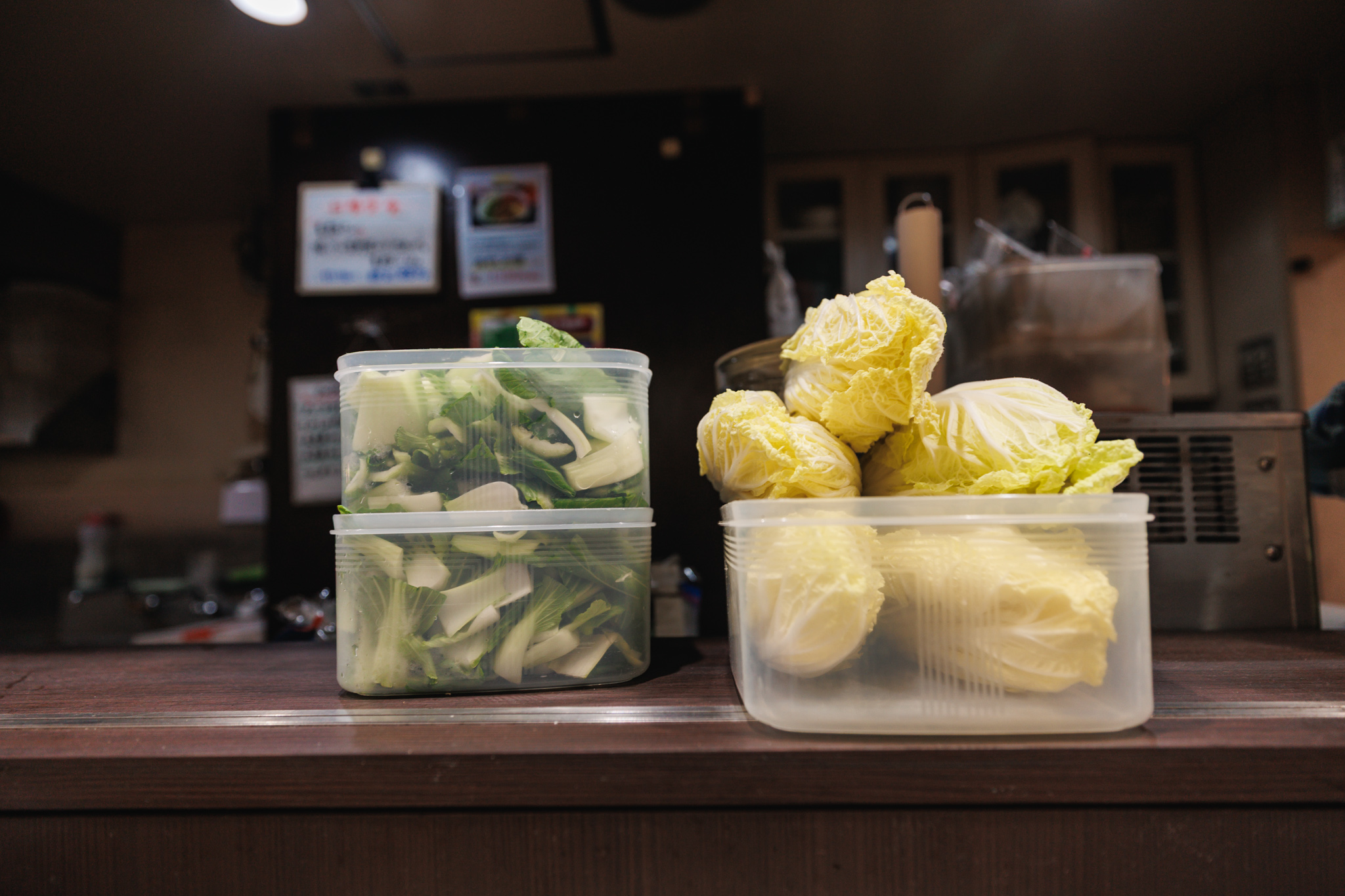
Shobara Shokudo, where I ate, calls itself a set-meal restaurant for seasonal vegetables. Leaving Shobara at 4 a.m., the sign at the entrance announces, fresh vegetables delivered daily! A board by the lunch boxes listed thirteen kinds, from hamburg steak to braised pork belly. The only fish it named was mackerel.
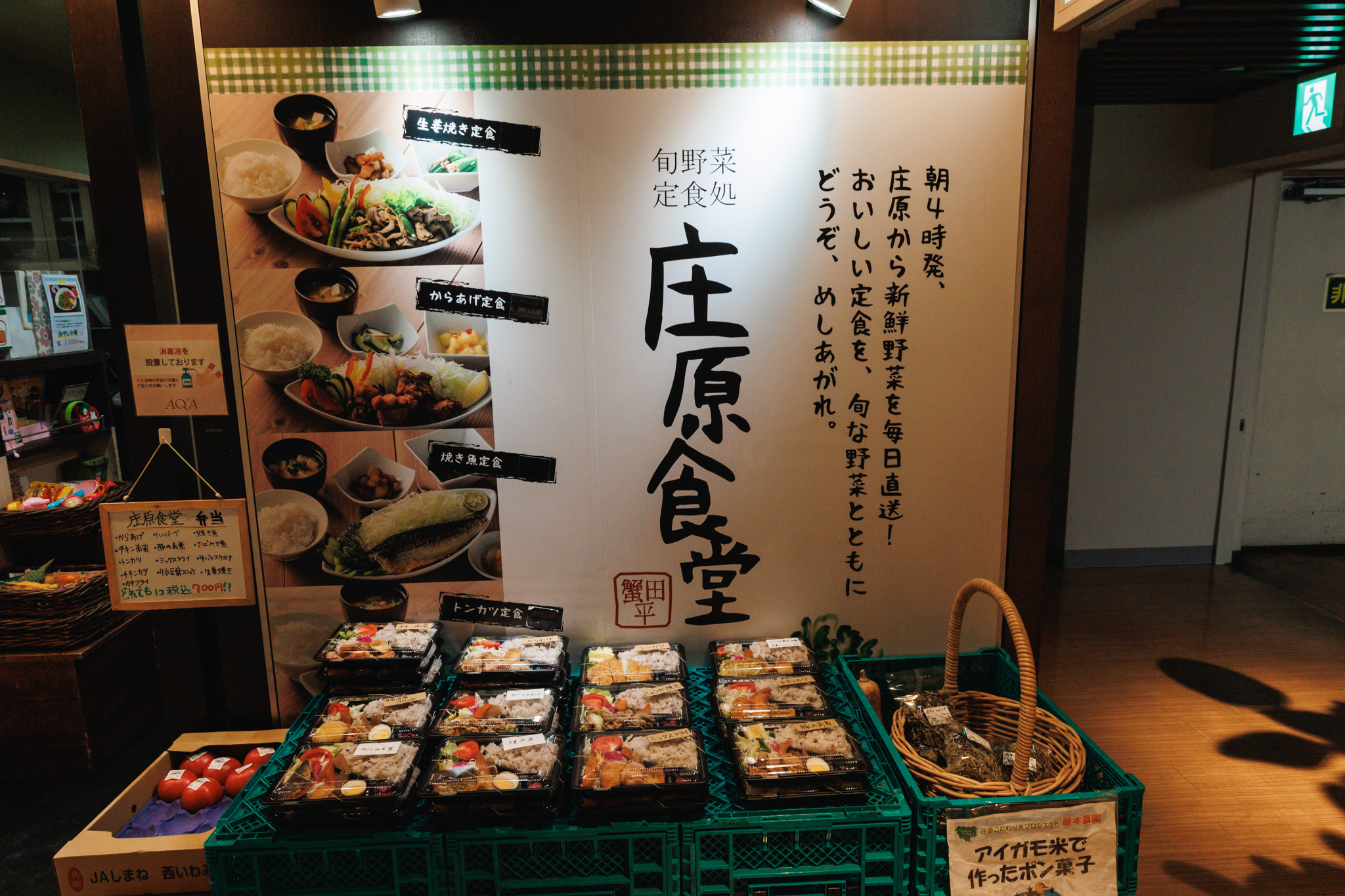
The restaurant is run by the Nishida family of Gandabira Farm, in Tōjō, part of Shobara. The parents mainly work the fields, which is how vegetables from Tōjō can go straight to the restaurant. The rice is from Tōjō too, from a farm called Fujimoto Nōen; by the door sat a basket of puffed rice made from its aigamo rice, grown with ducks in the paddies.
Sharks once travelled up into the hills from the coast.
Now the hills send their vegetables down to the city, every morning, in time for lunch.
Three ways with shark
I ordered the wani teishoku, the shark set meal. It came on a black tray: rice cooked with corn and grains, miso soup, pickles, a slice of citrus, and one large plate under a small hill of salad. The shark came three ways: as sashimi, as a fried piece under tartar sauce, and as wani no sunomono, a small vinegared dish.
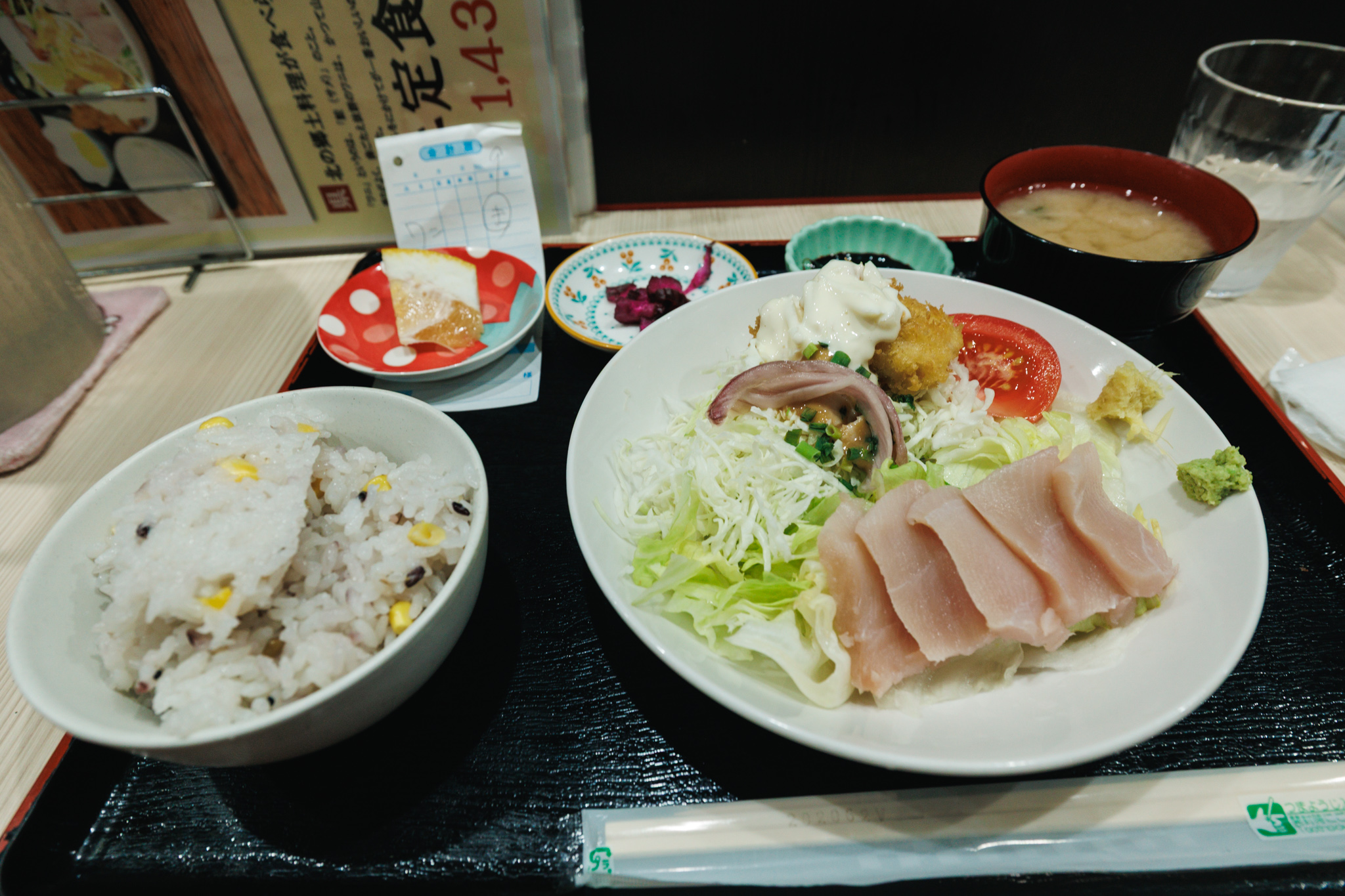
The sashimi was soft, slightly fibrous in places, and very mild. There was no smell at all.
The fried shark tasted like any mild white fish. The vinegared one was lighter still.
Ginger and wasabi came with the sashimi. I used both. By tradition, the ginger is there to deal with the smell; here, all it had to do was taste of ginger.
With rice, fried shark and miso soup on the same tray, my stomach never had a chance to go cold.
Location
Restaurant
Shobara Shokudo (庄原食堂)
On the 7th floor of Aqa Hiroshima Center Gai, the building with Hiroshima Bus Center; about 15 minutes from JR Hiroshima Station by tram or bus, according to the building
Aqa Hiroshima Center Gai 7F, 6-27 Motomachi, Naka-ku, Hiroshima 730-0011, Japan
Practical Information
- Dish
- Wani teishoku (ワニ定食), a set meal of shark sashimi, fried shark and vinegared shark
- Availability
- Not listed on the restaurant’s online menu; ask before travelling specifically for it
- Opening hours
- The shop page lists 11:00–22:00 (last orders 21:00); its linked menu lists a 10:30 opening. Confirm if arriving early.
- Closing days
- Follows Aqa Hiroshima Center Gai
- Phone
- 082-225-6369
- Associated area
- Bihoku (Miyoshi and Shobara), northern Hiroshima
Information last checked: October 9, 2026 (floor, address, phone and listed opening hours).
Conversation
Comments
Review pending commentsComments are reviewed before appearing. The internet already contains enough unattended surprises.
Checking comments…
Comments are not available in this migration preview yet. Existing comments remain on the current site.
Leave a comment