Sukugarasu Tofu: One Fish per Block
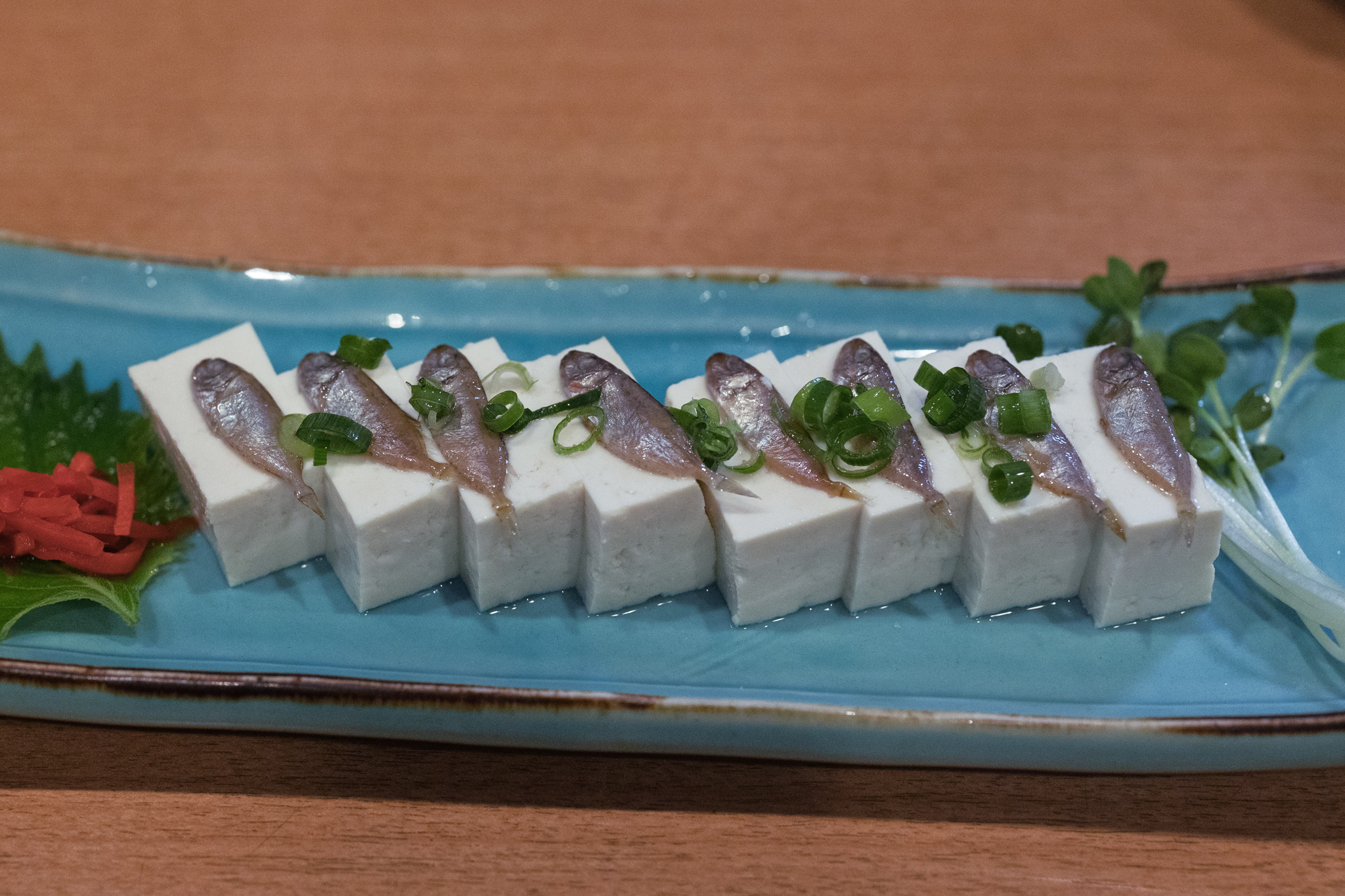
The first dish of the evening at Churasantei, a seafood izakaya in Naha, arrived in a straight line. Eight blocks of tofu sat along a long blue plate, and on each lay one small silver fish, at the same slight angle, as though they had been assigned seats.
The menu called it sukugarasu tofu. To Japanese ears, garasu sounds like “glass”. This was no help at all.
Neither the name nor the plate gave me the slightest idea what it would taste like.
A fish on a lunar timetable
In Okinawan, suku are young rabbitfish, and karasu means salting. Sukugarasu is suku preserved in salt.
The fish are about three centimetres long and roughly a month out of the egg. They arrive in large schools on the spring tides around the first day of the sixth, seventh and eighth months of the old lunar calendar, riding the rising water into the shallow lagoons inside the reef. Only fish that have not yet started eating seaweed are used.
Few ingredients turn up on a schedule set by the moon.
Salt draws moisture out of the fish and helps preserve them. As they mature, enzymes break down proteins into amino acids, which contribute to the savoury flavour.
The calendar still belongs to Okinawa’s reefs. Most of the fish in the jars do not.
According to Japan’s national fisheries research agency, about 90 per cent of the raw fish used for sukugarasu is imported, from the Philippines and elsewhere. A 2022 news report found that suku landings in Naha had fallen by more than 80 per cent in three years. Fishermen suspected warmer seas, poorer water or changes to the coastline, but nobody was sure.
On island tofu
The most common way to eat sukugarasu is also the simplest: put it on Okinawan tofu. Shima-dofu, Okinawa’s island tofu, is firmer and contains less water than most tofu elsewhere in Japan. It is made by pressing crushed soybeans before boiling them, rather than after.
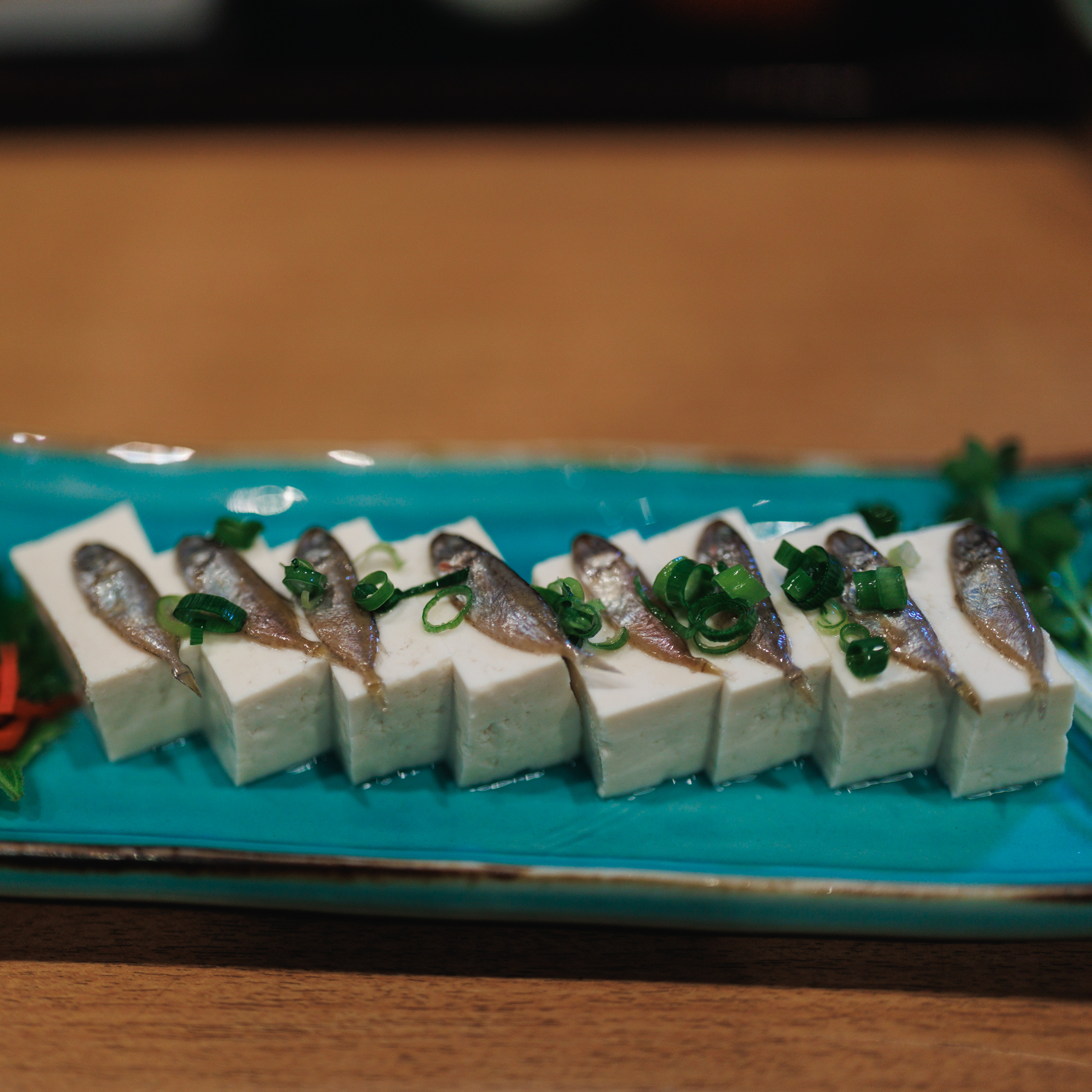
I ate each fish whole, head and all, with its block of tofu. The salt was just right, and it was delicious.
It did call for some attention. For something so small, each fish had a surprisingly firm skeleton, with a sharp little snap in every bite and the odd prick. Adult rabbitfish have venomous fin spines; this was only bone, and perfectly edible.
The name had told me nothing, and the plate very little.
The bones explained themselves.
Location
Restaurant
Churasantei (海鮮居酒屋 ちゅらさん亭)
About 3 minutes on foot from Asahibashi Station on the Yui Rail monorail, on National Route 58
5-15 Higashimachi, Naha, Okinawa 900-0034, Japan — Asahi Building
Practical Information
- Dish
- Sukugarasu Tofu (スクガラス豆腐)
- Associated area
- Okinawa
- Opening hours
- 17:00–01:00 (last orders 00:00)
- Closing days
- Wednesdays
- Payment
- Cash only when I visited (sign on the door). Restaurant listings also say cards are not accepted.
- References
- Restaurant page (Japanese); Hitosara (Japanese)
Information last checked: September 30, 2026 (listed address, opening hours, closing days and payment).
Conversation
Comments
Review pending commentsComments are reviewed before appearing. The internet already contains enough unattended surprises.
Checking comments…
Comments are not available in this migration preview yet. Existing comments remain on the current site.
Leave a comment