Sansai Soba: When the Mountains Join the Noodles
.JPG)
The bowl looked as though the mountains had been asked to join the noodles and, in their enthusiasm, had brought rather too much with them.
Green stems, mushrooms, sliced spring onion and a large piece of maitake tempura covered the soba in its dark broth. The order itself, sansai soba, had sounded far more orderly.
Sansai is a useful word. It lets you order several plants without conducting a roll call.
What counts as sansai
Literally “mountain vegetables,” it is a collective name for edible plants traditionally gathered from the hills and countryside. Warabi and zenmai are young fern shoots; fukinotō are Japanese butterbur buds; and tara-no-me are the new shoots of the Japanese angelica tree. Some are now cultivated, but they remain sansai. The category describes a food tradition, rather than a guarantee that someone has just come down a mountain carrying your lunch.
In my bowl at Fukushimaya, in Chichibu, that one word covered thin dark stems and brighter green ones. It did not say which was which, and nobody asked me to.
Lunch at the end of the line
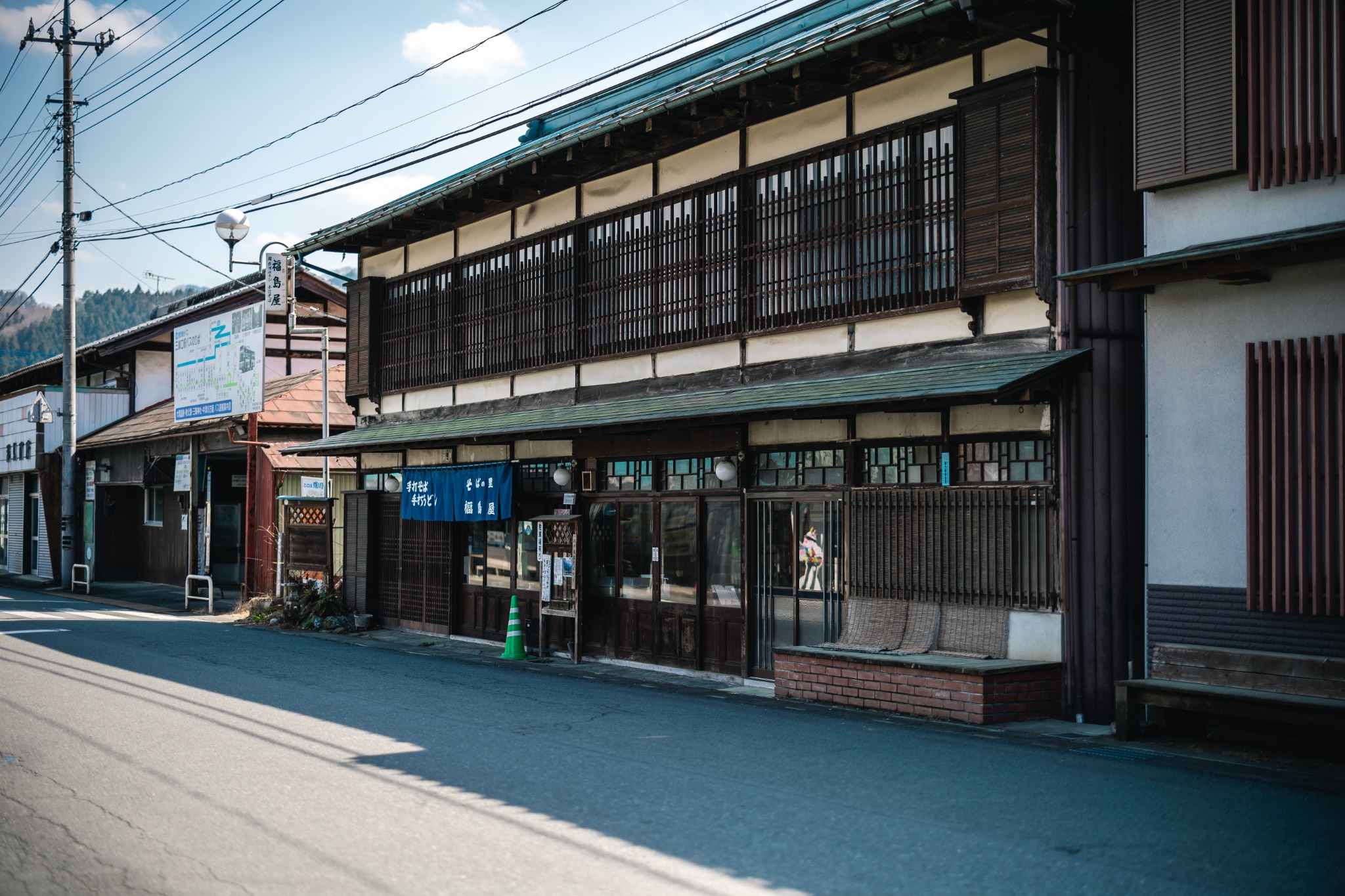
Fukushimaya stands opposite Mitsumineguchi Station, at the end of the Chichibu Railway line in the mountains of western Saitama, northwest of Tokyo. The restaurant is reported to have opened in 1930, the same year the railway reached Mitsumineguchi. On days when the steam train runs from Kumagaya, its locomotive is turned around on a turntable beside the station.
The station’s name means “Mitsumine entrance.” Mitsumine, “three peaks,” is a shrine deeper in the mountains, said to be named for the three peaks around it. Buses for the shrine leave from the station.
.JPG)
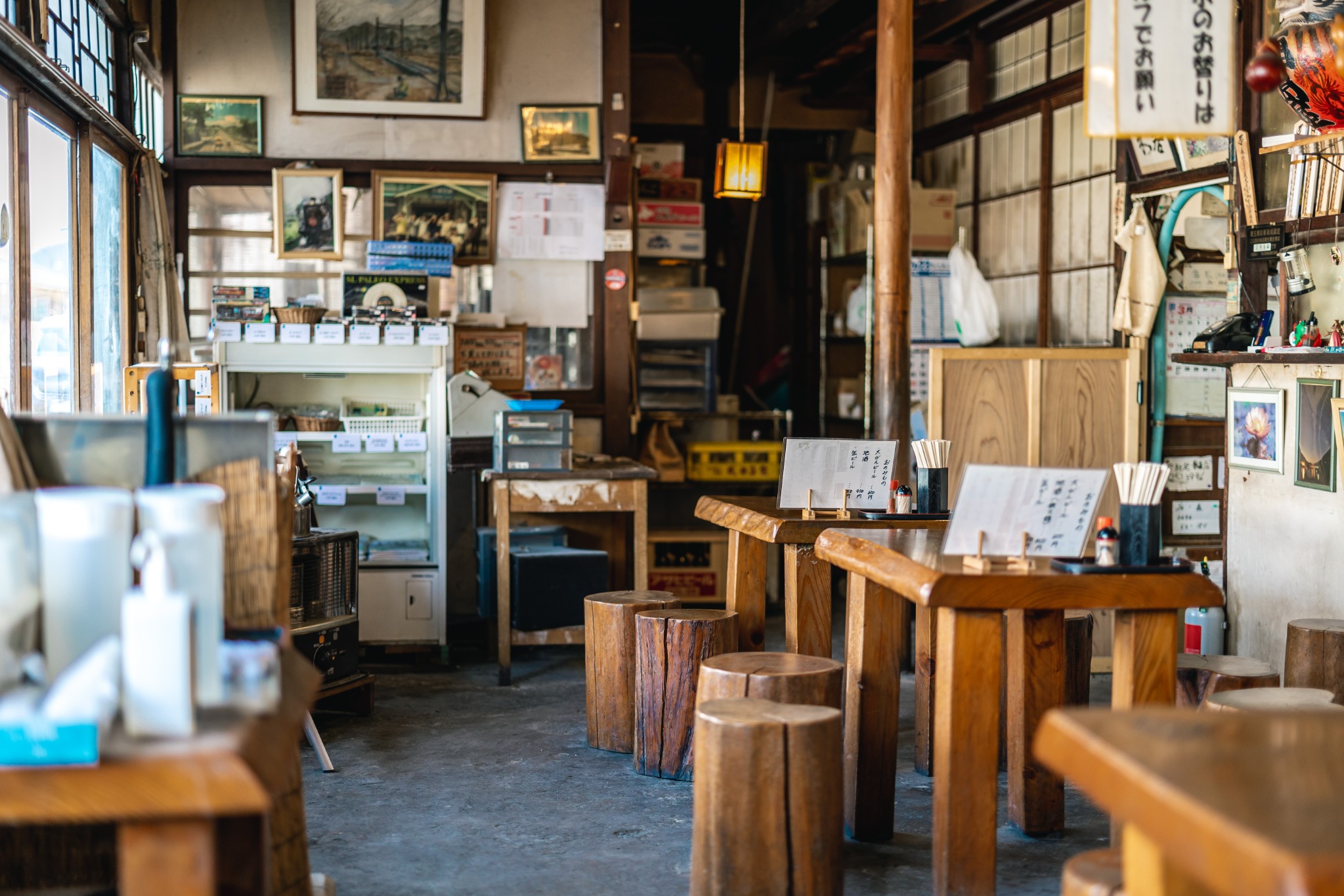
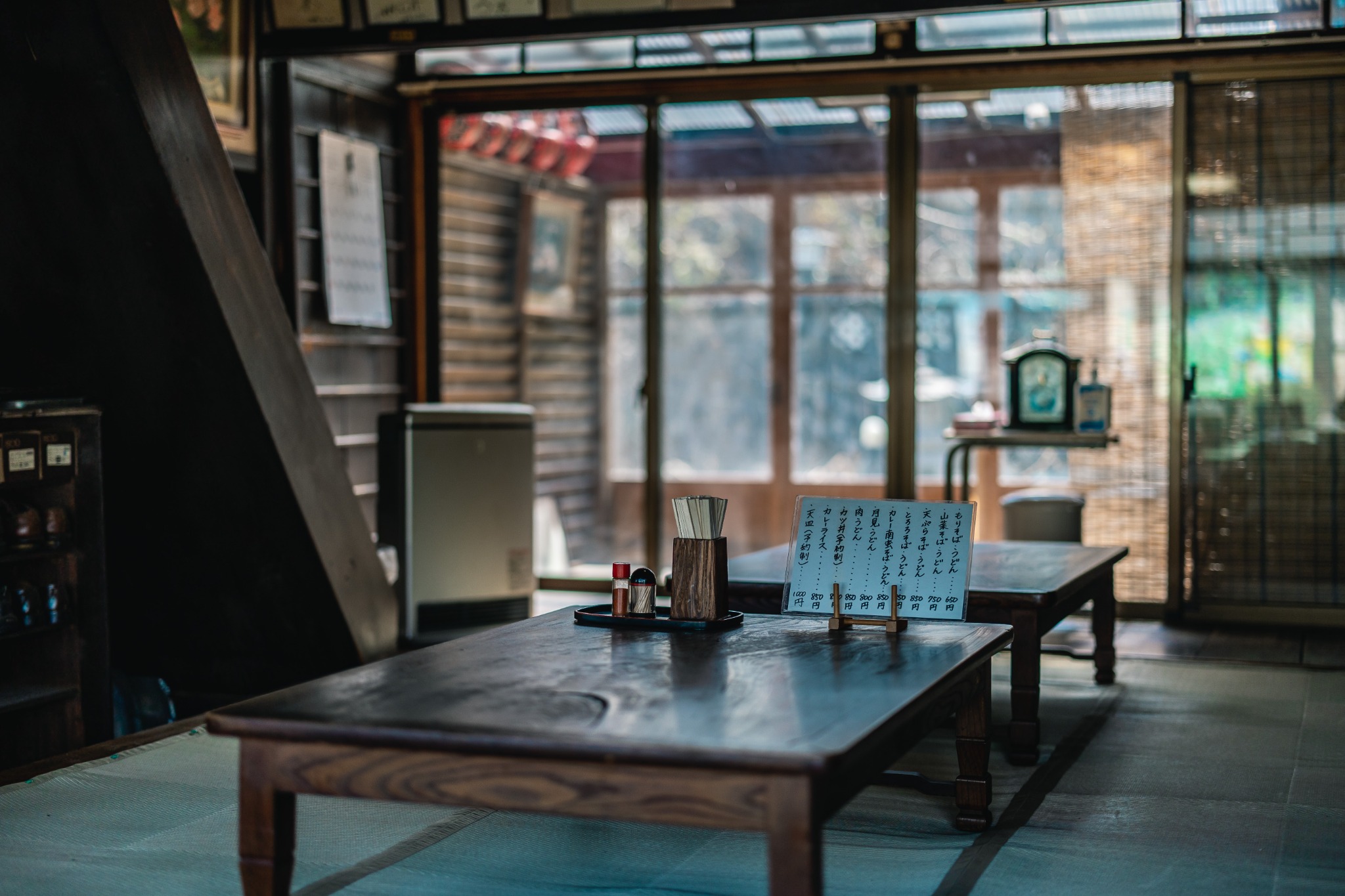
Inside, wooden tables, log stools and a raised tatami area with low tables gave the place a quietly accumulated character. Photographs and railway memorabilia shared space with the ordinary equipment of a working restaurant.
Some of the stools had made remarkably few concessions to being furniture.
Back to the bowl
There was plenty to look at, but the bowl gave me a better reason to lower my gaze.
The soba had the satisfying texture and handmade character I particularly enjoy. The mountain vegetables added something different between mouthfuls, but did not reduce the noodles to a supporting role. They were still the point of the bowl; they simply had a large and varied cast around them.
Then there was the maitake tempura.
It was particularly delicious. A bowl of handmade soba with a generous helping of mountain vegetables already made a convincing lunch. Someone had also seen fit to batter and fry a mushroom. I appreciated the initiative.
Maitake means “dancing mushroom.” One explanation is that people who found one growing wild were so pleased that they danced. Cultivation succeeded in the 1970s, and today nobody has to dance in a forest first. I did not dance, but I could see the argument.
I had been happy to order the plants collectively. The maitake tempura, however, was going on the next invitation by name.
Location
Restaurant
Fukushimaya (福島屋)
Directly opposite Mitsumineguchi Station, the terminus of the Chichibu Railway.
1567 Arakawa-Shiroku, Chichibu, Saitama 369-1912, Japan
Practical Information
- Dish
- Sansai Soba (山菜そば)
- Associated area
- Chichibu, Saitama
- Serving note
- Handmade soba served hot in broth with mountain vegetables, mushrooms, spring onion and maitake tempura
- Price at visit
- ¥750 on the menu photographed on March 16, 2023; not a current price
- Opening hours
- Call the restaurant to confirm current opening hours before travelling.
- Closing days
- Thursdays, as listed by Chichibu Tourism Association
- Phone
- +81 494-54-0124
- Tourism information
- Chichibu Tourism Association — Fukushimaya
Information last checked: September 25, 2026 (tourism-listed address, closing day and phone number).
Conversation
Comments
Review pending commentsComments are reviewed before appearing. The internet already contains enough unattended surprises.
Checking comments…
Comments are not available in this migration preview yet. Existing comments remain on the current site.
Leave a comment