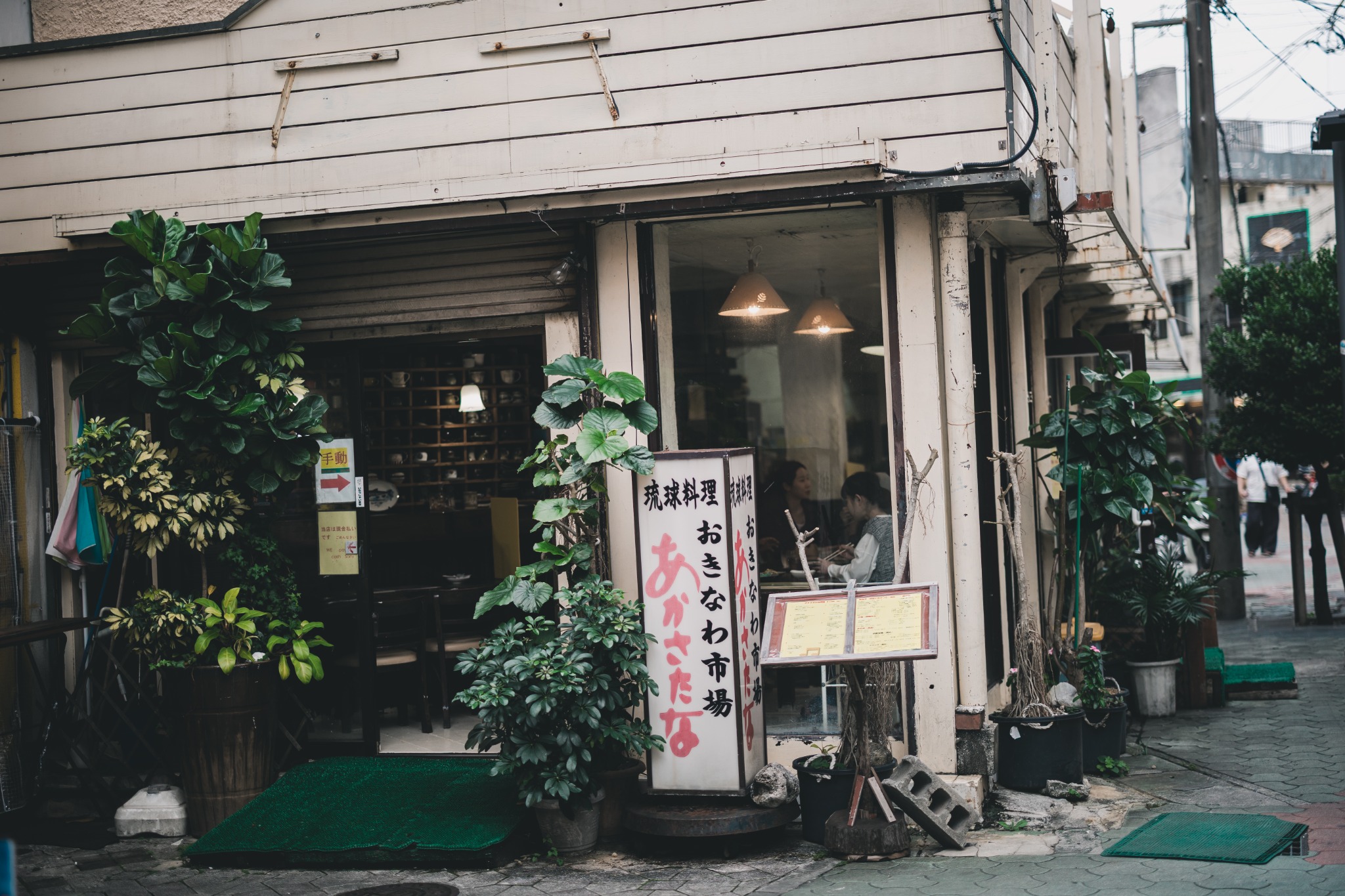
Before you enter
First: make sure the restaurant is actually open
Small restaurants can have short opening hours, irregular days off, lunch-only service or a break between lunch and dinner.
Online opening hours are useful, but do not treat them as divine revelation.
Look for:
営業中
eigyō-chū
Open
準備中
junbi-chū
Preparing / not currently open
支度中
shitaku-chū
Getting ready / not currently open
本日休業
honjitsu kyūgyō
Closed today
定休日
teikyūbi
Regular closing day
A noren, the fabric curtain often hanging over the entrance of a traditional restaurant, is also commonly put out while the restaurant is open.
Customers eating inside do not necessarily mean the restaurant is still accepting orders. If you are unsure, pause at the entrance and check with the staff.
Three things to sort out in advance
Before entering, make sure you have cash or a payment method the restaurant accepts. If you have an allergy or a strict dietary requirement, confirm what the kitchen can accommodate before ordering.
Try your translation app before you need it. Save the Japanese name of any dish you came for, and test any offline features you plan to rely on.
Getting seated
Sometimes there is a queue before there is a seat
At popular restaurants, there may be a list near the entrance where you write your name and number of people, numbered tickets, chairs outside, or simply a line of people who all seem to understand an arrangement that nobody has written down.
Before walking through the door, look around.
If six people are standing outside a restaurant and nobody is entering it, there is a reasonable chance they have discovered a rule you have not.
Check for a ticket machine
Before you look for a seat, make sure the restaurant does not expect you to have already bought your meal. If the order of queuing and buying is unclear, ask the staff first.
Ramen, soba and other inexpensive restaurants sometimes use a meal-ticket vending machine.
The basic procedure is:
money in → choose food → collect ticket and change → give ticket to staff → eat
The machine gives you a shokken (食券), or meal ticket. This is a common sequence, not a rule for every machine: follow the instructions on the one in front of you.
Some modern machines have English. Some older machines have photographs. Others present you with a magnificent wall of Japanese buttons.
If there is a line behind you, it is better to investigate the choices before reaching the machine rather than beginning a fifteen-minute linguistic expedition once everyone is waiting.
Walk in. Then stop.
This is the point where visitors sometimes make things unnecessarily difficult by confidently walking straight towards an empty table.
Confidence is useful. Not always here.
In many Japanese restaurants, especially small ones, the safest thing to do is simply enter and wait near the entrance until somebody acknowledges you.
You will probably hear:
いらっしゃいませ
irasshaimase
It means “welcome”. You do not need to answer it.
The staff may then ask:
何名様ですか?
nanmei-sama desu ka?
How many people?
When you answer, show the number with your fingers as well.
For one person:
一人です
hitori desu
One person.
Hold up one finger.
For two:
二人です
futari desu
Two people.
Hold up two.
Do this even if you are confident in your pronunciation. Japanese customers often indicate the number with their fingers too. It is not a special technique for visitors who cannot speak Japanese; it is simply a quick and normal way to remove any ambiguity.
For larger groups, the same principle works.
Say the number if you can. Show it with your hand either way.
The staff may then point towards a counter seat, a table or a tatami room. Follow the pointing.
Occasionally they will say お好きな席へどうぞ (o-suki na seki e dōzo) — “sit wherever you like”. If you do not catch it, this normally becomes apparent after several seconds of mutual pointing. You will survive.
Menus and translation apps
The menu may be anywhere
Do not assume somebody will bring you one.
The menu might be:
- on the table
- on the wall
- above the counter
- handwritten on a board
- on a tablet
- accessed through a QR code
- in a ticket machine
- distributed across several of these systems for reasons known only to the restaurant
A phone camera is extremely useful here. Photograph the menu and use camera translation to work out roughly what you are looking at.
The result may not be elegant. A regional fish dish can occasionally emerge from machine translation as something that sounds less like lunch and more like a medical condition. But it will usually get you close enough.
If the camera cannot make sense of the handwriting, do not spend ten minutes trying to persuade it.
Point to the item and ask instead.
Sometimes the easiest way around unreadable Japanese is to stop trying to read it.
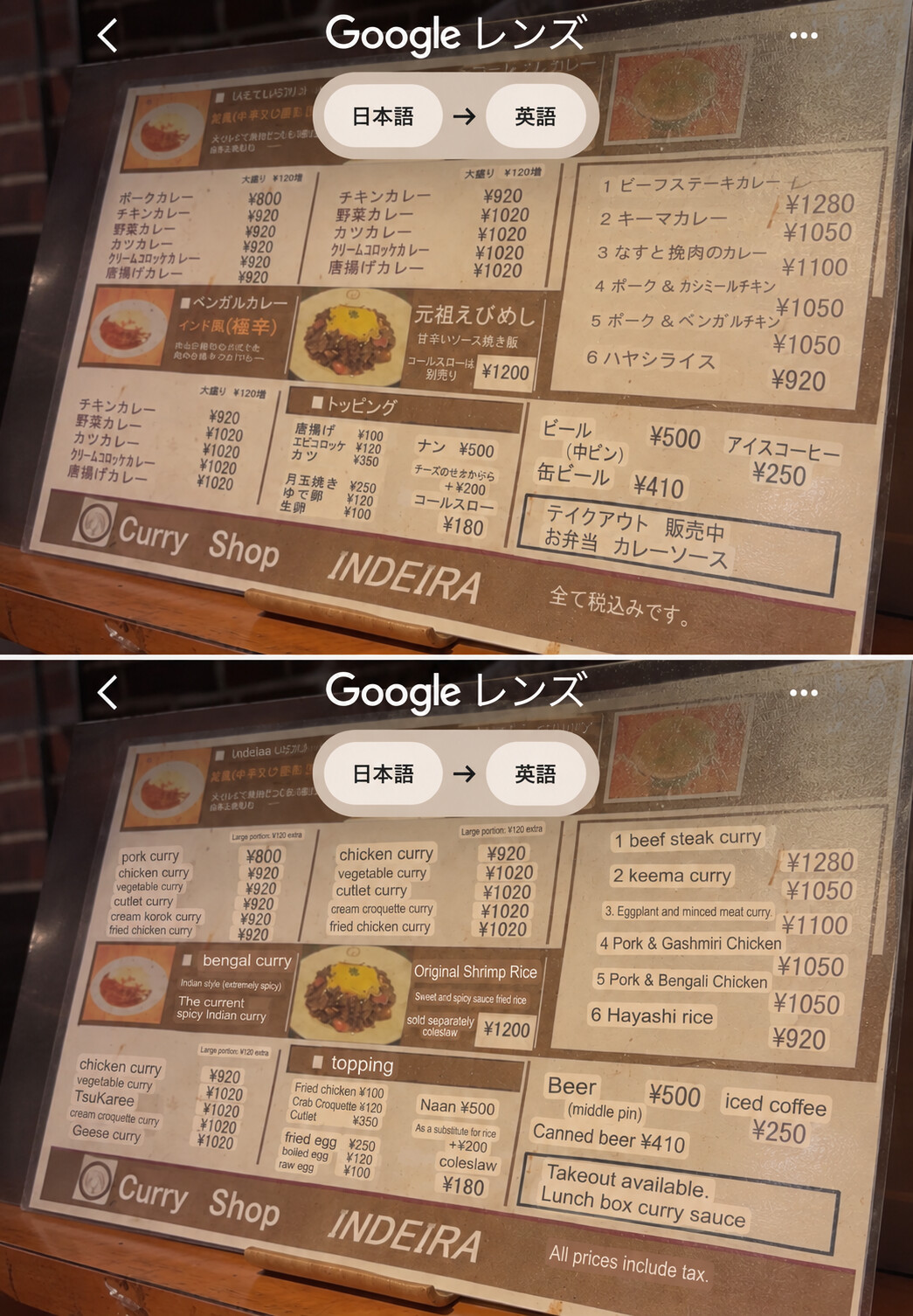
Let your phone do some of the talking
The same app can help with conversation too. It is useful when the staff are trying to explain something that pointing alone cannot solve: perhaps a dish has sold out, there are two different sizes, you need to choose hot or cold, or the local speciality has a particular way of being eaten.
At that point, rather than continuing an increasingly ambitious international game of charades, take out your phone and let each person speak into it.
Do not be embarrassed. The staff may be relieved that you have produced a solution.
Translation apps tend to work better with short, simple sentences.
Instead of:
“I was wondering whether this dish contains any fish because my friend told me that sometimes Japanese soup stock contains fish even when there is no fish visible...”
try:
“Does this contain fish?”
The software also deserves a reasonable chance.
For most ordinary restaurant problems, a phone, some pointing and a little patience will get you surprisingly far.
Ordering without much Japanese
Learn to recognise the words that lead somewhere interesting
You do not need to learn the entire menu.
A few words are particularly useful when looking for something local.
名物
meibutsu
Local speciality / famous local product
郷土料理
kyōdo ryōri
Regional or local cuisine
おすすめ
osusume
Recommendation
人気
ninki
Popular
定食
teishoku
Set meal
日替わり
higawari
Daily special
限定
gentei
Limited / limited availability
本日
honjitsu
Today
If a dish has the name of the town, region or local ingredient written beside it, that is also worth investigating.
And one word that leads nowhere at all: 売り切れ (urikire), sold out. If you see it beside a dish, or hear it after ordering, choose another item rather than repeating the same order more loudly.
If you came for a particular dish, this is where the Japanese name you saved earlier pays off.
Showing the staff うずわ定食 on your phone is substantially easier than trying to pronounce the name of a dish you discovered eleven minutes ago.
Pointing is a complete communication system
If nobody has come to take your order, it is normal to call sumimasen — “excuse me” — or use a call button if there is one.
Point to your choice and say:
これ一つください
kore hitotsu kudasai
One of these, please.
For two, use futatsu instead of hitotsu, or show the quantity with your fingers. You do not need a longer sentence.
If there is a photograph, point at it. If you have the dish open on your phone, show the phone.
If neither of you knows the other’s language, the object you are both looking at becomes extremely useful.
Ask what they recommend
If you have no idea what to order, this question is useful:
おすすめはどれですか?
osusume wa dore desu ka?
Which one do you recommend?
You may receive an answer entirely in Japanese. This slightly undermines the plan. Fortunately, there is usually pointing involved.
If not, show this:
メニューを指してください
menyū o sashite kudasai
Please point to it on the menu.
If that does not settle it, show a short translated question.
Another option is simply to show:
この辺の名物を食べたいです。
kono hen no meibutsu o tabetai desu
I would like to try a local speciality from this area.
You do not even need to pronounce it. Save the sentence on your phone and show it.
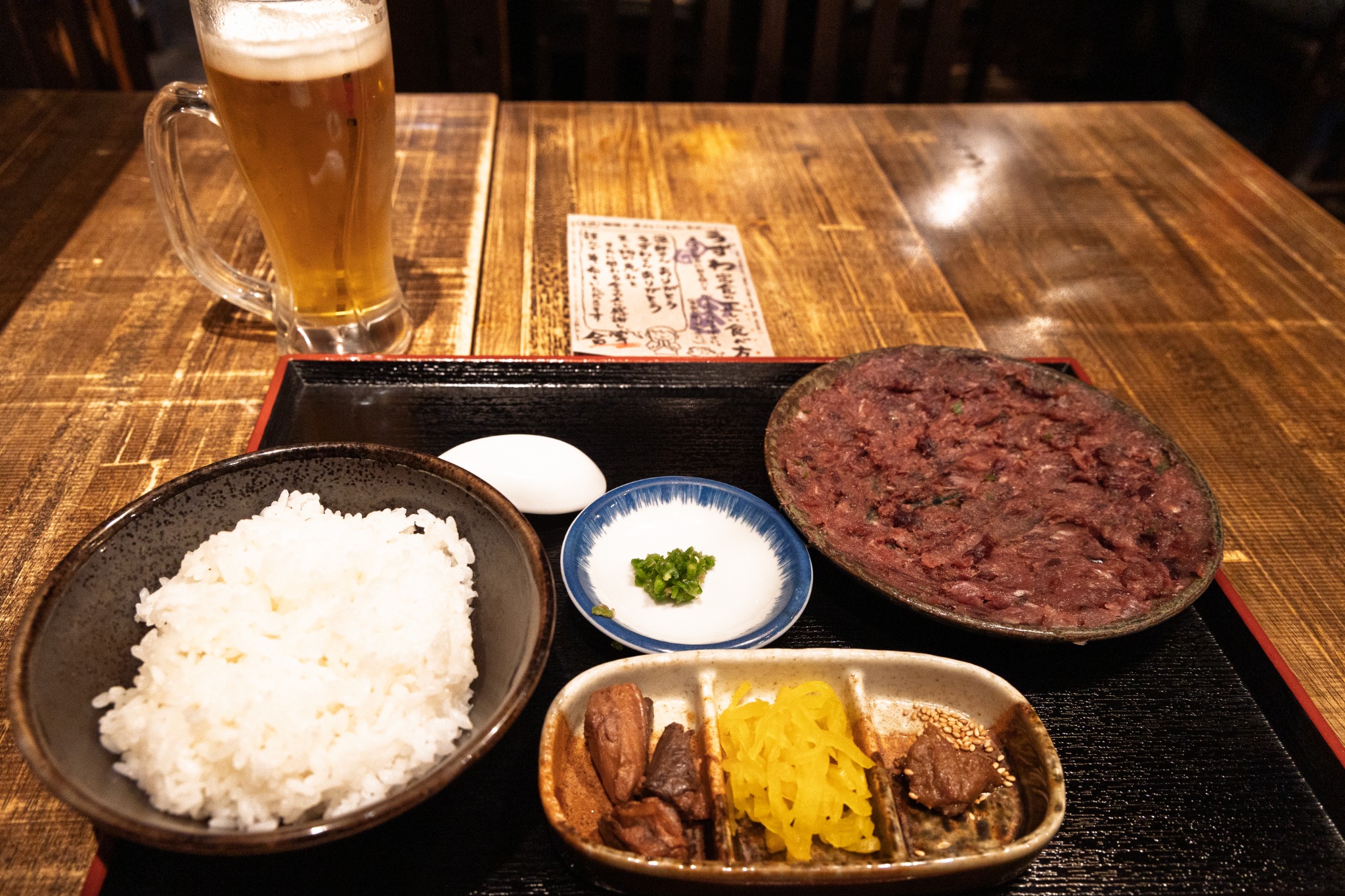
At the table
You may receive things you did not order
Soon after you sit down, a few things may appear before you have ordered anything.
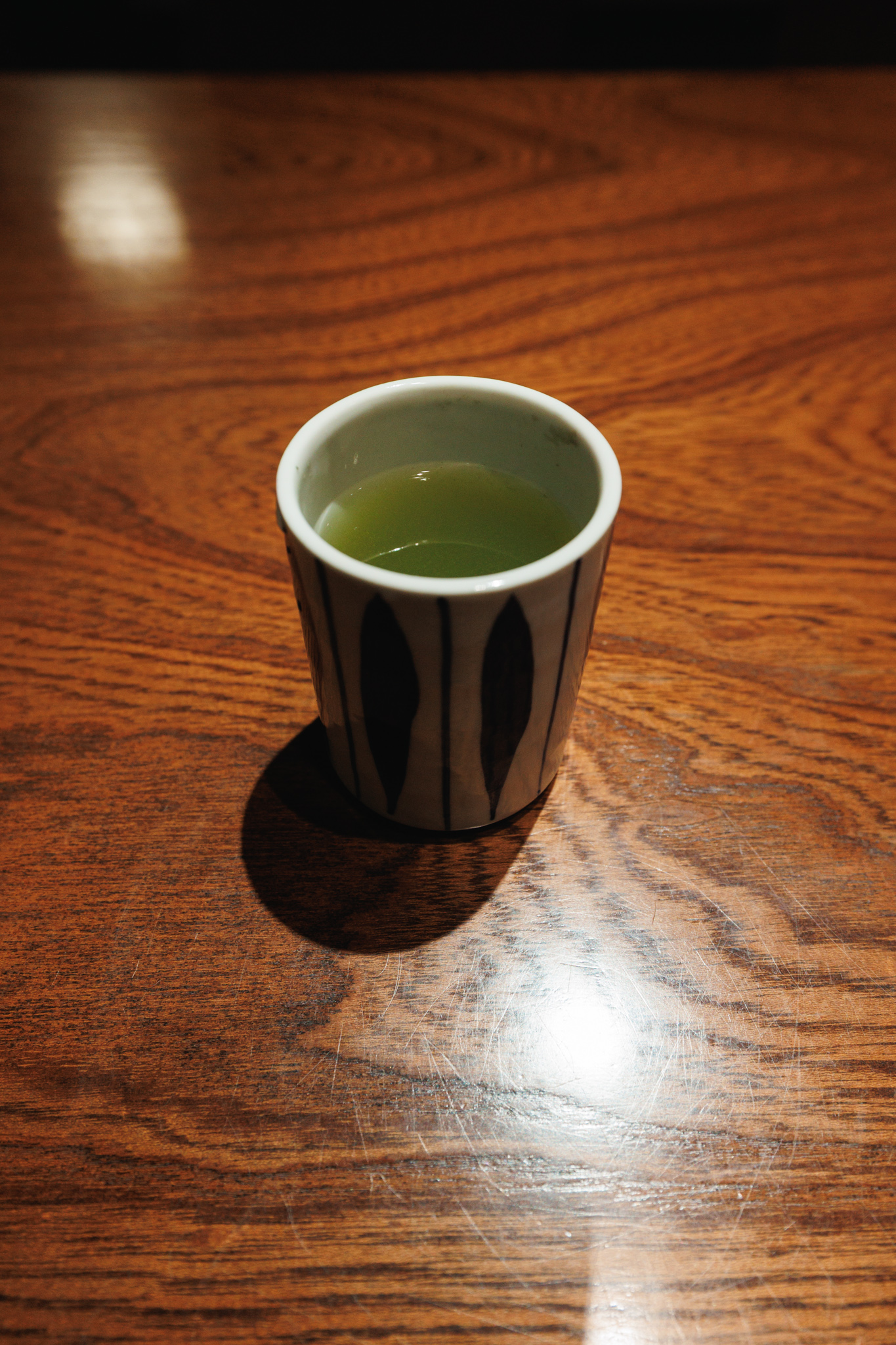
A glass of water is normally free. Many restaurants also serve complimentary tea, sometimes hot and sometimes cold.
And you may be handed a small wet towel. This is an oshibori (おしぼり).
It is simply a towel for cleaning your hands before you eat. It might arrive warm, cold or sealed in a little plastic packet. Use it, then leave it neatly beside your place.
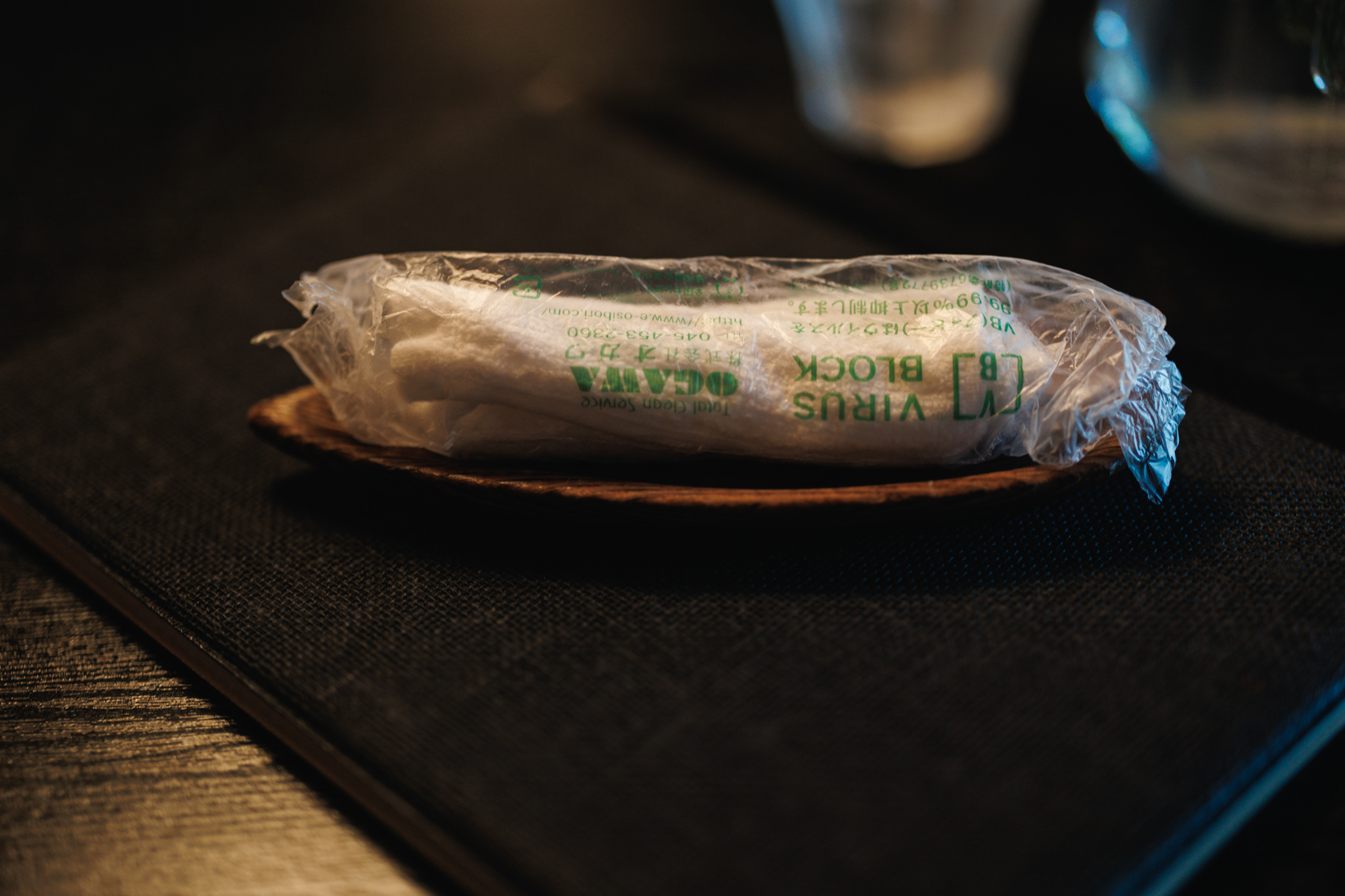
You are not normally charged for it.
You have not accidentally ordered a very small towel course.
A quick word about izakaya
Sooner or later, you may find yourself in an izakaya (居酒屋).
Calling an izakaya a “Japanese bar” is not entirely wrong, but it can give the wrong impression. A bar is primarily somewhere to drink; an izakaya is somewhere to drink and eat.
An izakaya can easily be dinner.
Rather than deciding on your entire meal at the beginning, it is common to order a few dishes, eat them and then order some more. You do not necessarily have to drink alcohol, either.
For a traveller looking for local food, an izakaya can be particularly useful because the menu may contain local fish, vegetables, regional ingredients or seasonal specialities.
Meet the otoshi
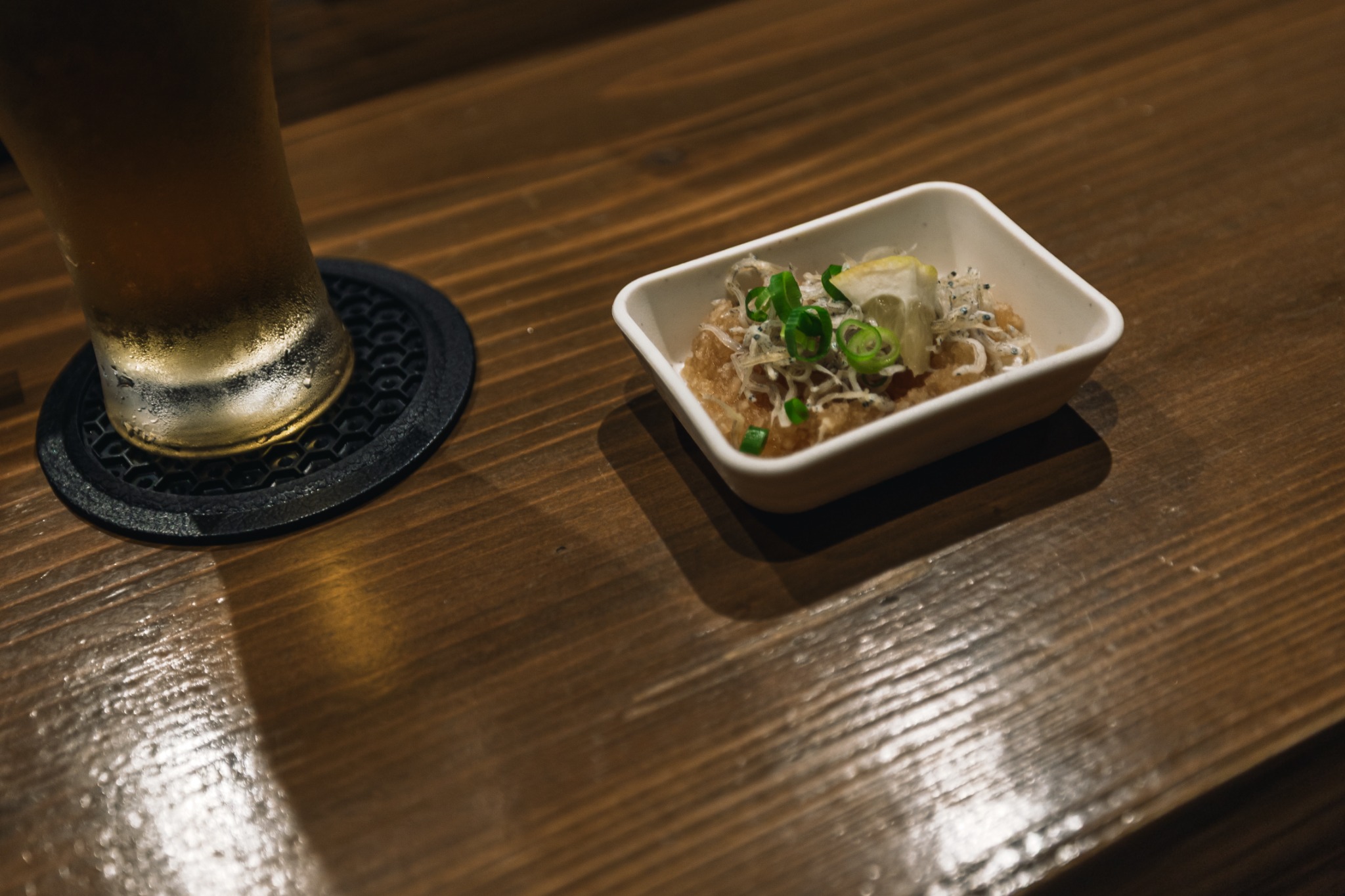
At many izakaya, a small dish may arrive shortly after you sit down.
This is an otoshi (お通し).
Unlike the water, tea or oshibori, it is not usually complimentary. A small charge is normally added to your bill, functioning somewhat like a table charge, with a small dish of food attached.
The exact food varies enormously. You might receive vegetables, tofu, fish, a small salad or something that takes substantially longer to identify.
If the charge matters to your decision, ask before ordering. Leaving the dish uneaten does not necessarily remove the charge; the restaurant’s policy applies.
So if water, tea or a wet towel appears before you order, relax.
If a small plate of food appears with them, you may have just met the otoshi.
Manners and dietary needs
Watch what everyone else is doing
This may be the most useful technique in the entire guide. If you are unsure whether to return your tray, collect water yourself, take your shoes off, press a call button or queue at the register, look at the other customers.
You are temporarily conducting field research. One person performing the correct behaviour is often more useful than five paragraphs of travel advice.
Do not worry too much about table manners
You do not need to memorise a long list of Japanese dining rules before entering a restaurant.
Most of what matters is ordinary consideration: keep your voice at a reasonable level, especially in a small or quiet restaurant; do not block aisles with bags or luggage; and follow the staff if they ask you to sit somewhere else, move something or wait.
If there is a queue outside, try not to remain at the table for a long time after you have finished eating.
Calling sumimasen to get a member of staff’s attention is perfectly normal. There is a difference between making yourself heard and shouting across the restaurant.
Just try not to make somebody else’s meal or work more difficult.
That is usually enough.
Allergies and dietary restrictions
This is the part where pointing and optimism are not enough.
If eating a particular ingredient could make you seriously ill, prepare the relevant information in Japanese before you arrive.
Do not rely only on whether an ingredient appears to be visible in the dish. Japanese cooking may use ingredients in stock, sauces and seasonings that are not obvious from looking at the plate.
The same issue matters for vegetarian and vegan travellers.
A dish can contain no visible meat or fish and still use dashi (だし) made with bonito or other fish. If avoiding animal products matters to you, saying only “vegetarian” or “vegan” may not always communicate exactly what you need.
Be specific about what you do not eat.
For serious allergies, have a clearly written allergy card or a carefully checked Japanese translation ready to show the staff.
For significant allergies or strict dietary requirements, it may also be sensible to choose restaurants where you can confirm the ingredients beforehand.
Ask about preparation as well as ingredients: shared equipment or cooking oil can introduce an allergen. A card helps communication but does not guarantee that a kitchen can meet your needs. If you cannot confirm that your meal is suitable, choose another restaurant.
FARE provides Japanese allergy chef cards to prepare before travelling.
For anything medically important, clarity matters more than improvisation.
Taking photographs
If you want to photograph your meal, that is usually straightforward, but small restaurants are somebody’s workplace rather than a film set.
Photograph your own food without turning the room into a production.
Some restaurants post a sign reading 撮影禁止 (satsuei kinshi) — no photography. If you see one, keep the camera away unless the staff say otherwise.
If you want to photograph the interior, staff or kitchen, ask.
A useful phrase is:
写真、いいですか?
shashin, ii desu ka?
Is it okay to take a photo?
If you have your camera or phone in your hand as you say it, the meaning is very easy to understand.
If the answer appears to be no, the research project ends there.
Paying
A bill, a slip or the register
There is no single way to pay in Japanese restaurants.
You may:
- have already paid at a ticket machine
- pay at your table
- take a bill or plastic slip from your table to the register
- simply walk to the register when you are finished
Look for a small bill holder or slip on your table. If there is one, take it with you to the register.
If there is no bill, do not start searching the table for one that does not exist.
In some small restaurants, you simply go to the register when you are finished. If the staff need to know which order was yours, point back to the table or counter seat where you were sitting.
If you are unsure, say:
お会計お願いします
okaikei onegaishimasu
The bill, please.
Or simply walk towards the register and look slightly uncertain. The staff will usually make the next step fairly obvious.
Carry cash
Cashless payment is far more common in Japan than it once was, but small restaurants — particularly outside major cities — can still be cash-only.
Do not assume that because you can pay for a train, a convenience-store coffee and a hotel room with a card, the twelve-seat restaurant beside a fishing port will have reached the same conclusion.
Look for card or payment logos near the entrance or register.
Useful questions:
カード使えますか?
kādo tsukaemasu ka?
Can I use a card?
現金だけですか?
genkin dake desu ka?
Cash only?
Having some cash with you removes one unnecessary source of adventure.
You are already looking for unusual food. The payment system does not need to contribute.
Do not tip
You generally do not add a tip to a restaurant bill in Japan. Pay the amount shown.
If there is a small cash tray at the register, place your cash there. For cards or contactless payments, simply follow the staff’s instructions or the payment terminal.
If you genuinely enjoyed the meal and want to leave something extra, there is a much easier option:
美味しかったです
oishikatta desu
It was delicious.
A smile and “oishikatta desu” may be the best tip you can leave.
It costs nothing, requires no awkward calculation and, in a small restaurant, may be appreciated far more than a few extra coins nobody expected.
As you leave, you can also say:
ごちそうさまでした
gochisōsama deshita
Thank you for the meal.
You do not need flawless pronunciation.
If you remember both:
美味しかったです。ごちそうさまでした。
That is more than enough — and if everyone looked slightly nervous when you first walked in, this is often the point at which the whole exchange ends with smiles anyway.
Save for later
Six phrases to keep handy
Save the phrases you need before entering. Pointing and showing the Japanese text are useful alternatives to speaking.
| Japanese | Romanisation | Meaning |
|---|---|---|
| すみません | sumimasen | Excuse me / call a member of staff |
| 一人です/二人です | hitori desu / futari desu | One person / two people — show the number too |
| これ一つください | kore hitotsu kudasai | One of these, please — point to the item |
| メニューを指してください | menyū o sashite kudasai | Please point to it on the menu |
| お会計お願いします | okaikei onegaishimasu | The bill, please |
| ごちそうさまでした | gochisōsama deshita | Thank you for the meal |
If you find something good
If this guide helps you find a great meal somewhere in Japan, I’d love to hear what you found.
Leave a comment or send me a message — especially if it is something local, unusual or simply delicious enough that I should go looking for it too.
And if another little restaurant makes you hesitate at the door, open it.
A restaurant does not need to know your language to know how to feed you.
Conversation
Comments
Review pending commentsComments are reviewed before appearing. The internet already contains enough unattended surprises.
Checking comments…
Comments are not available in this migration preview yet. Existing comments remain on the current site.
Leave a comment